5 Q&A With Michael Barrett Dixon
What was the creative process like for this particular album?
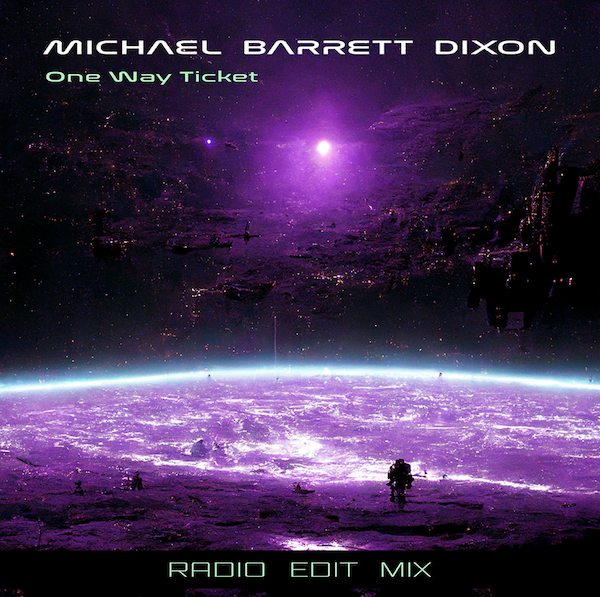
The creative process for ‘One Way Ticket’ was deeply influenced by a mix of personal and external factors. It all started in 2024 during the peak of a U.S. presidential election year, when the political climate felt particularly toxic and overwhelming. I was craving an escape, and that's where the initial idea for the album took root—what if we could leave it all behind? At first, I thought about leaving the country, but then I thought bigger. What if the escape was leaving the planet itself?
I’ve always been fascinated by space, sci-fi films, and the incredible work NASA has done, so I decided to create a concept album that would take the listener on a journey beyond our solar system. The album is structured as a trip, with each song representing different stages of the journey. It’s a blend of electronic pop with a retro feel, often using vintage synths blended with modern software and today’s sounds.
I spent a lot of time researching space travel, NASA's historical missions like Gemini, Mercury, Apollo, and Shuttle, and even used NASA’s audio archives from those missions and the Voyager golden record (which is attached to both spacecraft). I wanted the music and lyrics to convey to tell bits of the story, but sometimes indicate a sense of loss, as this was a “one way ticket” with no chance of returning. For the lyrics, I challenged myself to blend cerebral, ethereal, and a bit of nerdy elements, all while keeping it accessible and catchy. As there are two versions of the album (a true concept album and the “radio edit mix”), I made sure the concept album had tracks that flowed together with instrumental interludes. While I knew this approach might not be radio or playlist friendly, I also created a radio edit version of the album for those who want the songs without the intros.
What impact do you hope ‘One Way Ticket’ will have on your audience?
Regardless of which version of ‘One Way Ticket’ my audience listens to (original concept album or radio edit mix), I hope to transport my audience to a different place—both mentally and emotionally. I want listeners to feel like they’re embarking on a journey, one that takes them beyond the chaos of everyday life into something expansive and awe-inspiring. Whether they’re a fan of space exploration, sci-fi, or electronic pop music, I want them to feel that sense of escape and wonder I’ve felt throughout the creative process. For the concept album, I want people to experience it as a whole, from start to finish, and find their own interpretation of the journey. If it helps them escape for a while and feel connected to something bigger than themselves, then that would be a huge success for me.
Can you talk about any standout tracks on the album and what makes them special to you?
One standout track for me is “Passed Voyager.” It’s a deeply meaningful song that pays tribute to the incredible journey of the Voyager spacecraft. I utilized the NASA audio archives and sampled sounds from the gold record affixed to both Voyager I and II, which is a representation of humanity’s message to the universe. While the song refers to long since passing of a Voyager spacecraft in our journey, it’s a connection to that moment in history when NASA sent something out into space, hoping it might one day be discovered by extraterrestrial life. Musically, once it finished the introduction, kicks into EDM elements, with slightly nerdy lyrics depicting the (by that time) ancient relics of human technology, blended with welcome messages in many languages from the gold record.
Can you tell us a bit about yourself and how you got started in music?
I began composing music at the age of 11 in the summer of 1977, when I notated two original piano pieces instead of practicing for my next lesson. Encouraged by my piano teacher, I continued writing music. I played keyboards and drums in numerous bands during high school. Music continued into college where I earned both a Bachelor and Master of Music degree in theory/composition at East Carolina University. All during that time, I constantly wrote songs, composed electronic instrumental music, and collaborated with modern dance choreographers for commissioned works. While constantly writing music, I have worked in a parallel career in higher education working in instructional design and college teaching. Only since 2012, have I begun to publish music to the world, releasing 10 albums between 2016 and 2025 alone.
Are there any particular skills or techniques that you have been working on lately?
After making music for well over 40 years, you would think I’d be done learning, but I’m a life-long learner, always trying new things with music technology, software, virtual instruments, DAWs, and hardware. With AI pushing hard into many of the things we do every day, I have experimented with AI in making music (not on this album) but prefer the organic, creative process that fortunately humans still seem to do a better job at in making music (at least today).