5 Q&A With No Drinks for Jimmy
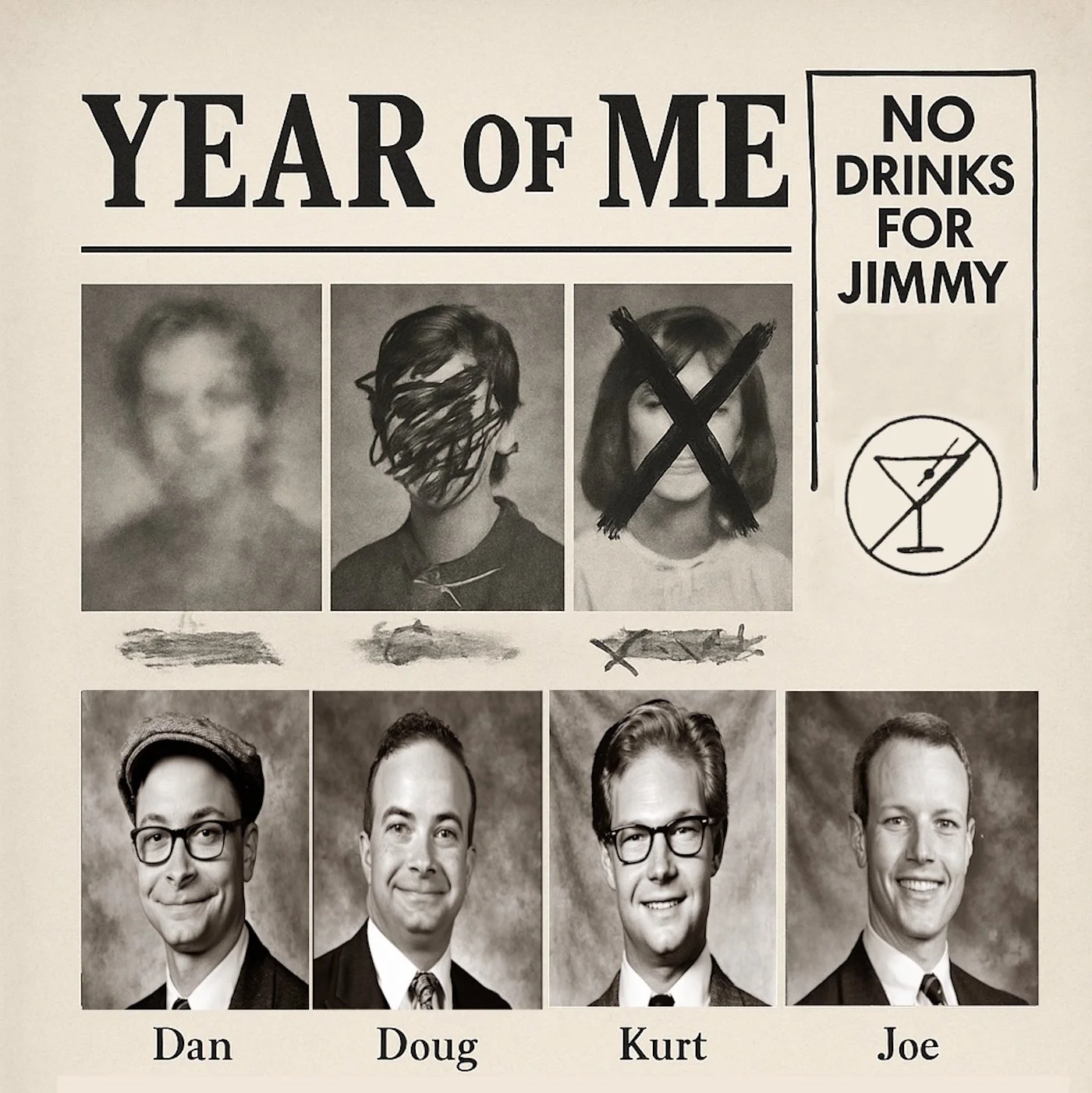
Is there a person or event that stimulated the creation of "Year of Me (The Brunswick Song)?"
Dan Wilson (bassist): Absolutely. The short version is that 2020 turned my world upside down. My marriage of 21 years ended, I sold a house, I lost people I loved, and I sent my only daughter off to college. All of that happened while the world itself was falling apart from the pandemic. For the first time in my adult life I found myself truly on my own. The people I used to lean on were gone, and the one person who was always my partner in crime, my daughter, was leaving to start her own life. That was a huge bright spot in the year, but it also forced me to ask myself, “Now what?” I could have just faded into the background, eating microwave meals on the couch every night, or I could decide to actually live. Thankfully I had friends around me who reminded me it is never too late to take ownership of your own story. That’s where Year of Me came from. It is a song about stepping back into your own timeline instead of waiting on somebody else’s.
How did you approach the arrangement and composition of the music for "Year of Me (The Brunswick Song)?"
I came into it with a pretty full sketch. When we met up in Phoenix in 2023, I laid out the outline of the track for the guys. My vision was a rebellious but celebratory radio-punk tune, because that was the only style that felt right for the message. The vocal line had to drive the melody, and the rhythm section needed to feel like a heartbeat that never lets up.
That said, No Drinks For Jimmy songs never stay as “one person’s song.” Once I presented the sketch, everyone started shaping it into something bigger. The guitar tones, the drum dynamics, the little rhythmic choices that lock the bass and drums together, and the way the gang vocals hit in the chorus, all of that came out of the band working together. We have this process where one person throws down a near-complete idea, but it doesn’t become a finished track until everyone else gets their fingerprints on it. Year of Me is a perfect example of that. We built it up remotely, trading stems and ideas until we had a version we all believed in. By the time we added the gang vocals, it had turned from my sketch into a full No Drinks For Jimmy song. That approach has worked well for us, and it is why we all share full credit on each of our songs, because it is always a full band effort. We also do our own mixing, mastering, and production. Joe, our guitarist takes on that task, but again, it is fully collaborative and he takes input and direction from each member.
What impact do you hope "Year of Me (The Brunswick Song)" will have on your audience?
More than anything I hope it feels like permission. If someone out there is stuck, grieving, or constantly putting themselves last, I hope this song gives them the push to take one bold step for themselves. That could mean leaving a bad situation, starting a new project, buying the ticket for a trip they keep putting off, or just finally speaking up. Even one action can shift your whole perspective. And if none of that happens, then at least people get three minutes of loud, driving energy that makes them feel good with the windows rolled down. Either way, it serves its purpose, but my real hope is that someone hears it and decides to change their own story.
What inspired you to pursue a career in music?
Music was always about connection for me. I studied classical music in college, which gave me a foundation, but I grew up on rock, metal, and punk, the kind of music that makes a room shake. Playing bass gave me a way to hold down that energy and anchor it. There is nothing like the loop that happens between a band and a crowd when it all clicks. It doesn’t matter if you are playing for 10 people, 50 people, or a thousand. That moment when the energy bounces back and forth is the reason I keep doing this. Music is what keeps me grounded and present, even when everything else feels like chaos.
What are some of the biggest challenges you have faced as a musician, and how did you overcome them?
The biggest challenge is balancing life with music. We are not 22 anymore. We live in different states, we all have jobs, families, and other commitments. The industry does not wait for you to figure it out, so you either quit or you get organized. We chose to get organized. We collaborate remotely, we set deadlines, and we say yes to opportunities that stretch us even if they are inconvenient.
The other challenge is mental. Every musician battles the voice that says, “Who cares?” or “Why bother?” For us, the way through was to reframe it. Play for the one person who needs it that night. Focus on making the music the best we can together, and trust that if we keep showing up, the work will stack into something real. That mindset is what carried us through to this song.