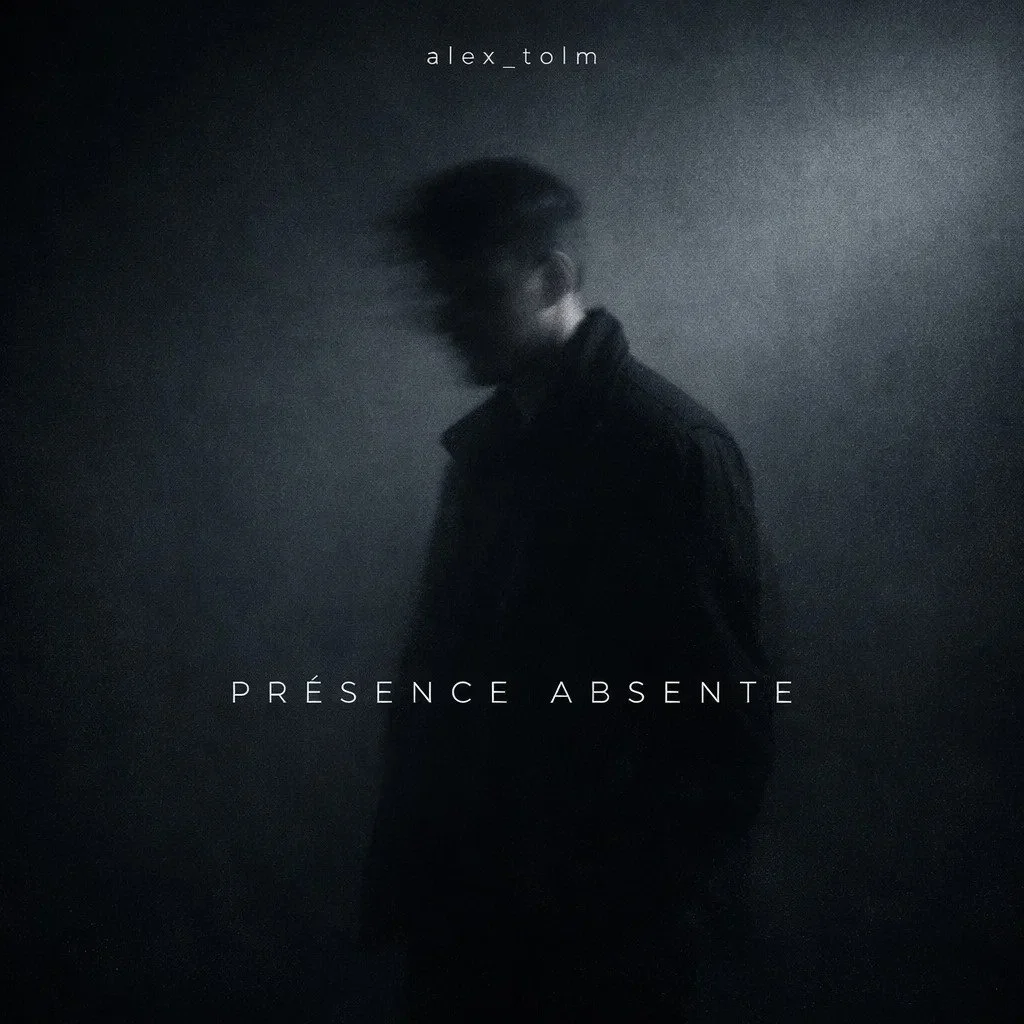
Alex Tolm On ‘Présence Absente’: "nostalgic" and "relaxing"
Punk Head: You describe this project as being fueled by years of life experience. I’m curious how that actually shapes your songwriting in practice. Are you revisiting specific memories and translating them directly, or are these more like emotional composites that have evolved over time?
Alex Tolm: I would say they are emotional composites. After several decades, memories lose their sharp edges and become a "vibe" or a recurring feeling. When I write, I’m not usually reporting on a single day; I’m trying to capture the residue that those years left on my soul. My life as a civil servant in Belgium provides a grounded, perhaps "ordinary" reality, but my music is where those years of stored-up observations finally get to breathe and turn into something abstract and artistic.
Punk Head: The title PRÉSENCE ABSENTE feels like a contradiction you can sit inside. When did that idea first click for you as the spine of the album?
Alex Tolm: It clicked when I realized that the most important things in life are often the ones that aren't physically there anymore - memories, lost connections, or even the versions of ourselves we used to be. They are "absent," yet their "presence" is felt every day. The title reflects that haunting feeling of something being gone but still taking up space in the room. It’s the "spine" because every song on the record deals with that tension between what was and what is.
Punk Head: “Pardon, j’parle tout seul” suggests a kind of self-dialogue. Do you write as if someone else is listening, or is it genuinely a private conversation that we’re overhearing?
Alex Tolm: It is genuinely a private conversation. Writing is my way of making sense of the world to myself. The phrase "Pardon, j’parle tout seul" (Sorry, I'm talking to myself) is almost an apology to the listener for letting them in on such a personal internal monologue. I think there is a specific kind of honesty you only find when you think no one is listening, and that’s the frequency I try to hit.
Punk Head: There’s a strong late-night energy across the record. Are these songs written in those hours, or is that atmosphere something you build afterward in production?
Alex Tolm: A bit of both. The initial spark often happens late at night when the world goes quiet and the filters come down. However, the atmosphere is definitely something I consciously sculpted in production to mirror that late-night solitude. I wanted the listener to feel like they are driving alone on a highway at 2 AM - that specific mix of melancholy and freedom that only exists in the dark.
Punk Head: You’re working in French, which carries a long poetic and musical tradition. Do you feel in conversation with that history, or are you trying to distance yourself from it?
Alex Tolm: I feel deeply connected to it, but I’m not trying to mimic the past. The French language has a rhythmic fluidity that allows for a lot of nuance and "hidden" meanings, and I respect the tradition of the great French chansonniers who prioritized the story and the emotion of the lyric.
I am particularly inspired by the "Bruxelles vibe" - that specific Belgian way of using the French language that spans from the legendary Jacques Brel to modern icons like Stromae. Stromae, in particular, influenced me in how he balances heavy, meaningful themes with a sound that still moves people. My first two albums, Nuit Tropicale and Blue Motion Dreams, were a mix of English and French, which I believe is also very typical for the bilingual spirit of Brussels. I love exploring these different linguistic textures; in fact, I plan for my next album to be entirely in English. It’s all about taking these influences and making them live in the present, showing that you can be both melancholic and danceable at the same time.