Artist Spotlight: Meet Mitch Dubin
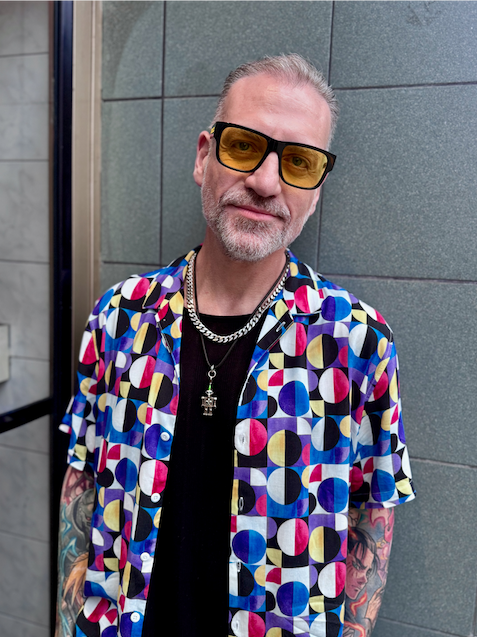
Can you tell us about the inspiration behind "Whole Damn Heart" and the story it tells?
I wrote “Whole Damn Heart” about three months ago, and as of today, I’m 18 months sober. It’s the most personal song I’ve ever written. It reflects on my journey through addiction, the toll it took, and the people who held me together when I was falling apart — my wife, my two sons, and the family I’ve built. Every line in this song is based on something real.
There’s a moment in the track where I say, “No real plan… no roadmap charted / But I gave them my soul whole torn and wholehearted” — that’s me looking back with gratitude, humility, and love.
I was heavily inspired by the 10-minute version of Taylor Swift’s “All Too Well.” What I loved about it was that there were no repeating choruses — the only repeated line was the title. It flowed like a confessional. I wanted that same emotional arc in “Whole Damn Heart.” It’s one of the few songs I’ve heard that made me feel like someone was handing me their journal. I tried to do the same.
Were there any memorable or standout moments during the recording sessions for this song?
Absolutely. While the song doesn’t mention him directly, my sponsor — who’s been sober for 27 years and is also a professional musician — was a huge influence throughout the entire process. He gave thoughtful feedback on every track on my album, not just this one, and helped me refine the lyrics and vocal phrasing so they’d really hit.
What’s wild is that he’s 72 and I’m 51. The odds of us ever meeting in regular life were slim to none. But we met through AA, and his mentorship has been life-changing. His presence in my life is one of the things that makes me believe there’s something bigger out there — a higher power, or at least something guiding us. He’s played a massive role in helping me stay sober and stay grounded through this creative process. He’s even joked (more than once) that the song is “a minute too long” with a smirk — because in his world, you keep it close to the three-minute mark. It always makes me smile. He’s not wrong, but hey… I’m a nobody, so I figured I’d take the extra time.
I didn’t record this in a traditional studio — I built my own setup at home using my laptop, a dynamic microphone for some parts, a condenser mic for others, and MIDI keyboards. I already had instruments and gear for mixing, so I just leaned into what I had and made it work. No fancy studio — just heart, time, and intention.
I don’t have any formal music theory training. I’ve just been immersed in music my whole life and always had a natural feel for it. One of my inspirations has always been Michael Jackson. I was amazed — and honestly, jealous — of the way he could build entire songs by beatboxing and making mouth sounds into a tape recorder, and then having his band build real music from it. I always wanted to do that. And now, thanks to modern technology, I can. That’s how a lot of this album came together — me recording little ditties or rhythms into a mic like the one I’m talking into now, and turning them into real songs. I’m not comparing myself to MJ — I’m just starting out and nowhere near that level — but it’s cool that I finally got to try that process myself.
What impact do you hope "Whole Damn Heart" will have on your audience?
I hope it helps people feel seen — especially those who’ve struggled silently. Addiction carries so much stigma. I’ve learned that even people very close to you might carry secrets about their recovery because they’re afraid of judgment. That breaks my heart. When I got sober, I found out that two people I’m close to had been sober for years — and had never shared it. That moment hit hard. It made me realize how much fear and shame are still attached to this disease.
That experience shaped my approach to sobriety. I’m proud of my journey, and I’ve found that the more honest I am about it, the easier it is to stay sober. I believe most of us have demons — and what matters is how we love each other through them. I want this track to offer hope, compassion, and a reminder that healing is possible.
Can you tell us a bit about yourself and how you got started in music?
I went to my first concert when I was two — April Wine. My parents had backstage passes, and apparently, I sat on Jerry Mercer’s lap and banged on his head like a drum. My grandfather owned a music store in Montreal, and I was the only grandkid who really dove in. I started drum lessons at 11 and kept at it until my late teens.
My parents were huge music lovers. They took me to concerts all the time — Bee Gees, Prince, Michael Jackson, Billy Joel, Elton John. By the time I was 20, I’d seen hundreds of shows. I got into metal, glam rock, and Rush in the '80s and '90s. Neil Peart made me want to learn drums.
One of my earliest emotional memories — even though I was only a little over three — is how sad my mom was when Elvis died. I didn’t fully understand it, but I remember her expression and how affected she was. That stuck with me. And I’ll never forget how somber our house felt when John Lennon was assassinated in December 1980. I was six, and it was like the music had stopped.
The Beatles have been my favorite band since before I can remember. I passed that love on to my sons. I started them on guitar when they were 6 and 7. My oldest, Noah, is an exceptional guitarist — the best I’ve ever seen up close. I taught him drums about 10 years ago, just some basics, and he’s taken it way beyond that. A lot of this story is in my song “Jack of Hearts,” which is about my grandfather’s music store being my sanctuary. Even our dog Hendrix — named after Jimi — is part of this family rhythm.
This album might be my first official release, but it’s not the first music I ever made. Back in 1989, on a school trip to Israel, my best friend CJ and I wrote a funny rap called “Got Kicked Out of the Holy Land” after getting into trouble as teenagers. It somehow became a hit among our classmates — people were still asking me about it at our 20-year reunion. We had a makeshift rap duo called RWMF and recorded songs on cassette tapes with a tape recorder. Later, in my early twenties, I wrote and jammed with other friends, but that all faded away as life took over.
Then, during COVID — before things got really bad with my addiction — I wrote a song called “Sad Inside.” It was about isolation and being stuck. I shelved it, but when I got sober, I dusted it off and finished it. That track sparked the rest of the album.
I also taught myself guitar over the years. When my kids were taking lessons, their teacher — Jamie, who became like family — would spend an extra 10–15 minutes with me after each session, showing me tips. I watched tons of YouTube videos and practiced a lot. I actually got pretty good for a while, but once Noah passed me at 8 or 9 years old, I kind of stepped back. I felt like, “He’s got this.” But now that I’m sober and have a fresh perspective, I feel that urge to pick it back up again.
So yeah, this may be the first time I’m sharing music publicly — but it’s been brewing for over 30 years.
How do you continuously grow and evolve as an artist?
This is my first album — the first music I’ve ever written. So when it comes to growth, I’m still at the very beginning. But I can say that sobriety changed everything. It made me want to create, to express myself, and to do something meaningful with the time and clarity I’d fought for. Since getting sober, I spend almost all of my free time writing music, creating, or even drawing and coloring.
I’ve spent 30 years in IT, so I’m a very technical person — which helped when I started putting together my home recording setup. But even before all that, I was obsessed with sound. At 16, before I had a basement or a house, every penny I had went into building the best stereo I could. I hung out at JD Car Stereo in Montreal with the owner, just soaking everything in, helping customers, and eventually working on car audio installs with his team on the weekends.
That obsession stuck. Today, my two-channel audio setup is something I’ve refined over decades. When I’m in my basement listening room, I’m spinning vinyl 90% of the time. I crave warmth, depth, and imperfection — and I chase that same feeling in the music I create.
But at the end of the day, I grow by being real. I lean into feedback, keep learning, and always try to write from the most honest place I can.