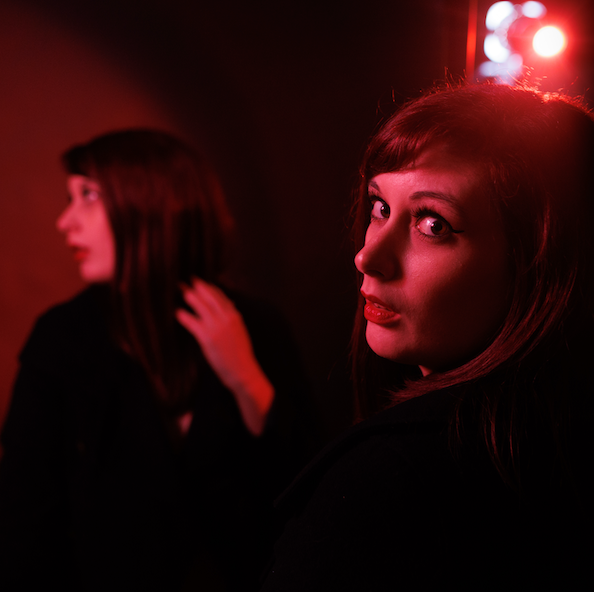
Brenna Menz Needed More Than One Version of the Truth
Punk Head: Your album lets the same relationship look different from song to song. Was there a moment when you realized you weren't telling one story anymore, but documenting how your perspective kept changing?
Brenna Menz: Yes, after about the 6th or 7th song I wrote I started noticing the shift in how the songs felt compared to the first one. As I continued writing, all of the songs seemed to cover different stories and different perspectives that I had held during particular times in the relationship. But it really took some time for me to realize that’s what I was doing.
Punk Head: “I Hope You Miss Me” sounds like you giving yourself permission to be petty. Did writing that song feel cathartic, embarrassing, liberating, or some combination of all three?
Brenna Menz: Amazing that you say that, because that is exactly what that song was for and is about! It was really a freeing feeling allowing myself to get that raw and honest about what I actually wanted to say, and I think this song is a common thing many people might think after a break up. It was an extremely cathartic process being able to write and record that song, and I think that’s why it has ended up being my favorite from this album.
Punk Head: Then you have “Break This Habit,” which turns the lens back onto yourself. Did writing that song change the way you understood the relationship?
Brenna Menz: Yes and no. It didn’t really help me understand the relationship as much as it helped me understand myself better, and the habits that I had formed in certain relationships that definitely weren’t helping things work out well. Writing this song was really a way for me to be honest with myself and take accountability for the role that I had possibly played early on in the relationship leading to it breaking apart.
Punk Head: “Cliff” closes the album with the idea that you never know until you try. After making the record, what are you more willing to try than you were before?
Brenna Menz: Throughout the process of making this album and definitely afterwards as well, I have been much more willing to try and get my music (and myself) out in front of people as much as possible. I’d love to perform and even tour one day even though the thought terrifies me. It’s something I’ve always wanted to go out and do, and I hope to do so soon!
Punk Head: The album moves from electronica to folk to reggae while staying rooted in pop. Did you think of that genre-hopping as a reflection of the emotional story, or did the songs simply demand different worlds?
Brenna Menz: I think it became more prevalent after the songs were written, that the genre-hopping was a great way to show how different the stories and perspectives of each song were compared to each other. When I was writing them though, those specific genres were just what came out in that time frame when I was writing each song, they were based on how I was feeling and what songs I was listening to at the time so I think it was a little bit of both. It was an unintentional reflection of the emotional story that the songs just demanded different sounds.
Punk Head: You found both of your producers through social media. What made you hear something in their work and think, “I need this person to understand what's in my head”?
Brenna Menz: My main producer Amit really understood what I was trying to accomplish when we first talked about working together and when he first put At the End together, based on the rough vocal melody idea I had and my references, I knew he was really able to understand what was in my head and make it a reality. As for my other producer, Patrick, I was a huge fan of his music and loved the signature sound he had throughout his first album, so I was thrilled at the chance of working with him and combining his sound that I loved with my own.