Caratacus Built a Sci-Fi Prog Album Around the Curiosity of a Cat
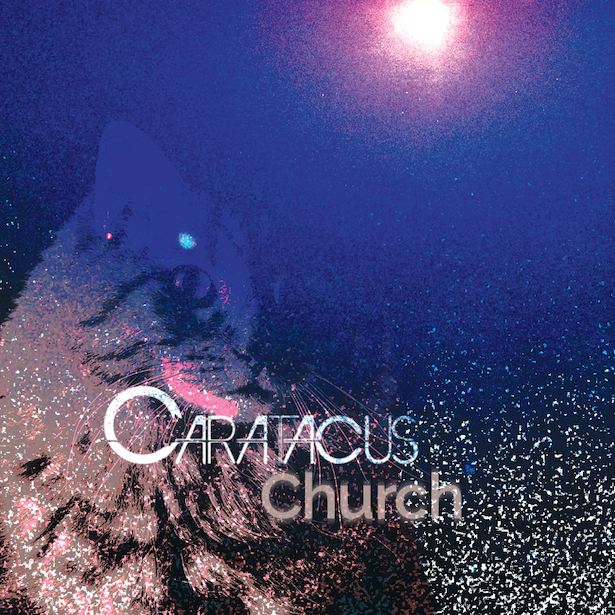
Punk Head: Church is a cat on a spaceship—how does his personality shape the moods and textures of the album?
Caratacus: Church, the real life cat in my apartment right now, has a pretty big personality. His mood can shift from curious sniffs to needy meows to irritated swipes. I feel like that big personality makes him this weirdly perfect protagonist. He feels like the kind of cat who would get pulled into an adventure just from being himself. But to answer your question more directly, it wasn't intentional at first. He just happened to be around a lot while I was writing this album about space. He'd make me take breaks to pet him. He'd yell at me. He was just his authentically chaotic self. And one night, when I got the picture of him that I ended up using the cover, I realized that he was influencing a lot of what I was writing. I started picturing him chasing alien pests that had made their way on board or even curiously watching 2 programs having an argument. He's so curious and that's how I wanted the title track to feel. Curious and chaotic.
Punk Head: If you could pick one track that best embodies Church’s curiosity, which would it be, and why?
Caratacus: It would be track 2 - "Church." I wrote it to almost feel like a chase, but like a fun chase. An investigative "What are you?" kind of chase.
Punk Head: You describe the album as “digital prog-rock”—can you break down what that means to you in terms of sound design?
Caratacus: I was actually paraphrasing my father-in-law! He's had an interest in my weird little music projects since I was a teenager. One day he told me he's pretty sure he's got me figured out. I'm making prog rock, but digital. I took it as a massive compliment. I spent most of my teens and young adulthood being obsessed with bands including, but not limited to King Crimson, Pink Floyd, Coheed and Cambria, and The Mars Volta above all. Bands that can masterfully craft a mood within a moment. My approach to that is to have a scene in my head and try to match it either through simulating certain sounds or through going for a really specific emotion or combination of emotions. In "Retina Scan" the track opens with this sort of powering up sound and later incorporates sound that could be interpreted as scanning. Then it leads directly into "DANGER!" which has synths making these sort of alarms blaring throughout the song. It's fully incorporated into the composition and makes sense within the composition, but it still distinctly sounds like alarms going off.
Punk Head: Do you think your music would feel different if someone else had scored Church’s adventures? Or is it inseparable from your perspective?
Caratacus: I think it would feel very different. I say that because the bones of this album started as a love letter to my adolescent years. A lot of those nostalgic elements carried over even after I started to focus more on Church. It is ultimately about him, but so much of it is me too. I was curious kid. I was shy, but I was always very curious too. I liked to people watch. But I think the concept works better from the perspective of a cat, because he's such a neutral observer.
Punk Head: Nighttime in your bedroom seems central to the creation—how does insomnia fuel your sonic imagination?
Caratacus: The working title of the album was "The Danger Room," and it was originally going to be about the late night hang outs from my adolescence in my bedroom which we called the Danger Room because it had this novelty rotating red emergency light. My best friend and I would stay up late with only the danger light, the tv, and my Gamecube on and we'd have all kinds of super focused discussions. Even now, I generally having an easier time focusing and writing at night. I have adhd and sometimes I need the dark and the quiet so that I have the room in my head to think and create. I'm also just... bad at sleeping sometimes.