For Lilia Asha, the Darkest Feelings Don’t Need Names
Punk Head: You’ve said you write to express things you can’t express in conversation. What can a song say that a conversation can’t?
Lilia Asha: There are different levels of sadness, and I think there’s a certain point you can reach in a conversation, but beyond that there’s a kind of hollowness that I find really hard to explain. And it isn’t only sadness. There are very few conversations where I feel I can truly describe mental health in the way I can paint it in a song. In a song, you can say something without having to name it. My Grade 8 year was intense and difficult on many levels, and during some of the darkest moments, songwriting gave me somewhere to put feelings I didn’t know how to talk about.
Punk Head: Why did My Morbid Reverie need to be written in one sitting?
Lilia Asha: It wasn’t something I planned — it just happened that way. That actually happens quite a lot with my songwriting and my art. Once I start something, I don’t decide that I’m going to sit there until it’s finished; I just get so driven by it that it’s really difficult to pull me out of that state of mind. With My Morbid Reverie, I sat down at the piano and everything that had been going around in my head just came out. I didn’t stop to analyse it or try to make it into something. I think that’s part of why the song feels so personal to me.
Punk Head: There’s a moment where everything gives way to birdsong. Why birds?
Lilia Asha: For me, birds are a symbol of peace. One of the final lyrics say “I lay, I suppose,” and by that point in the song there’s almost a feeling of slowly becoming numb and finding peace within the insanity. I liked the idea that after everything happening in the song, suddenly there are just birds. It feels peaceful, but I don’t think it’s necessarily a completely happy kind of peace. There’s still something strange about it. I like that the ending leaves you in that space for a moment rather than explaining exactly what you’re supposed to feel.
Punk Head: What did Starcle Music understand about the song that helped you take it somewhere you couldn't have taken it alone?
Lilia Asha: Vitalii Kuzokov is my mentor at Starcle, and when I have a new song — usually the lyrics, chords and melody — I take it to him and we start exploring what it could become. He’s an amazing pianist, and with My Morbid Reverie he suggested bringing elements of jazz into the sound. I loved that because it wasn’t something I necessarily would have thought of on my own, but it really fitted the strange, unsettled world of the song. We have long conversations about production and what the music should make you feel. I still want the original song to remain at the centre of everything, but working together allows it to become something much bigger than the version I first played at the piano. We’re also releasing a stripped-back piano version at the end of September, which brings it back to where it began.
Punk Head: You’re building a world around the music through artwork, photography and performance. Which part of that world feels most naturally “you”?
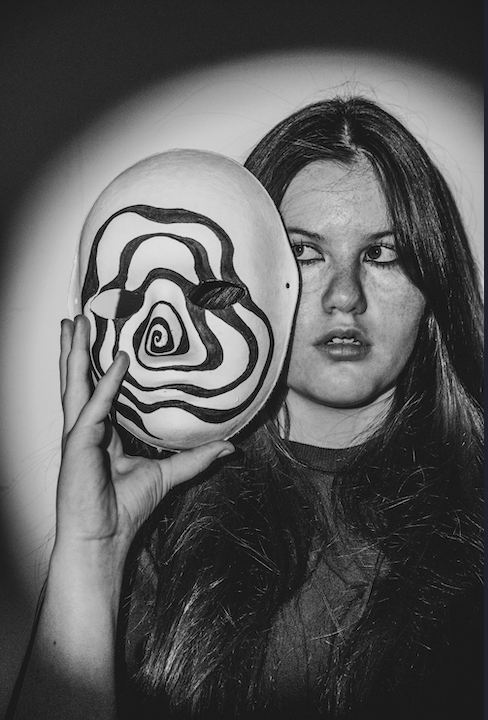
Lilia Asha: I don’t think I can really separate them. Art is probably the place where I express myself most freely — I’ve always loved sketching and painting, and for My Morbid Reverie I even painted the masks we used in the photoshoot. But performing is also a huge part of who I am. I’ve been performing since I was little and joined my first rock band through Starcle when I was eight. I love being onstage, whether I’m playing with a band or performing my own songs, because I love that connection with an audience. I also really enjoy being part of the conversations around the concepts, artwork and photoshoots for my releases. The best part is when the music, art and performance stop feeling like separate things and all become part of the same world.