From ILM To Inner Soundscapes: 748Bees On Crafting Truth Of Lies
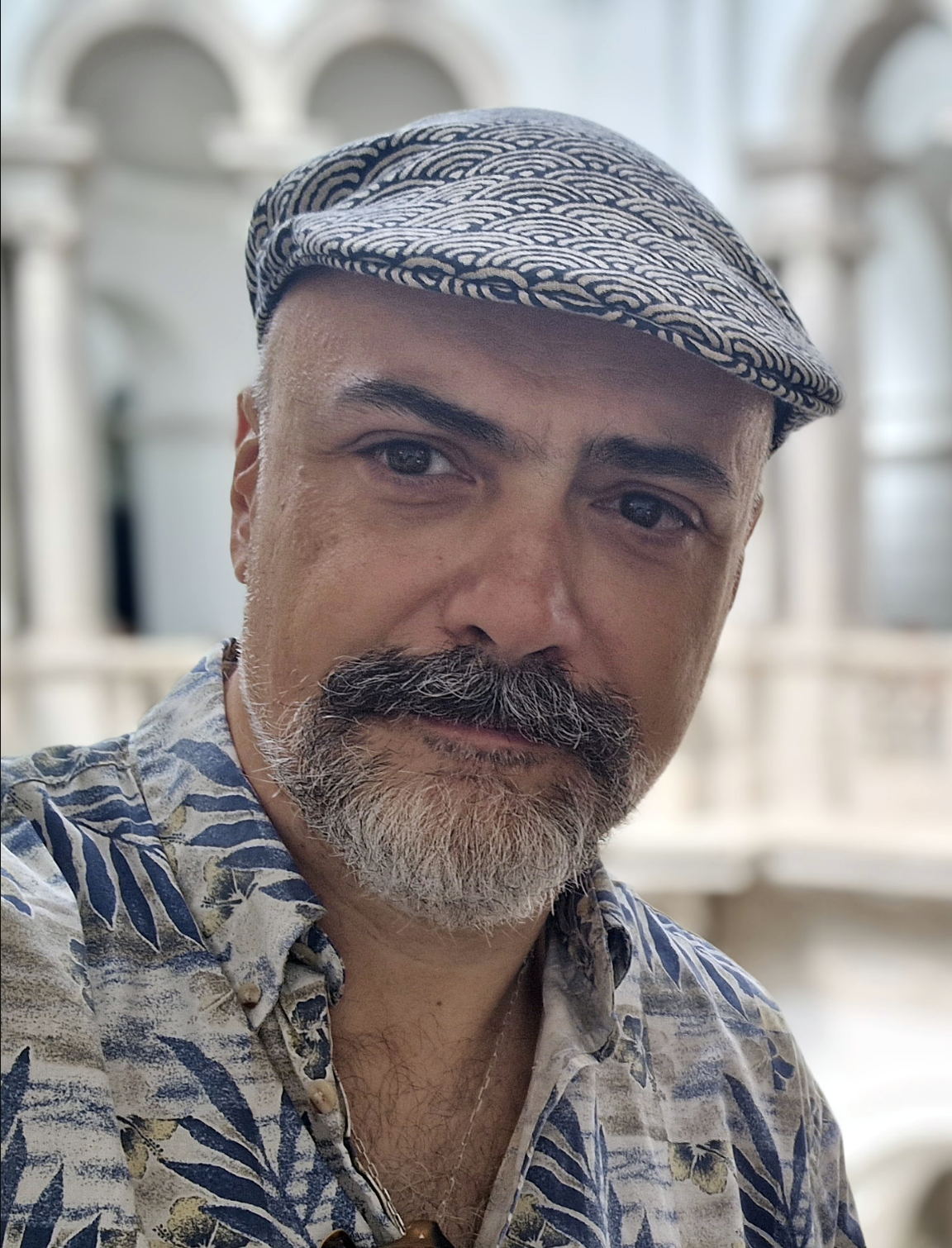
Punk Head: Coming from ILM and DNEG, you’ve helped build visual worlds. When you sit down to compose, do you see images first or feel sound first?
Fabio Bonvicini/748Bees: Actually, I was a musician long before I entered the world of VFX. In my early years, I was the typical 'starving artist' with plenty of ideas but no budget. I realized early on that building a professional studio required resources I didn’t have, so I pivoted into Computer Graphics. I essentially used my career at ILM and DNEG to fund my true passion, building my studio piece by piece over the years.
When it comes to the creative process, for me, music and images are inseparable. I don’t necessarily 'see' a specific picture first, but I believe music is image. If you close your eyes while listening, a visual world naturally forms. I usually start at the piano or guitar, and there is always a moment where a specific chord progression or acoustic texture triggers a feeling—which is, in itself, a visual atmosphere.
I can give you two examples from the album Truth of Lies:
'Crossroads' is the only purely instrumental track on the Album. It was the most difficult to write because it deals with a personal breakup. Without a single lyric to guide the listener, the title and the music have to do the heavy lifting. The 'image' is there naturally, but I prefer for the listener to find their own visual story within the notes rather than me dictating it.
On the other hand, in a track like 'Just Give Me What I Want,' I used lyrics to construct a specific 'Noir' movie scene. I always write the music first and treat the vocals like an instrument. After the arrangement was laid out, I added the vocal layers: a woman singing in English about a failing relationship, and a man speaking sweetly in Spanish. During the bridge, the 'dark side' is revealed—he is a con man only interested in her money. The mellow, jazzy mood blended with that story of manipulation created a cinematic 'Noir' image that only appeared once the sound was already alive.
Punk Head: What’s the difference between scoring for picture and creating something like Truth of Lies, where there is no screen but the listener’s imagination?
Fabio Bonvicini/748Bees: They are two totally different experiences. When you score for a film, you are an artist in service of the picture. You have to climb inside the director’s head, understand their needs, and translate their emotional intent into sound. While there are many 'correct' ways to score a scene, the director ultimately decides which one stays.
I remember working on the score for the film Emper by Joey Brown. The brief was very specific: a fusion of Chinese and Western orchestras with a myriad of unique instruments. I actually wrote one specific piece for a sequence that I personally loved, but the director felt it didn't fit his vision for the screen. That music ended up on the soundtrack album but was cut from the film itself. For some, that 'controlled freedom' can be frustrating, but I enjoy the teamwork and being part of a larger machine.
However, when I create my own work like Truth of Lies, I am the only one in charge—and the only one to blame. I am 'naked under the sun,' so to speak. Without a video to follow, I have total control over the timing, which allows me to explore textures and soundscapes that wouldn't fit a film sequence constraint. On Truth Of Lies, I didn't have to follow a label or a specific commercial style. My only rule was: I must be my own first listener. If I can sit back and genuinely enjoy the music as if I hadn't written it, then I know it’s ready for the world.
There is also a significant technical shift. Most of the music I write for images is purely orchestra-based, often requiring a dedicated track for every single orchestra instrument in the arrangement to be mixed in Nuendo with a Dolby Atmos surround to create an immersive experience. In Truth of Lies, I am the composer and the director of the entire sonic journey.
Punk Head: Tracks like “ALL FOR YOU” and “PEACE” seem to sit on opposite ends of the emotional spectrum. Was sequencing the album about contrast or cohesion?
Fabio Bonvicini/748Bees: "The album is definitely a full spectrum of emotions, moving from melody to rap and everything in between. I see the sequencing as a sonic movement; for example, 'Peace,' 'I’ve Never Seen Anything Like You,' and 'Believe in Dreams' are the only tracks without guitars, which helped create a specific rhythm in the listening experience.
Truth Of Lies is a journey from the first track, 'When Love is Lost'—which starts with electric guitars and a feeling of deception and despair—to the final track, 'Believe in Dreams,' which ends on a note of positive thinking. Between those two points, I wanted to explore different states of mind.
I think of the tracks in terms of movement. If 'All for You'—with its minimal lyrics and four overdubbed electric guitars—is like a car riding through an Arizona desert, then 'Peace' is like a bird flying over a forest at sunset. One is dynamic and highway-driven, while the other is a mellow, soul-gospel chill-out, but both are constantly moving. I wanted to give the listener direction without making it predictable.
There is a cohesion in the contrast, and that comes largely from the lyrics and how they sit within the music. I love using subtext, a technique common in film. In 'I’ve Never Seen Anything Like You,' the lyrics tell one story—a girl falling for a man she just met—but the slightly eerie, dramatic music suggests something else. It creates a feeling of doubt, suggesting that this 'paradise' might actually be a curse. By using various male and female vocal samples, the EP becomes a dialogue between characters, each with their own story. In that sense, the contrast creates cohesion, much like a choral movie where different voices unite to tell a single narrative."
Punk Head: Is this record more about technology shaping us, or us shaping technology?
Fabio Bonvicini/748Bees: I believe it is always about us shaping the technology. Technology by itself is ordinary and soul-less; without the human hand to guide it, it’s just a digital toy. My journey started in the analog world and moved into the digital realm, which was a vital transition because it finally allowed me to write without constraints.
Whether it is software like Omnisphere or Kontakt, these tools only have life if you push them to go where they weren't designed to go. For Truth of Lies, I found that blending the 'live' element of my guitar—my first instrument—with advanced digital textures was where the real excitement happened.
A perfect example is the track 'Take Me.' It began as a purely acoustic, fingerpicking piece—almost a jazz-country style. I had no intention of adding vocals, but as a creative challenge, I began exploring my vocal libraries. I started building a melody that was completely different from what I had originally envisioned. In that moment, I was shaping the technology to find something unexpected. I wasn't just 'using' a sample; I was treating it like a malleable instrument to find a new emotional direction.
I use libraries like GGD Modern and Massive or Stylus because they are incredibly versatile, but I never let them dictate the genre. On 'When Love is Lost,' the drum processing could have easily turned it into a metal song if I had pushed the compression that way, but instead, I shaped it into something funky and upbeat, layered with guitars and keyboards. For me, technology is a double-edged sword: the freedom to express is infinite, but automation can be a 'killer' of soul. Music must remain a journey of manual creation, not a predictable result of an algorithm.
Punk Head: 748Bees feels like a coded name. Why that alias instead of releasing under Fabio Bonvicini?
Fabio Bonvicini/748Bees: You’re right—it is a coded name. The numbers represent the letters of my name (7=F, 4=A, 8=B), but the 'Bees' part of the alias is just as important. Bees are incredibly industrious, collaborative, and vital to the world's harmony. I felt this alias described my creative process and my spirit much more accurately than a name I didn’t choose for myself at birth.
While there is a connection to my legal name, I wanted to create a clear separation for this journey. In the professional world, I am known as a Film Composer or a VFX Supervisor, but those titles come with specific expectations and constraints. When I am 748Bees, I am simply the person I was when I first started writing music as a teenager musician, pure and simple.
I wanted to start with a 'blank page.' If you look at my history, you’ll see a life spent in major film studios and writing complex orchestral scores, but I don't want those accolades to define this project. I want the music to stand on its own. 748Bees is my way of stripping away the titles and the history to show a side of myself that is 100% authentic and unfiltered.
Punk Head: After two decades in film and VFX, does this project feel like freedom, reinvention, or continuation?
Fabio Bonvicini/748Bees: I’ve always had freedom, but like many artists, I often faced the constraints of budget or professional direction. To me, Truth of Lies feels more like a continuation than a reinvention. You can’t simply 'switch off' who you are; music has always been knocking at my door, even when I wasn't publishing it. Whether I was on a movie set or in a post-production suite, every time I sat at a piano, something new would surface.
Life changes you, and your musical spectrum evolves with your experiences. I remember the first time I heard a live Gamelan or a Sitar; my entire perspective on harmony and rhythm changed in a heartbeat. Music is a constant journey, especially when you are no longer bound by contracts, genres, or the fear of losing an audience.
A pivotal moment for me happened while I was studying in Vienna with Conrad Pope. I was in the middle of my VFX career at the time, but I was there to conduct a small orchestra playing my own compositions. I was surprised when the musicians told me how much they enjoyed the piece. Conrad turned to me and said: 'Remember, the best compliment you can ever receive is to hear that a musician playing your music is enjoying what you wrote.'
When we said our goodbyes, his parting words were: 'Don’t stop writing music.' It became obvious then that this part of me—the composer—was always visible to me, even if it wasn't visible to the world yet. With this album, I am finally sharing that internal world. And, like the industrious bees in my logo, I’m already looking toward the future. For the next album, I hope to move from vocal libraries to direct collaborations with singers to continue that journey of collective creation.