How Eye of TJ Turned Heartbreak Into “Cinematic Grit”
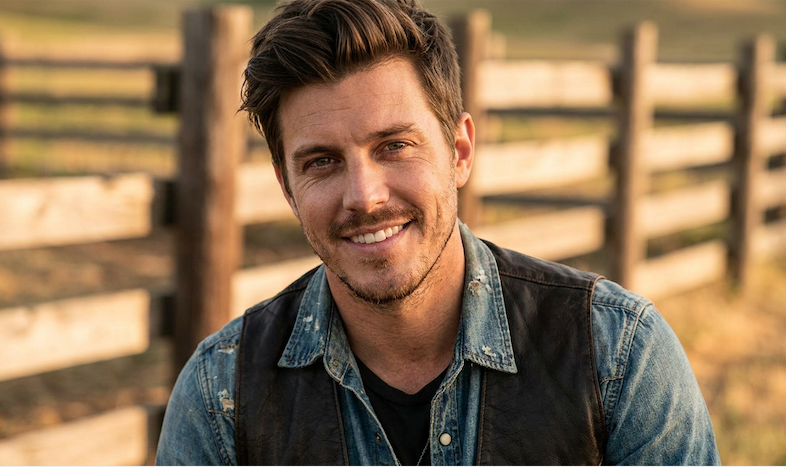
Punk Head: You’ve called this move “The Pivot.” What was the moment you knew it was time to lean into Cinematic Country-Rock?
Eye of TJ: I’ve always been a fan of the intersection where Rock and Country meet, but the timing of "The Pivot" was actually dictated by my audience. I stay very connected with my followers on TikTok and YouTube, and I noticed that the people in my "Archive" were posting and reacting to both sounds with equal passion. I knew I wanted my next project to offer something different—still capturing that trademark heartbreak, but with a different kind of weight than my debut album. It felt natural to use this 5-song EP, Knowing the Risk, as a strategic bridge. It allows me to explore this "Cinematic Country-Rock" landscape fully before we dive into the second full-length album next year.
Punk Head: If “Headlights in the Drive” had a setting in a movie, what would it look like?
Eye of TJ: The setting would be the "Blue Hour"—that transition between sunset and total darkness. Picture a lone truck parked on a gravel shoulder in rural Alabama. In the distance, you can see the neon glow of a bar or a house party you just left, but where you’re standing, it’s just fog and silence. The headlights are cutting through the mist, looking for a silhouette that isn't there. It’s that cinematic contrast between the noise of a Friday night and the sudden, sharp realization that you’re heading home to an empty driveway.
Punk Head: Cinematic Grit is a term associated with your work. How do you define it for yourself, and how does it influence the way you construct a song from lyrics to production?
Eye of TJ: To me, Cinematic Grit is the marriage of high-fidelity production and raw, human imperfection. I want the "Cinematic" side to feel like a wide-screen movie—huge drums, atmospheric layers, and soaring choruses. But the "Grit" is what keeps it grounded. It’s the dirt on the boots, the gravel in the vocal delivery, and lyrics that don't try to hide behind metaphors. When I’m constructing a song, I start with the "Grit" (the honest story) and then I build the "Cinema" (the production) around it to give that story the scale it deserves.
Punk Head: Mobile, Alabama seems to shape your storytelling heavily. How does your environment influence the textures, themes, or cinematic visuals in your music?
Eye of TJ: Growing up in the South, you're constantly surrounded by a mixture of Southern Rock tradition and Alternative energy. I am definitely not a city kid; my environment is built of empty highways, porch lights, and small-town dynamics. In a small town, stories carry more weight because you see and hear everything—the heartbreaks aren't anonymous. Those textures find their way into my music through "roomy" production and themes of longing and homecoming. The South has a specific kind of atmospheric loneliness, and that’s a primary color on my palette.
Punk Head: What’s the most surprising reaction you’ve gotten from fans about this genre shift?
Eye of TJ: The most surprising thing has been the level of immediate support. Usually, when an artist changes their sound, there’s a period of friction, but my fans seem to be evolving with me. I’ve dropped several teasers for "Headlights in the Drive," and the common thread in the comments is that people love seeing an artist take a creative risk. I think in a world of "safe" music, people are hungry for an evolution that feels earned and honest.