Micae On the Making Of ‘For The Record’
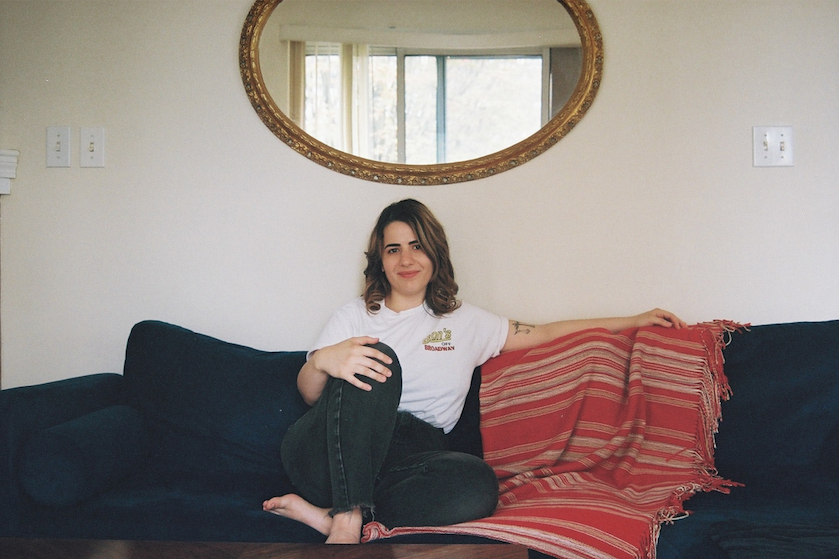
Photo Credit: Chiara Pirritano
What is the creative process like?
I’d describe my process as intuitive. It usually starts with me trying to make sense of something that's bigger than what words can really address on their own. But being intuitive means you have to surrender to yourself a little - sit in the discomfort, release the expectation of making anything "good", and trust that there’s something worth exploring in it. It’s like holding a mirror up to yourself and trying to tell an honest story. To feel safe enough to confront that in yourself, I think the environment matters a lot. So, I'll light a candle, use a nice pen, wear something soft. I let myself be flexible. Sometimes, I use writing prompts. Other times, it'll feel like the words and melody are pouring out of me. It's an iterative process, meaning that I’ll come back to an idea again and again, checking in with whether the core of what I wanted to say still sits right.
Were there any memorable or standout moments during the recording sessions for 'For The Record?'
Oh yeah, for sure. I recorded this EP in my own home, with my two long-time friends Matt DeSimone (Guitar) and Jadhé (Production). We had a lot of fun with it. There's something special about producing music in your own home with people who care about you. We decided to track vocals and guitar live, using one mic to capture the immediacy of the room. I approached the EP this way to challenge my perfectionism by deciding that whatever I could do with the resources I had was still worth making and sharing. This does not come naturally to me! Jadhé was really great at noticing when I was getting in my head. At one point he reminded me, “Just sing it like you’re in your bedroom alone.” That advice really shaped the way the EP came together. I actually kept the tail end of that conversation as the intro at the start of the first track—“Okay, girl in her bedroom crying about her boyfriend”—because it captured that moment of permission, of letting myself just exist in the songs.
Can you talk about any standout tracks on 'For The Record' and what makes them special to you?
I wrote "turtleneck" the summer that I left my first relationship and was rebuilding my life. I often felt like I was in a dreamlike state at that time, oscillating between terror and excitement about all of the ways my life could unfold. I had this chance encounter with an older woman who shared her own story of leaving an abusive relationship decades earlier. I found a lot of solace in her words and in how she carried herself, and I think it allowed me to step into my own confidence a bit more. "do you wanna piece of me?" follows that track. This song came from a place of anger, which is something I’ve historically found hard to let myself feel. A lot of the grief I’ve experienced in recent years has been tied to being let down by men I trusted, not always because they’re “bad people” but because they weren’t given the tools to relate, communicate, or feel their own emotions. Writing that song was a way for me to zoom out and get in touch not only with my personal experience, but with a collective grief about the divide between men and women, and the systems that enable it.
Can you tell us a bit about yourself and how you got started in music?
I feel lucky to have been born into a household where my dad loved to sing and valued music, and I’m really grateful for that. My parents put me in voice & piano lessons when I was young but didn’t push me to practice (which I later learned was pretty uncommon). They let me be a kid and trusted that I was learning and gaining something from it. I think because of that, I was able to build a relationship with music that let me understand myself and the world around me better. I started writing songs when I was around 9, and I remember often collaborating with my friends on songs as I grew up. I think those experiences shaped the trajectory of my career. I work as a music therapist - I get to help kids use music to express themselves and feel a sense of control in a world that doesn't often offer that. I love the work that I do, but it took a long time for me to reconnect with my own music. I only really started writing again a couple of years ago, and I'm excited to finally have the time and space to invest in my own music a bit more.
What do you enjoy most about performing live and connecting with your audience?
Maybe it’s self-serving, but I feel deeply seen when I play live. Growing up, it wasn't always easy for me to experience that in conventional ways. I'd built up a habit of "performing" in my social world to the point where I often felt hollow and disconnected from myself. When I share my music and I can tell the audience is listening, I feel full. I'm able to embody my experiences and communicate them in a way that's accessible. Being on stage not only allows me to stand in my personhood better, but it allows me to be witnessed and accepted in it. In that space, I feel less alone, and I hope the audience does too.