QuantumCaza On the Making Of “Theatre Girl”
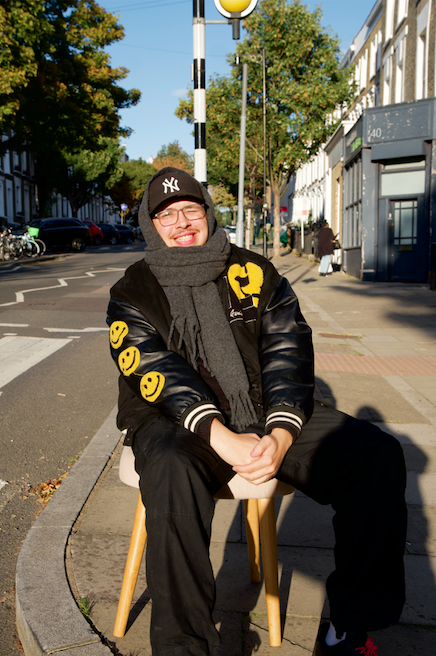
Punk Head: Let’s start with the title. Who is the ‘Theatre Girl’? A real muse, a metaphor, or both?
QuantumCaza: The way I write music is a bit backwards compared to most people. I tend to visualise the whole world of a song before I even touch the lyrics. I’ll sit with a reference playlist on repeat, track after track, until a name or a feeling hits me. Once that happens, I get the cover art made really early. It helps anchor the emotion and gives me something to build the story around.
Theatre Girl is both a real muse and a metaphor. There is someone close to me who absolutely loved theatre. She lived it and breathed it, and it became such a big part of who she was. On a personal level, this song is for her.
But the title also works on a wider level. Theatre can be a symbol for how love sometimes feels like a performance or a fairy tale. Something magical, dramatic, and a bit larger than life, like a Disney story. So while it is rooted in someone real, it also represents the idea of love being an act we step into, hoping it becomes the story we imagine.
Punk Head: You’ve mentioned MGK and Myles Smith as influences. Where do you see your sound landing between emotional pop punk and raw, acoustic storytelling?
QuantumCaza: I’ve worked with MGK and I’m good friends with Myles, and I look up to both of them. I have a huge amount of respect and appreciation for their musical talent. With this track I wanted to experiment and step into a genre I’ve never touched before. That pop punk energy MGK brings to the table really inspired me, and I think we managed to capture that feeling with Theatre Girl.
At the same time, I’m a sucker for storytelling. I feel like music needs that emotional connection in the lyrics, otherwise it doesn’t land. Myles is incredible at that raw, stripped back honesty, and I’ve always admired it.
Both of these artists are lover boys at heart, just like me, but they express it in their own unique way. With this track, I wanted to bring my own version of that to the table and tell my story of love in a way that blends emotion, energy, and vulnerability.
Punk Head: Love and anxiety is a chaotic duo. When you write about vulnerability, is it relief or risk?
QuantumCaza: It really can be a chaotic duo because they feed into each other. There is the love and the heartache that come from caring deeply for someone, but then there are the late nights where anxiety creeps in. You start battling with the fear of never seeing them again, the uncertainty, the unanswered questions. That tension between love and the unknown can feel overwhelming.
Writing about vulnerability is both relief and risk for me. It gives me space to be open and honest, especially when something heavy is sitting on my chest. Putting it into a song helps me process it. But there is always a risk in being that exposed. When you show the world the softest parts of yourself, you give people the chance to misunderstand you or take advantage of that weakness.
Still, I think the beauty of music is found in those moments. Vulnerability is scary, but it is also the most human thing you can give your audience.
Punk Head: The music video takes place in a real theatre. Why was that visual space essential for telling this story?
QuantumCaza: With a title like Theatre Girl, filming in a real theatre felt essential. I wanted the visuals to mirror the emotion of the song. In the video it looks like I’m performing just for her, but the room is actually empty. That emptiness says everything. It reflects the reality that she is no longer there, even though the love and the memory of her still fill the space.
She loved theatre more than anything, and because this song was made for her, I wanted every detail in the video to honour that. Being on that stage felt symbolic, almost like a modern echo of Romeo performing for Juliet. It is the ultimate expression of love played out in an empty room, where the performance becomes a tribute and the silence becomes part of the story.
Punk Head: Releasing a song this personal can feel like ripping open stitches. What pushed you to share it anyway?
QuantumCaza: I wouldn’t say it felt like ripping open stitches. It was more like allowing old wounds to finally heal by remembering the love, the moments and the emotions that shaped this story. I’m a big believer that love always finds a way to prevail in the end. You just have to let it grow, and no matter which direction it grows in, things eventually work out the way they’re meant to.
Sharing this song felt important because I want people to love with their whole heart, even when it hurts. I want people to know they’re not alone when they’re battling anxiety or dealing with uncertainty in their relationships. And more than anything, I love making music. I love expressing myself. That’s why I released it. If my vulnerability can help someone else feel understood, then it was worth sharing.