Rusty Reid’s Lone Stardust Is a Love Letter to Texas Songwriters
Punk Head: What made you realize this wasn't just going to be a covers album, but a collection with a unifying idea?
Rusty Reid: Well this project started off with a unifying idea. What happened was my Houston/Los Angeles buddy Steven Beasley (who also gets a song on this album) came up to visit to learn how to use a computer recording program (Apple Logic). We did a couple of test projects featuring two songs separately written by a couple of friends we knew back in Houston. We were pleased with the result. After Steve went home, I was mulling it over, and thinking... with two already in the can... "Wouldn't it be fun to do a whole album of songs by Texas songwriters?" So that's how it started. Those two test songs ended up the first cuts on the album, "Roll On Santa Fe" by Bill Browder and "All Through My Days" by Vince Bell and Connie Mims.
Punk Head: Which song fought you the hardest in the studio?
Rusty Reid: I'd say, "The Change" by Jon Dee Graham. It's a simple song, stripped down instrumentally, so you'd think that would be the easiest song. But it's a very somber, introspective, reflective look back at an entire life, so you've got to get it right. I had a guitar backing, and realized I needed more. I had a smooth vocal, and realized that was all wrong. I had a short lead break and new that something was missing. Thankfully, I kept working at it, and I think the pieces fell together pretty well. I added a second acoustic guitar, roughened up my vocal, and added a bit of lap steel to the break. It took a while, but I got there.
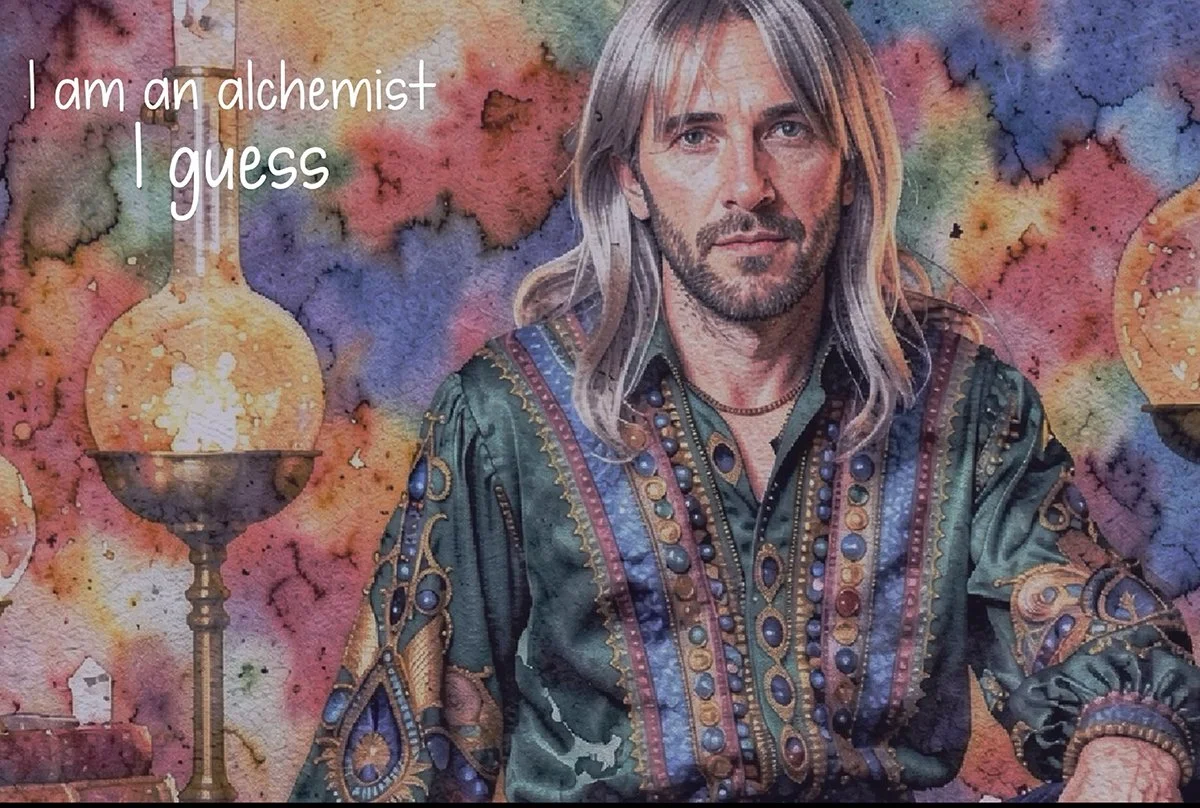
Punk Head: ”Alchemist" is one of the newest songs on the record, yet you describe it with the same admiration you might reserve for a classic. What convinced you it already belongs in that conversation?
Rusty Reid: Yeah, I think I was fortunate that Steve and I did those first two songs by two different songwriters that most people don't know about. That set an important template: this would not be jam packed with the usual suspects of "best Texas songwriters" nor an all-hits album. So this left me free to select the collection by quality of song, not quality of reputation. There are some well-known songs on the album, but even more that probably the listener has never heard before. In my search, I stumbled upon the contemporary Texas band, Blue Water Highway. Zack Kibodeaux is their lead writer and singer, and I just immediately fell in love with his song, "Alchemist." in my mind, it's close to a perfect song. It's got a great theme, great melody, great lyrics that carry some gravitas, and lends itself to creative soundscaping. It also may be the only song in the world to every include the word, "eucatastrophe." How many songs can claim such an exclusion?
Punk Head: After spending so much time inside other writers' songs, did it change the way you think about your own songwriting?
Rusty Reid: Probably not too much. My taste influences my songwriting, and these songs were selected based on my taste. So there's an automatic compatibility going there. Singing other writer's songs is always fun for me, causing me to have to stretch in places where my writing doesn't usually go.
Punk Head: The title Lone Stardust feels like it balances mythology and humanity. It evokes Texas while also suggesting something cosmic and timeless. How did that title emerge, and what does it capture that the music alone couldn't?
Rusty Reid: The working title of the album was "Texas Heart." I knew I couldn't use that because I already have an album with "heart" in it: "Head to Heart." I knew the album title would need to refer to Texas. Well the nickname of Texas is the "Lone Star State." So I started noodling with Lone Star this and Lone Star that and Something Lone Star. It took me a week to bumble into Lone Star...dust. That's how slow I am. But yeah, it works nicely because a songwriter does use something akin to pixiedust to create and polish their "gold" as is mentioned in "Alchemist." This album is collection of such stardusted jewels. I've never heard the term used before, so it's original... and truly great songwriters really do love that neighborhood.