The Kerry Gray Project on “Fault Line”: a powerful "coup de grâce"
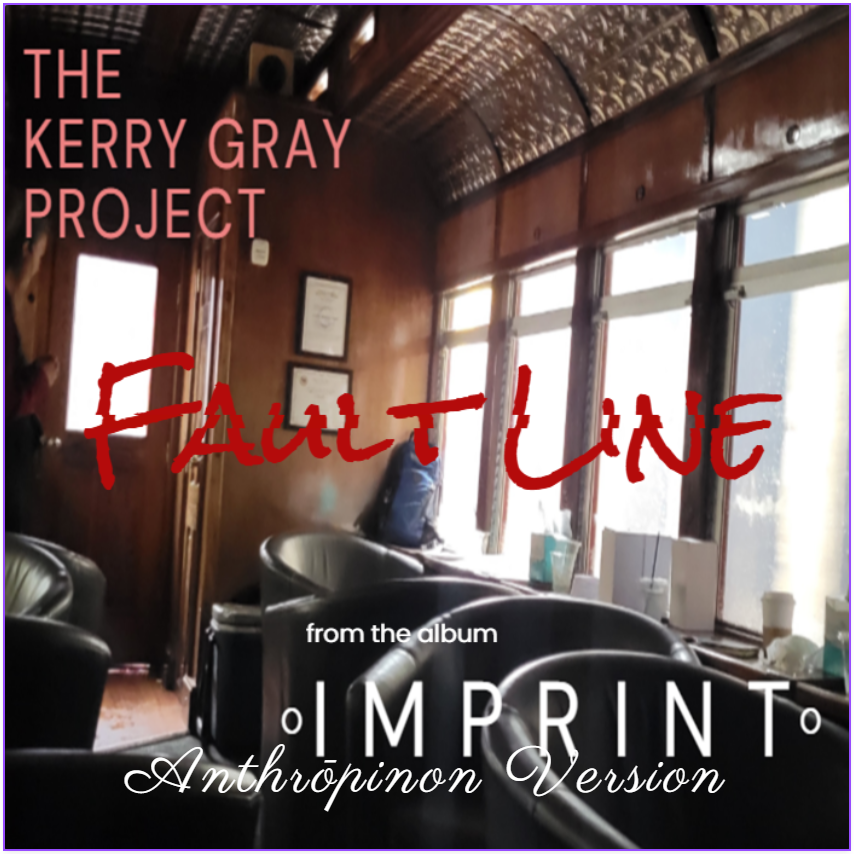
Punk Head: The song is described as a “coup de grâce,” which suggests finality, even brutality. How do you balance writing something that feels emotionally true without tipping into pure vengeance?
The Kerry Gray Project: “Fault Line” is autobiographical for my wife and co-lyricist, Alissa, and it reflects a past long-term relationship she survived. Wounds heal with time, so that primal urge for revenge gets swapped out for something more like a dare. Still sharp, a little childish, but absolutely emasculating with the line: “look at me now, bitch.” The song is written from her present vantage point, looking down at that person from a place of strength. If you picture the antagonist standing in a hole and the victor standing at the edge, “Fault Line” is basically the final “fuck you” before she turns around and closes the book emotionally.
Alissa didn’t originally include the word “bitch.” I added it because the line needed balance, and it was the perfect pressure release valve. Sometimes a person just needs to scream an expletive, even if it slightly undermines the thesis.
Punk Head: There’s a strong sense of narrative voice here, almost like the protagonist is stepping into power mid-song. How consciously did you build that arc?
The Kerry Gray Project: For a storytelling song we intend to release as a single, we’ve only got a few minutes to set the scene, walk through the antagonism, and land the ending.
In the chorus, “I’m rising through” becomes “I’ve risen through,” and “I’m breaking through” becomes “I’ve broken through.” It’s a pain in the ass to write that kind of compressed arc, but it’s intentional. It gives the listener a sense of time and progression they can actually digest inside a four‑minute window.
It’s like comparing Stephen King and Dean Koontz: same genre, but King is verbose and Koontz is direct. Both authors get you there, but Koontz does it in a third of the pages. King is an investment. Koontz is a quick and dirty guilty little pleasure.
Punk Head: The track is positioned as both therapeutic and anthemic. Do you think those two goals ever compete with each other in songwriting?
The Kerry Gray Project: Alissa and I write differently, but we both aim to reflect how real people actually feel; even the shit they’d never admit out loud. Inside your head, everything’s legal. So, our minds become a kind of “scream room,” which is exactly what this song is meant to be.
It’s a place to unload that pent up rage, which is inherently therapeutic. And when you pair that with the vantage point of “look at me now,” the song becomes triumphant. I don’t think those two goals compete, rather they feed each other.
Punk Head: The idea of “rising beyond” an abuser is central here. Musically, how did you try to reflect that sense of elevation or transformation?
The Kerry Gray Project: In this track, the character transformation happens inside the chorus, with the bridge acting as the declaration of that elevation above the abuser.
We grew up at the tail end of the progressive‑rock era. Prog was great for ethereal storytelling, but the trade‑off was 5‑ to 10‑minute tracks because both the lyrics and the music were telling the story.
For Fault Line, we used progressive repetition and direct language to move the story through its arc in far less clock time. At the risk of polarizing the listener, the track doesn’t give you time to overthink what’s being said, it just says it. The story either rings true or it doesn’t.
Punk Head: This project pulls together musicians with very different histories. How did you make sure “Fault Line” felt cohesive rather than like a collection of great individual parts?
The Kerry Gray Project: There’s that old line: a stranger is just a friend you haven’t met yet. In the same way, session players are just a band you haven’t formed yet.
The great thing about session musicians is they already know each other and often play together. With the exception of Bec Hollcraft, Matt Denis, Aviv Cohen, and Neil Swanson have all worked together on other projects, so they weren’t strangers at all. Matt also handled the coordination of schedules and studio time in L.A., and he’s the one who suggested Bec.
We try to work with session artists who have their own networks to bring into the project. We’ve also got a similar group in the UK. We tend to think of them collectively like the Nashville A Team or the Wrecking Crew, so cohesiveness is built in.
Vocalists are a different story; they need to connect emotionally with the lyric more than the band. That part is just a matter of “shopping” the demo to the right voice.
Punk Head: If this track represents a breaking point, what does the version of this project sound like on the other side of that break?
The Kerry Gray Project: If I’m understanding your question, yes “Fault Line” and the album it comes from, Imprint, are an inflection point.
Our first album, If You Weren’t Here, is mostly from the male POV. Imprint is mostly the female POV. Both albums are “scream rooms,” giving listeners a glimpse into the sometimes-tortured psyche of both sexes in the context of past young love relationships.
The third album, After the Fall, shifts into an adult present tense. The songs are longer, deeper, and painfully honest about a relationship that goes through hell but ultimately survives. It’s an acknowledgment of human fallibility, but also a testament that a truly strong connection can endure.
It’s not a scream room album. It’s introspective. Still dealing with the stuff no one wants to talk about but ending on hope and healing.
After the Fall is its own full arc, but each song stands alone as part of that larger narrative. “That which does not kill us makes us stronger”. That’s the spirit of it.