“The Room Is No Longer Asking Permission”: GODDAMN GOTHS ON METH on Making Music That Confronts You
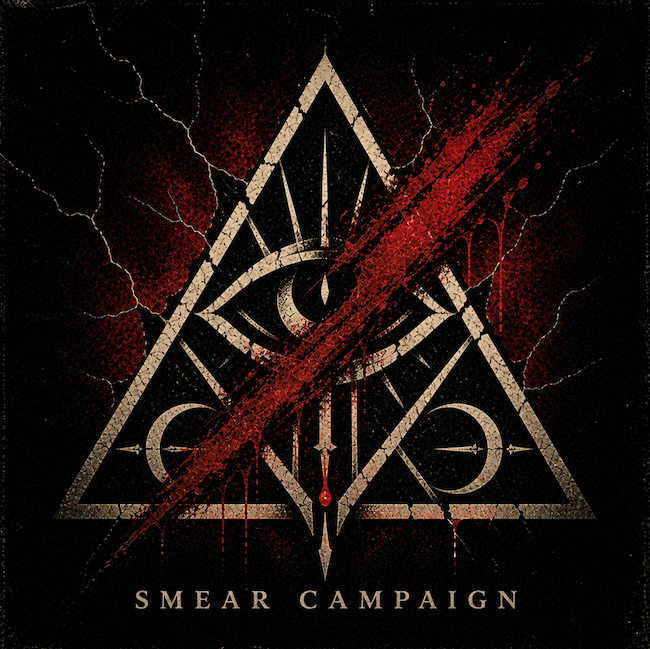
Punk Head: You describe LESII77 as a descent where symbols start judging. How do you translate that philosophical concept into sound without losing the listener?
Robert (GODDAMN GOTHS ON METH): I wanted the album to feel like it invites you in at first, then gradually stops pretending it’s there to comfort you. Early on there’s still some structure, some light, even some beauty in spots, but as it goes on the sounds get more severe, more crowded, and more confrontational. Repetition starts feeling less hypnotic and more accusatory. Certain tones stop sounding decorative and start sounding like they’re staring back at you like you owe them money.
At the same time, I didn’t want it to disappear up its own occult ass. There still had to be movement, atmosphere, hooks, and enough shape to keep pulling the listener forward. The point was to make it feel like entering another chamber, not like getting trapped in a pile of random abstraction. LESII77 is harsher than some of the other Lucist releases, but in the bigger GGOM universe it’s still not the most brutal thing I’ve made. Compared to some earlier records, this thing could practically pass for Teenage Dream.
Punk Head: The DIY recording environment seems crucial to the album’s character. Can you walk me through a specific space or moment that shaped the sonic identity?
Robert (GODDAMN GOTHS ON METH): A lot of the album’s identity came from working in spaces that weren’t built to be pristine, and that helped more than it hurt. I wasn’t trying to make some vacuum-sealed studio relic where every rough edge gets politely removed and framed like a taxidermy owl. I wanted the pressure of the room, the fatigue, the immediacy, and the abrasion to leak into the record.
There wasn’t one mystical “the album revealed itself to me” moment. It was more that I kept noticing when something got too cleaned up, it lost the feeling. So I stopped fighting that. LESII77 needed some crack in the glass. It needed some room tone in its teeth. A cleaner version probably would have sounded more respectable and a lot less alive, which is usually another way of saying more boring.
Punk Head: Many of your tracks function like thresholds or pressure points. How do you design these moments to manipulate emotion or perception?
Robert (GODDAMN GOTHS ON METH): Mostly through contrast, sequencing, and knowing when a track needs to act more like a turn in the hallway than a complete statement. Some tracks are there to pull you in, some are there to make the walls feel closer, and some are there to break the emotional logic that just got established. I like music that behaves a little wrong on purpose.
I use repetition a lot, but not always in a comforting way. Sometimes it feels ritualistic, sometimes oppressive, sometimes like the song is politely asking you to stay put while it rearranges the room around you. Same with abrupt shifts, empty space, density, or a groove that suddenly starts carrying something uglier underneath it. I like that point where the listener thinks they understand what the record is doing, and then it bends slightly wrong. That’s where the pressure starts. Hopefully that’s also where the fun starts, if your idea of fun includes mild psychic harassment.
Punk Head: Collaboration appears central yet invisible in the final work. How do you guide contributors so each chamber feels distinct but cohesive?
Robert (GODDAMN GOTHS ON METH): I think in terms of presence more than feature spots. I’m not bringing people in just to decorate tracks or collect names like cursed Pokémon cards. I’m thinking about what kind of force that room needs. Some collaborators bring weight, some abrasion, some glamour, some damaged beauty that shifts the temperature without breaking the structure.
The challenge is keeping it all inside the same building. Even when the voices and textures shift, the sequencing, tone, and psychological logic of the album have to hold. I wanted each chamber to feel distinct, but not like I accidentally stitched together five different records and called it a concept album because I ran out of discipline.
Punk Head: Your music seems to demand active listening, almost ritual participation. How intentional is this challenge, and what do you hope it triggers in the listener?
Robert (GODDAMN GOTHS ON METH): That’s very intentional. I don’t really make music to sit politely in the background and behave itself. Even when something is atmospheric, I want it to feel inhabited, like there’s pressure in it or some implied instruction or presence that won’t let you treat it like wallpaper. If somebody throws LESII77 on as dinner-party background music, that’s between them and God.
With this album especially, I wanted it to feel like a structure you move through. There’s definitely some influence from ceremonial staging and the idea of moving from a more illuminated outer space into something darker and more severe, but I wasn’t trying to make a coded blueprint for people in aprons. I’m interested in serious material, but I don’t trust seriousness as a default performance. I’d rather play with the fear, pretension, and symbolism people project onto things than just repeat it back to them in a grave voice. What I hope it triggers is attention — that moment where passive listening stops and somebody realizes they’re inside the thing now, and the room is no longer asking permission.