Why The Sonic Travelers Think Music Deserves Your Full Attention
Punk Head: You describe every song as a different stop along a musical journey. What kind of destination is "Home To Stay"?
The Sonic Travelers: We think of every song as a stop along a road that all of us travel in one way or another. Some songs are about beginnings, some are about loss, some are about dreams, some will just be for fun, and some are about finding your way back.
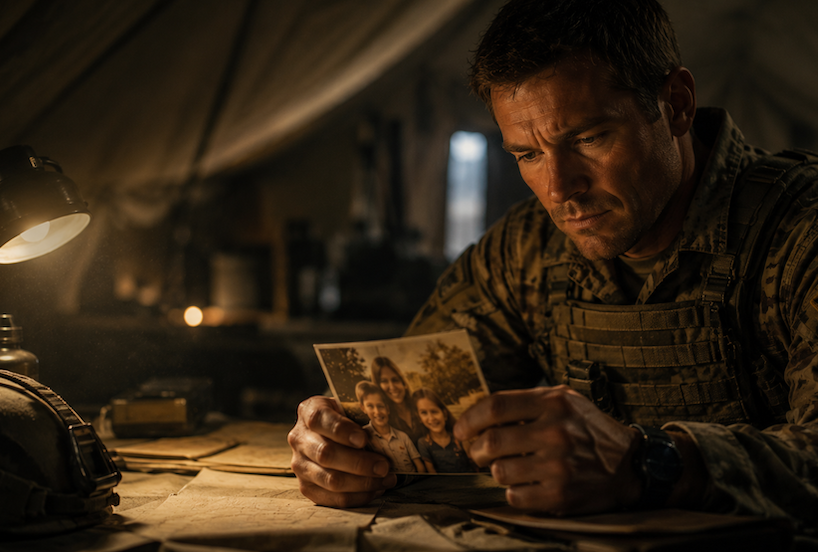
Home To Stay is about coming home. On the surface, it's the story of someone returning to the people who have been waiting for him. But it's also about the things that matter most when life's uncertainties are stripped away—family, relationships, belonging, and keeping your promises.
In that sense, the destination isn't really a place. It's a feeling. It's the moment when the road finally leads you back to the people who make a house feel like home. I also see it as a metaphor for any kind of separation.
For The Sonic Travelers, that's an important stop on the journey because many of our songs are rooted in real-life experiences and emotions. We like telling stories about ordinary people facing recognizable moments in life. Home To Stay is our way of exploring hope, commitment, and the idea that no matter how far life takes us, there's something meaningful about finding our way back to the people we love.
Punk Head: The phrase "designed to be listened to, not just heard" stands out. What does a listener miss if they only catch the chorus?
The Sonic Travelers: That phrase isn't really about any single song, chorus, or lyric. It's about how we approach music as The Sonic Travelers.
We grew up in an era when listening to music was often a more intentional experience. Top 40 radio exposed us to everything: pop, rock, folk, country, even big bands and standards. Nobody thought twice about moving from one style to another. If a song was good, you listened.
People also bought albums and sat down in front of their stereo systems to hear them from beginning to end. The songs weren't competing with a dozen other distractions. Listening was the activity.
Today, music often serves a different role. It's playing while we're driving, working, scrolling, exercising, or doing something else. There's nothing wrong with that, but music has increasingly become part of the background rather than the center of attention.
When we say our music is "designed to be listened to, not just heard," we're inviting people to slow down and spend a few minutes with the songs. Many of them tell stories. They have characters, places, and emotions that unfold over the course of the entire recording.
The other part of that philosophy is that we don't see ourselves as belonging to a single genre. We came from a musical culture where listeners embraced a wide variety of styles, and that's how we still think today. Every song is a different stop along the journey. If we only followed one musical road, we'd miss many of the places worth visiting.
So if someone only catches the chorus, they may hear the hook. But if they listen to the whole song, and the songs around it, they'll discover the larger story we're trying to tell.
Punk Head: Songwriters often talk about characters taking over a story. As you followed the family and the soldier through separation, injury, and recovery, were there moments when the narrative surprised you?
The Sonic Travelers: Absolutely. I often find that a story can change direction because of a single lyric, image, or musical phrase that appears while we're writing. Sometimes the song tells you where it wants to go.
With Home To Stay, the starting point came from watching news coverage during the Iraq War and thinking about the families living through separation, uncertainty, and, in many cases, life-changing injuries. I knew from the beginning that I wanted to tell a story that started with absence and ended with a return home.
What surprised me was how much the song became about the family as well as the soldier. We often think about war in terms of battles, equipment, and headlines, but every deployment affects real people waiting at home. As the song developed, that became the emotional center of the story.
Home To Stay is dedicated to service members, veterans, and the families who live with the lasting effects of war. That's also why we include links to organizations that support veterans and their families in the YouTube version at: youtu.be/dlzZDjnaWso
That said, not all of our songs explore subjects this serious. Most of them are about relationships, memories, and everyday moments. But whether the story is large or small, we're always interested in the people at its center.
Punk Head: There's an interesting contrast between the old and the new in this project. You're drawing from the singer-songwriter traditions of the 1960s through the 1980s while also using modern AI-assisted tools. What has that combination taught you about what is essential in songwriting?
The Sonic Travelers: That's a great question, and the honest answer might be a little surprising. AI hasn't really taught us anything about songwriting because we don't use it to write our songs.
The songwriting still happens the old-fashioned way: somebody staring at a blank page, chasing an idea, finding a melody, rewriting a lyric, and wondering if the second verse is any good. Some things never change.
Where AI has been helpful is as a production tool. We're in our seventies now, and our voices aren't always what they were decades ago. By modeling our own voices from recordings we've made over the years, we're able to continue bringing our songs to life with voices that are still authentically ours.
We also use AI-assisted tools to explore arrangements and musical ideas. Sometimes they help us discover a direction we might not have considered, and sometimes they confirm that our original idea was the right one all along. Either way, the final decisions remain ours.
What this combination has taught us is that the essential part of songwriting hasn't changed. Technology can help with production, performance, and arrangement, but it can't replace the reason a song exists in the first place. A good song still begins with a human experience, a point of view, and something worth saying.
For us, AI is a tool, an assistant, and occasionally a helpful bandmate in the studio. But it's never a co-writer. The stories, melodies, and lyrics are still written by people... um, us.
Punk Head: Looking across the broader vision for the project, do you see these songs as individual destinations, or are they slowly adding up to a larger map of American life and memory?
The Sonic Travelers: One of the joys of this project is revisiting songs written over many decades and hearing them in ways we could never have imagined when they were first created. Modern production tools have allowed us to bring these songs to life in ways that would have been beyond our reach years ago, and we're having a great time doing it.
So are these songs individual destinations or part of a larger map? Maybe they're both. Each song stands on its own, but over time, they may begin to form a picture of the people, places, and experiences that have mattered to us.
We're committed to releasing a new song each month for the foreseeable future, so whatever roadmap eventually emerges is still being drawn. We're discovering it one song at a time.
If there is a larger map behind The Sonic Travelers, it's probably not hanging on a wall somewhere. It's buried a little deeper than that—somewhere in our hearts.
And thank you for the opportunity to explore these questions. We greatly appreciate your interest in both Home To Stay and The Sonic Travelers.