5 Q&A With Stephanie Happening
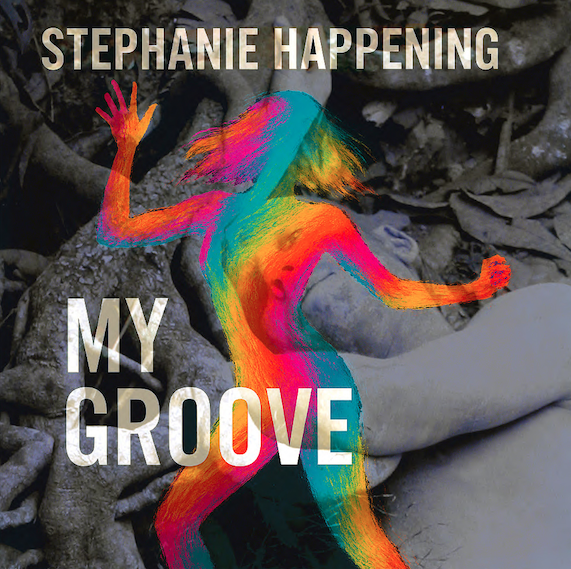
What inspired you to write the lyrics and music for “My Groove?”
We wrote “My Groove” out of the fierce, pulsing need to reclaim our own rhythm after years of feeling pulled in every direction. Living with DID, our inner voices often spoke over one another, some fearful, some angry, some yearning for joy. We wanted a track that didn’t smooth over those fractures but celebrated them, turning what felt like chaos into a collective stomp, clap, and shout of survival. Our lyrics were born in the quiet hours when us parts found alignment: A late-night conversation with our teenage self demanding to dance, a whispered promise from a newer part that we’d keep fighting for pleasure, the robin who landed beside us as I sketched the chorus, reminding us that small wonders can anchor us.
Musically, we blended raw punk grit with dance-floor euphoria, a slashing guitar riff to mirror that electric charge you feel when you finally say, ‘We’re here.’ A thumping bass and drum machine heartbeat to keep you moving even when your mind wants to stop. Layered synth swells to symbolize plural voices moving in unison.
Ultimately, “My Groove” is both a war-cry and a dance invitation. It’s an anthem for every fragmented part of us that’s ever begged to be heard, an audacious reminder that, even after everything, we still can and will groove to heal and improve.
Can you share any interesting or unique musical elements or production techniques used in “My Groove?”
Yes, and every one of them holds meaning beyond sound.
We crafted “My Groove” with a deliberate mix of punk urgency and dance-floor resilience. It’s all in English, but it carries voices, us and ours that refuse silence. The production became a conversation between rhythm and rebellion.
Drums that speak in layers: we didn’t want a clean groove. We wanted a push-and-pull. So we built overlapping rhythms, tight drum machine pulses paired with handclap loops that tug against the time signature. It mirrors how it feels to live in multiplicity: never just one beat, always moving between selves, truths and triggers.
Vocal stacks like inner whispers: The lead vocal is doubled and shadowed with responsive shouts, like my own parts cheering, resisting, rising. There’s grit, then glitter. We left imperfections on purpose, because that’s real. That’s what groove feels like.
Nature as texture: We recorded the robin that landed near us while we were writing. The droplets from the fountain beside us became a soft, percussive layer. These weren’t just aesthetic, those sounds grounded us. So I let them dance with us in the mix.
Guitar punches as punctuation: The distorted guitar isn’t constant. It’s used like a fist hitting the table, just when the lyrics demand extra bite. Especially on the bridge: “I’m the storm, I’m the spark.” We wanted listeners to feel that ignition.
Stereo motion as embodiment: In the final chorus, our vocals swirl from left to right in slow pan, plurality in motion. It’s not a gimmick. It’s the sound of us owning space, fully. Loudly and refusing to shrink. Even my mix choices carried intention: parallel analog/digital chains for warmth and clarity, sidechain compression to give the track breath, reverse reverbs to let each lyric cast its own shadow. “My Groove” isn’t polished, it’s alive. It moves like we do: fierce, layered, and unapologetically loud.
Can you describe the emotions or feelings you hope "My Groove" evokes in listeners?
We want people to feel unapologetically alive. “My Groove” isn’t just a song, it’s a heartbeat for anyone who’s ever felt boxed in, silenced, or told to dim their shine. We made it to stir something electric in your chest, a kind of stomp-your-feet, flip-your-hair, claim-your-space energy that says we belong exactly as we are.
We hope it evokes:
Defiance: Not anger for anger’s sake, but the kind of courageous refusal that rises when someone finally says “No more.”
Joy: Loud joy. Messy joy. The kind you feel when you shake off shame and start dancing for your own soul.
Liberation: That breath of relief when you realize you don’t have to twist yourself into someone else’s mold, you can just be.
Empowerment: I want listeners to walk taller, speak louder, and know they are the main character in their own narrative.
Even when the groove slaps with swagger, the root emotion is healing. For us, every beat was a step out of the shadows. For listeners, I hope it feels like a homecoming or like their rhythm was waiting for them all along.
Can you tell us more about you as an artist?
I earned my Multimedia Fine Art degree at Central Saint Martins at Byam Shaw School of Art, and it was there that I found language in every medium, photography, film, music, painting, digital work, performance and sculpture, each giving voice to parts of us we couldn’t speak aloud. We move fluidly between canvases, screens, stages, and installations, using painting’s raw textures, digital art’s layered possibilities, and sculpture’s tactile resonance combined with conceptual photography, to tell stories of survival and renewal.
Step and Hanie didn’t just exist, they had to. Step came first: grounded, guarded, always assessing the room before entering it. Masculine in the way survival demanded, strong, protective, a voice that cut through distortion. Hanie followed like a whisper in the static: intuitive, expressive, feminine in her sensitivity and surreal glow. She saw beauty in moments others missed and refused to dim herself to fit anyone’s narrative. For years, they worked separately, each holding parts of the story that felt too heavy or too soft to share. Step braved what Hanie couldn’t. Hanie softened what Step wouldn’t. But identity isn’t a war, it’s a reconciliation. And over time, through art, advocacy, pain, performance, music, memory...they started weaving. Not fusing into one, but-becoming together.
Stephanie Happening was never a costume or a compromise. Theirs is a name that holds both, Step’s grit and Hanie’s glow. She’s the voice that sings with both of their frequencies, that walks with their memories braided into rhythm. She’s the artist who can rap a verse like a fight song and then paint a garden with hands that remember both the hurt and the healing. This isn’t different genders, or alter integration, it’s becoming whole. Not perfect. Not finished. But happening, exactly as we are meant to.
Living with DID and complex PTSD means we share studio space with multiple alters, each bringing its own vision and skillset. Art is our therapy: when we paint, sculpt, or perform, we’re weaving together fragmented memories into cohesive expressions of strength.
As an orphan and a Shirley Oaks (SODA) survivor, our work holds both the pain of loss and the power of transformation. Every piece we make is born from those chapters of our life, turning trauma into acts of creation that invite others to witness resilience.
What are your future goals or aspirations as a musician?
Our ambitions now feel less like destinations and more like a series of invitations, to ourselves, to us alters, and to everyone who’s ever needed a song to meet them exactly where they are. Our hope is that viewers feel seen in their own struggles, that they discover beauty in unexpected places, and that they leave my work with a spark of possibility, proof that broken parts can become the most vivid art.
We will be releasing a full-length, multi-sensory album, Move Swings, that fuses progressive lyrics with immersive visuals and field-recorded textures, turning every track into its own moving tableau.
Collaborate across borders and genres, from punk-driven producers to Latin-trap percussionists, so each song becomes a new crossroads of culture and community.
Use our platform to amplify mental health visibility, not through pity, but through purpose. Hopefully curating art-as-therapy workshops that offer safe spaces for expression, and building real opportunities for neurodivergent and trauma-survivor artists to showcase their truth.
Continue refining my craft, diving into analog tape recording, experimenting with hybrid signal chains, and pushing my production tools until they sing with the same raw honesty as my lyrics. Ultimately, I want to keep transforming fragmentation into harmony, one beat, one brushstroke, one live moment at a time. It’s not about speaking for anyone, it’s about creating room for us to be heard, boldly and without shame or apology.