Anana Kaye On the Making Of “Cordelia”
Punk Head: What was your first connection to the character of Cordelia in King Lear and what made you feel her voice was relevant to the world right now?
Anana Kaye: I’ve had an odd attraction to tragedies ever since I was a child. They were some of the first pieces of literature I ever read. Oedipus Rex and King Lear were clear favorites. Back then, the character of the Fool spoke to me the clearest. Coming back to it now is a different story. We look around and see a world in crisis, at its breaking point. The old order of things is collapsing. We are overwhelmed with information we mistake for knowledge. The rise of artificial intelligence makes us question some of the most fundamental aspects of our humanity. We see millions suffering in war, in poverty, in hunger, and we are taught by the entertainment culture we live in to only ever seek emotional responses to these human tragedies, responses that fade quickly, go nowhere, and do nothing. One tragedy replaces another in the blink of an eye, and each time we fail to come out of it with a transformed way of seeing, thinking and being. In times like this, a tragedy about a mad king and his daughter, the only one who dares to speak the truth and dies for it, helps you make sense of the world around you and, ironically, brings out the bitter comedy of it all.
Punk Head: You’ve described “Cordelia” as a collision between honesty and illusion. How did you bring that tension into the sonic and visual choices of the single?
Anana Kaye: My musical partner and co-author Irakli Gabriel and I originally wrote this song acoustically with David Olney, not long before he passed, thinking it might be part of our follow-up collaboration to Whispers and Sighs, (an album we recorded together, released in 2021). It began with a minor-key sequence and the lyrics “to wake me now you do me wrong / grave’s the place where I belong.” We wanted to juxtapose that with a danceable beat that could cut through the heaviness of the lyric. We were listening to a lot of Bowie’s Earthling at the time, which might explain the impulse. And then Mark Plati, who co-produced Earthling with Bowie, ended up mixing “Cordelia,” which felt very fitting. I remember when our producer Charlie Chamberlain laid down that funky guitar part in the chorus, it felt a bit out of left field but completely on point. It brightened the song, much like the “Are You There?” question refrain in the post-choruses.
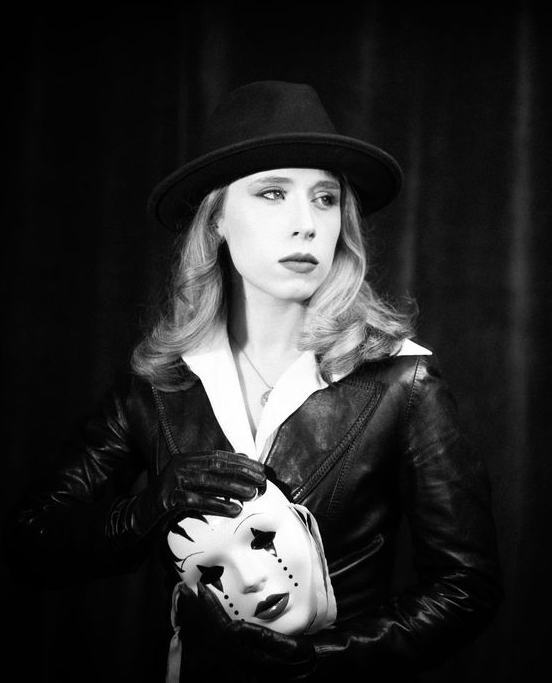
The artwork was done in Tbilisi by the incredibly talented photographer Giorgi Kolbaia. Shot on medium-format film, I’m wearing a custom dress incorporating traditional Georgian motifs, created by another gifted Georgian artist and scenographer, Ana Dvali.
Punk Head: Your Georgian musical roots play a major role in your writing. In what ways did those traditions influence the harmonies, storytelling, or arrangement of this track?
Anana Kaye: Vocal polyphony and three-part harmonies are a big part of Georgian music, I try to allude to that tradition in recordings.
Punk Head: This is the lead single from Are You There? What about “Cordelia” made it the song that had to open the door for this new album era?
Anana Kaye: The title of the album is based on a question that is phrased in the post-chorus of Cordelia “Are you there?. “Cordelia” seemed like a good curtain opener to the rest of the record, both sonically and lyrically.
Punk Head: You’ve called this record a response to a world at its tipping point. How did the wars in Ukraine, unrest in Georgia, and political divides in the U.S. filter into your writing?
Anana Kaye: Are You There? is not an escapist record. Themes of war and freedom run through this album in a very personal way. When the war in Ukraine began, it brought back my own memories of Russia’s 2008 invasion of Georgia, feelings I had been suppressing for years. I was only a child then, but I remember those August days so vividly. Seeing it all repeat on a massive scale in Ukraine, while I was living as an immigrant on the other side of the world preparing to become an American citizen, created a strange emotional double exposure. The ongoing Georgian resistance against an authoritarian takeover became a later thread throughout the record. Even the album artwork was created during the protests in Tbilisi. We took the photos and returned to the streets immediately afterward. For me the moment itself was inseparable from the art we were making. All of this affects me not just as someone with roots in these conflicts, but also as an artist trying to create in a world that feels increasingly chaotic and absurd.