Mortal Prophets: ‘LOST IN SPACE’
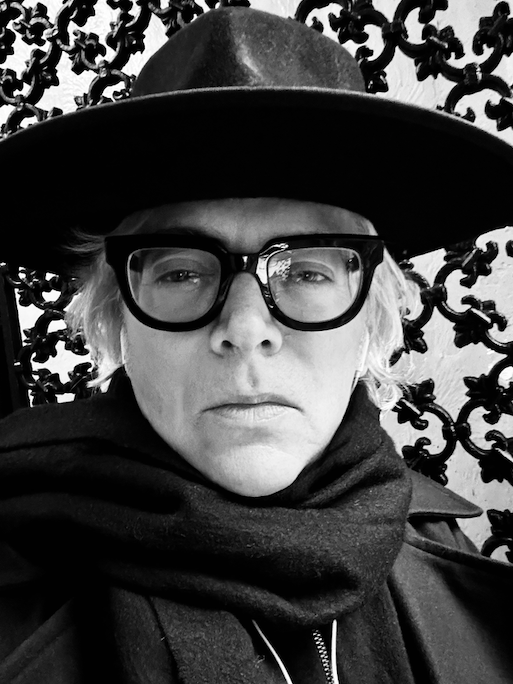
Punk Head: The Mortal Prophets has always been cinematic in its approach. How does electronic instrumentation amplify that atmosphere?
Mortal Prophets: Electronic instruments allow me to work directly with space itself. Unlike guitars or traditional band arrangements, synthesizers and sequencers don’t just occupy space — they generate it. They behave more like light, fog, or architecture than sound in the conventional sense. With electronics, I can stretch time, suspend gravity, and let a chord hang like a wide shot that never cuts. That’s inherently cinematic. It enables the music to breathe in long arcs, like a tracking shot through memory or a dream that refuses to resolve.
Punk Head: What artist or era from the synthpop world most influenced how this project took shape?
Mortal Prophets: Rather than one artist, it was a moment — late ’70s to early ’80s Europe, when synthesizers stopped being novelty instruments and became emotional tools—that period where restraint, melancholy, and futurism coexisted. The machines were cold, but the feelings were deeply human. That tension fascinated me. It’s the era where pop music quietly became philosophical, and that sensibility shaped this record more than any single name.
Punk Head: The tracklist feels like a narrative unfolding in space. If you could summarize the story, what’s the emotional mission of the record?
Mortal Prophets: The record is about movement without certainty. It’s about drifting forward while carrying the weight of memory, desire, and loss. If there’s a mission, it’s not conquest or arrival — it’s continuance. The album follows an emotional traveler moving through isolation, wonder, and brief moments of connection, learning to accept that not all journeys have destinations. Sometimes the act of staying in motion is the victory.
Punk Head: Was there a particular moment in the studio that made you realize: “This is the sound of the new era”?
Mortal Prophets: Yes — the moment I stopped trying to “perform” and started listening. There was a night when a simple sequence locked into place, and instead of adding more, I let it run. No flourish, no correction. That restraint felt radical. I realized then that the new era wasn’t about innovation through excess, but clarity through subtraction. When the machine and emotion aligned without friction, I knew we were somewhere new.
Punk Head: You describe synthpop as “emotional architecture.” What feelings or memories do you imagine this architectural building evokes in listeners?
Mortal Prophets: I imagine rooms rather than melodies. Rooms filled with longing, late-night introspection, moments before decisions are made. Spaces where people remember who they were, or who they almost became. Synthpop, at its best, builds structures you can wander through alone — places that feel private yet universal. I want listeners to feel held by the music, not overwhelmed by it.
Punk Head: As a multidisciplinary artist, how do your visual instincts influence how your music sounds, especially in this new electronic universe?
Mortal Prophets: I think in images before I think in notes. Shape, proportion, negative space — those concepts guide everything. In this electronic universe, sound behaves like material: glassy textures, concrete basslines, soft gradients of tone. I’m always asking: What does this sound look like? What does it weigh? How does light hit it? When music is built with visual logic, it becomes immersive rather than decorative. It becomes a place you can step into.