Daph Veil On the Making Of “Bloodsucker”
What is the inspiration behind it?
“Bloodsucker” began with a blues-inspired guitar riff, and the lyrical direction started with Rebecca Price, who created the first lines that shaped the theme of the song. From there, it grew into something much larger and more chaotic. The inspiration came from the intensity of unhealthy relationships. These are the kinds of relationships that feel magnetic and irresistible while also being draining and unstable. I wanted to capture that duality, showing how something can begin with seduction and allure before unraveling into turbulence and chaos.
How did you approach the arrangement and composition of the music for "Bloodsucker?"
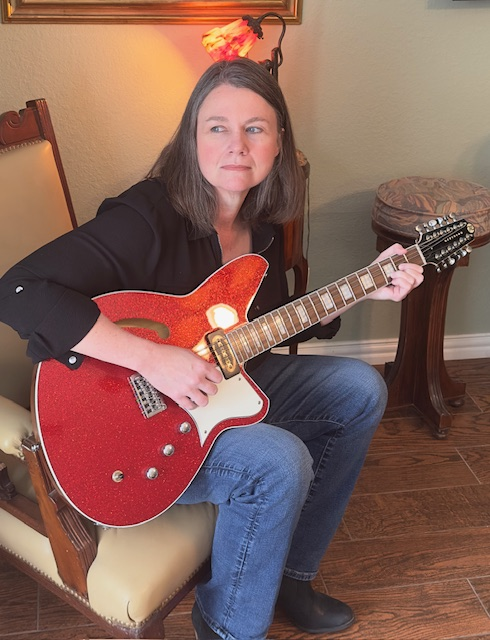
The arrangement was designed to mirror that emotional arc. The opening is smoother and more grounded, and then the layers build and collide to create tension. Explosive drums, shifting textures, and contrasting vocal parts all work together to create instability by design. The guitar solo is a nod to my love of 80s hair metal, which adds another dramatic turn to the track’s identity. I performed all of the parts except the drums, which were played by Joe Valadez. Matt Parmenter shaped the production in a way that balanced the chaos while still allowing it to breathe.
What impact do you hope "Bloodsucker" will have on your audience?
I hope listeners feel both the attraction and the unease. The song is not meant to be comfortable, but rather to feel intense, chaotic, and consuming, in the same way as the relationships it represents. I also know that some people will not understand this song, and I am fine with that. Not everyone connects with music that refuses to fit neatly into a category. For me, that tension is part of the point. I wanted Bloodsucker to challenge expectations and push people away from the comfort of strict definitions.
How would you describe your musical style or genre?
Daph Veil is not tied to one genre. Each song I write tends to fall into a different space such as alt-rock, shoegaze, electronic, or blues. Not every track blends genres, but none of them are written with the intention of fitting into a single box. People often become focused on making songs line up with strict categories, but I prefer to push back against that idea and simply enjoy the process. Bloodsucker is my way of doing exactly that. It is about living in the chaos and seeing what emerges.
What role do you feel emotions play in your music, and how do you channel them into your performances?
Emotions are at the core of everything I write. I see each track as a way to process experiences and translate them into sound. In “Bloodsucker,” the chaos and turbulence are just as important as the melody or rhythm, because they capture the emotional truth of the story behind it. When I perform, I focus on staying present with those feelings so that they come across authentically, even if that means being raw, messy, or unpredictable.