Feature: Ship Her Son Decodes ‘Soundtrack to the Daily Agenda’
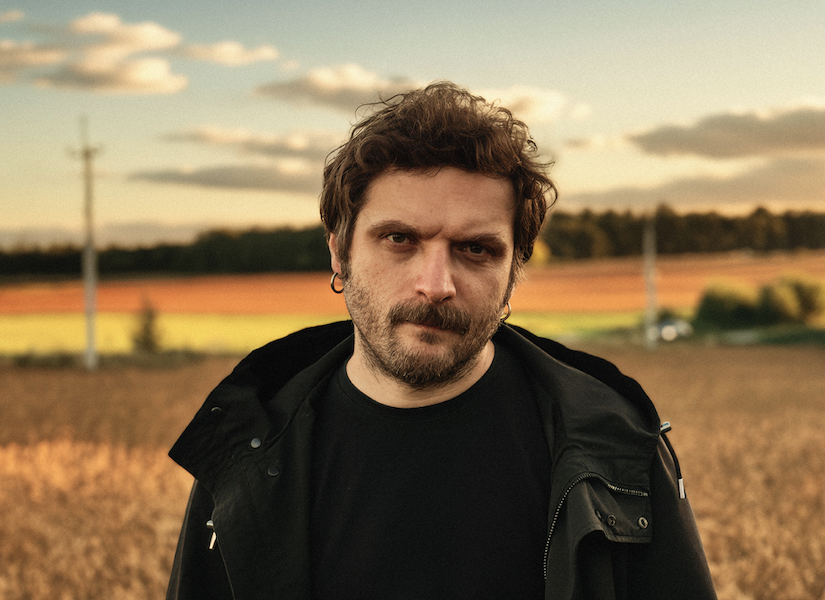
Punk Head: The title, Soundtrack to the Daily Agenda, feels both ironic and brutally honest. What does “order” mean to you in a time when the world feels so disordered?
Ship Her Son: You know, it’s like that classic line — “every day is exactly the same.” The world is disordered, but you’ve gotten so used to it that you stop noticing the difference. Every day we have brutally bad news here in Ukraine, absurd things happening around the world, and yet you wake up, make coffee, have breakfast, start working, finish working, and fall asleep doomscrolling — carrying a luggage of postponed things into the next day. This chaos somehow becomes the order we live by. Nothing surprises you anymore.
Punk Head: Do you think of this record as political, or is it more about the interior experience of living through political times?
Ship Her Son: I don’t want to use the word politics — let’s say wartime. Actually, we could call every new Ukrainian release a wartime record, because we live in war. Some people speak about it directly, some hide it between the lines, and some don’t mention it at all — but war is still there if you’re living in Ukraine. I chose the second approach here: no direct mentions, everything is between the lines — in the narrative, in the voices, in the emotions.
Punk Head: You’ve called this a heavier, more physical record — what did “physical” mean for you sonically?
Ship Her Son: It’s actually about opening the door to live vocal performances and adding more percussion and bass layers. My earlier work was mostly built on robotic vocal samples, mechanical and technical sounds where everything sat perfectly in place — like it was programmed to be there. In this record, some manipulations with the grid, vocals, and textures made it feel more alive, more physical.
Punk Head: The album features guest vocals from across Ukraine — each with their own distinct emotional tone. How did you choose who to collaborate with, and what did each bring to the story?
Ship Her Son: They’re my good friends from amazing bands in the Ukrainian underground scene. I listened to Anton Slepakov’s band when I was in school 20 years ago — he’s a legend. Now we’re good friends, and having him perform on my album is a huge honor. With Stepan Palindrom, we’ve already done two collaborations that pointed directly to the war. Oleksandr, Eugene, and Divuar play in post-hardcore, experimental metal, and deathrock/dark country bands. I love these bands and these voices — that’s why I invited them to collaborate on the tracks where I felt their presence would fit perfectly. I’m really glad they joined me.
Punk Head: You’ve mentioned “intrusive visions of eternity” — that’s such an arresting phrase. How do you translate a thought like that into sound or structure?
Ship Her Son: This connects to the third track, “Into Eternity,” where Anton joins me with calm, metaphorical spoken-word that’s hard to interpret, even for native speakers. It’s about those moments when the mind refuses to stay in the present or think rationally. Translating that into sound meant breaking the sense of time within the music — like in the second half of the track, and through other structural disruptions across the record.
Punk Head: The album was recorded in Lviv during an incredibly turbulent time for Ukraine. How did what unraveled in real time shape your creative process? The title, Soundtrack to the Daily Agenda, feels both ironic and brutally honest. What does “order” mean to you in a time when the world feels so disordered?
Ship Her Son: We can say Lviv feels relatively safer than cities in eastern Ukraine or Kyiv. But the creative process has become slower than ever — because of emotional exhaustion, procrastination, doomscrolling. You really have to tune yourself just to start, continue, or finish something — and that tuning can take weeks or months. The seventh track, “I Have No Strength,” reflects exactly that state.