How Komusō Finds Death Popsicle Searching for Detachment in a Noisy World
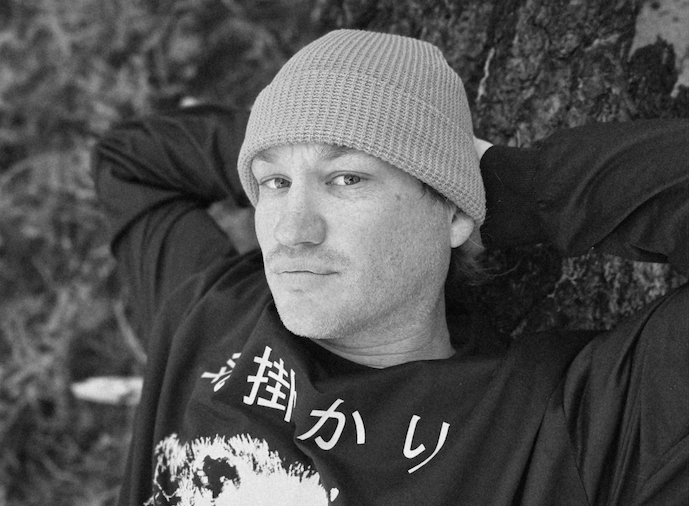
Punk Head: Komusō is built around the idea of detachment, but the songs themselves sound deeply emotional. Is that contradiction the whole point?
Death Popsicle: I wouldn't say it's contradictory. Rather, it demonstrates that being emotionally vulnerable can inadvertently lead to detachment—not by eliminating our humanity, but by encouraging us to remain honest with ourselves and our feelings in a world that is rapidly becoming desensitized and stripping those qualities away from us. As artists, our job is to be conduits of expression and emotion. One thing I cannot stand is soulless music. I do my best to represent how and what I feel in my art, and I try to listen to music that does the same.
Punk Head: You mention the wandering monks who hid their faces with baskets. In 2026, does that feel more like spirituality or social media?
Death Popsicle: In a sense, it's both, though it's more of a parallel to how I feel on the journey of my own life. I feel as if I am wandering through life at this point, having struggled, hustled, suffered, and sacrificed to get to where I am now. Having lived a very transient and, at times, difficult life, I feel as though the war I've fought—metaphorically speaking—is sort of over. In many ways, I embody the idea of a Komusō. Komusō were often former samurai, and the philosophy associated with them is rooted in Zen Buddhism, emphasizing detachment and transcending the ego and material world.
As an artist, I have always struggled with the social aspects of art and creation. I love creating more than anything, but beyond that, the marketing, promotion, live shows, and everything else can feel like raising a child or doing chores. That dichotomy—the necessity of participating in those things while wanting to focus solely on creation—is part of what transcending the ego means to me. It's about accepting our place in the material world and understanding what we must do within it. It's about playing the game while holding onto what I value, all while recognizing that many expectations stem from vanity and materialism.
Punk Head: The forests of Northern Arizona are a long way from the industrial landscapes that inspired a lot of this music. How did that setting shape the record?
Death Popsicle: I originally grew up in Phoenix, but I have also lived in Los Angeles and New York City for a number of years, which greatly shaped my understanding of life. I've been in rock bands, DJed at goth clubs, taught music production, and more. Part of the reason I moved toward isolation is because of my overexposure to those environments and ideologies. Again, this reflects the concept of the Komusō: a soldier retiring from war and society, simply playing his music for a pittance while transcending the concerns of the mortal and physical world.
Punk Head: Industrial music has often expressed anger toward systems, while gothic music can turn inward toward personal wounds. Where do you see Komusō sitting between those two traditions?
Death Popsicle: Most definitely both. I have a strong distaste for and distrust of the system at large, and I blame many of the problems we face on it. The Earth, as a living organism, suffers, and humanity has overstepped its bounds. We exist almost like a plague or a virus, feeding off our host while slowly—or perhaps quickly—draining the life from it.
I would say that Komusō takes the wounds caused by society and the system and examines them both inwardly and outwardly. I don't claim to be better than anyone else. We are all guilty in some way, and we all need to survive. However, there are definitely things I would change if I had a choice in how our world operates. This album is a reflection of those wounds and what has caused them.
Part of my message is that you have to enjoy your life if you can and do what you are able to do, because there isn't much we can realistically change on our own. I don't think society truly wants change; I think many people simply want to post about it or settle for small steps of progress. Most people are still too comfortable, and those who become marginalized by the system are often swept under the rug.
The lyrics to "Animal" are:
"It's over, just enjoy the view
There's not much you or I can do
It's over, just enjoy the view
With all those shiny things in your room
It's over"
To me, these lyrics mean that we are destroying species and habitats at an alarming rate, yet we choose to do little about it because greed continues to drive the world. So, enjoy your life and whatever you choose to do within it. It's also a reminder that we already possess far more than we need to be happy. We've crossed the threshold of efficiency and ventured deep into a culture of waste. While I do believe scientific progress will continue to improve our lives and help us live healthier for longer, I still have to ask: at what cost?
Punk Head: The title Death Popsicle has a strange mix of darkness and absurdity. How important is humor in a project that deals with such heavy subjects?
Death Popsicle: I think humor is an important aspect of life. Art is a reflection of life, and therefore all aspects of it should be represented. One thing I've learned is that you can't take life too seriously. There's simply no point. I consider myself a positive nihilist: nothing matters, so do it anyway.
If you really think about it, much of our society is highly fabricated and built upon rules that evolved from standards, traditions, and social conventions. They are not fundamental laws of the universe. Fundamental laws do exist, in my opinion, but that's a completely different conversation.
The name Death Popsicle is both humorous and a reminder not to take life too seriously. At the same time, it represents the brief nature of our existence. We are all slowly licking a Death Popsicle as both we and it melt back into nothingness.