Joshua Worts Discusses Writing About Real People And Real Issues In ‘Back To Hell’
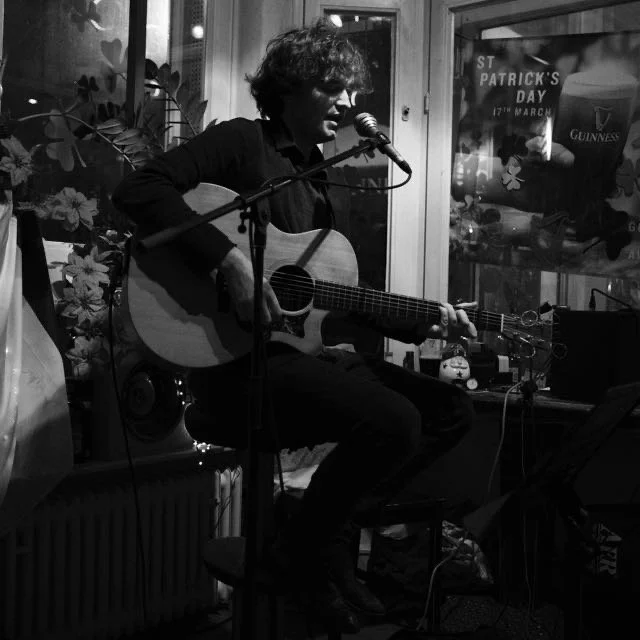
“To me, truth is ultimately the choice of both the narrator and the interpreter.”
Back to Hell consists old and new songs. Some were initially written during Joshua Worts’ late teen years and early 20s, while others are more recent. Like a time capsule that captures and reflects on changes over the years particularly on the European political landscape post Brexit, both on a personal and societal level, Back to Hell marks the songwriter’s most political-driven work yet, though he clarifies that he writes more from the place of “common sense and empathy than activism.”
Tackling relevant issues through a unique blend of soul, indie folk, alternative rock, and ambient elemtns, the genre-fluid album consists of six deeply haunting tracks. In an interview with Punk Head, Worts broke down his process writing real life-inspired music and revisiting his younger self.
Punk Head: Back to Hell feels like a very personal project. Some of the songs almost sound like a time capsule of your late teens and early twenties. When you write about these times, what did it feel like to revisit who you were?
Joshua Worts: It was very odd. I felt like some of these songs should have triggered the same sadness I felt when I wrote them almost ten years ago. And for “It Wasn’t Your Fault” and “The Ferry Station’s Closed,” that was definitely the case.
The other songs on this EP are a bit newer — though “newer” still means two or three years old. At times, it felt almost like playing cover songs, or like I had to reinterpret old feelings and adapt them to how I felt in the moment of recording. So it wasn’t so much about revisiting my teenage self as it was about revisiting who I was in that recording moment, and taking stock of how far I’d come.
Punk Head: You’ve said some tracks, like “It Wasn’t Your Fault” and “Scared,” are based on real people and moments. How do you decide how much truth to reveal — and how much to keep just for yourself?
Joshua Worts: I guess it depends on how much you want the person the song is about to realise it’s them. For one track, it might be great to make that very obvious; for another, not so much. It’s also practical to leave certain things out, just to see where the writing process takes you. That can even make a song a little fictitious, which I find really interesting. To me, truth is ultimately the choice of both the narrator and the interpreter.
Punk Head: You’ve lived through different versions of yourself. How do you think those chapters shaped this EP?
Joshua Worts: It’s shaped by my personal life as well as my political interests. It’s also about people who have come and gone — people who were once incredibly important but now feel less so.
I think the key message of this EP, especially in the first five songs, is that life just keeps moving, and you’ve got to find a way to move with it.
Punk Head: You end the press notes saying “Migration is not the problem, and neither are poor people.” That’s powerful. Do you see your songwriting as a form of activism, or more as storytelling with a conscience?
Joshua Worts: I think it’s more storytelling with a conscience. I feel that art can help us cope with big, worldly problems. I don’t see myself as an activist — I’m usually not very political in my music.
In this case, it’s more about common sense and empathy than activism.
Punk Head: If this EP were a place, what would it look like?
Joshua Worts: I think the artwork captures it pretty well. It could be hell — but I imagine it with a lot of yellow and orange, maybe less fire, and just more heat.