Punk Head: You've described “XO” as being about the “thrill of almost.” Why do you think the uncertainty of a potential romance can sometimes feel more intense than the relationship itself?
Metagirl & the Earth Passengers: It’s the anticipation. Those initial sparks can be so intense, when anything seems possible with this person, the relationship, the future. And the vulnerability. The potential for something so great in your life. As Tom Petty put it, the waiting is the hardest part. But it's also the most dizzying part.
Punk Head: “XO” takes the vulnerability of a love song and gives it a punk edge. Was that contrast intentional, and what does punk allow you to express about desire that a more conventional love song might not?
Metagirl & the Earth Passengers: I think punk is a great vehicle for impatience. You've started something, it's gotten to a certain point, and now you want to know: Is this going somewhere or not? A girl's got to know where she stands.
I initially called it “A Punk Love Song” — really as a placeholder — but then I started liking that name because of the contrast between the romance in the lyrics and the aggression of the music. When I got to composing the confessional part of the song, the bridge, where I clearly express an eagerness, almost a hunger, to move things forward, I wanted to contrast the punk with a softer, possibly sweeter surf or psychobilly sound. I thought that could underline the vulnerability of being in that early, uncertain stage of a relationship.
Punk Head: Your previous single, “Fire It Up,” leaned into ska, while “XO” brings together punk and psychobilly. When you're writing, do you consciously explore different genres, or does each song reveal the sound it needs as it develops?
Metagirl & the Earth Passengers: I don't consciously set out to explore different genres. The more expansive our tastes are, the more we can stuff into our musical blenders. Sometimes I start with a lyrical idea and play around with it musically to see what fits. Other times, I start with a musical concept — a riff or motif — and look for subject matter that works with it.
For example, a number of years ago, during a very stressful time in my life, a friend noticed I had misplaced a couple of things and asked me when I was going to stop losing things. That question became the seed for “Found Things” (and even made it into the opening line). When I started working on the music, I ended up developing a Latin-jazz riff built around a 3-2 clave. I have no idea how I went from the original lyrical idea to the Latin rhythm, but that's what happened when I sat down at the piano with those first lines in front of me.
Punk Head: Your upcoming EP, Trying to Chalk the Sun, takes its title from an Emily Dickinson poem. What drew you to that image, and does it connect to a larger theme running through the four songs?
Metagirl & the Earth Passengers: The title comes from the EP’s fourth and final single, “Rainy Day Mashup,” due out toward the end of this year or, more likely, early next. It’s a celebration of rain, Mother Nature, New York City, and the life-affirming role art plays in our lives. It pays homage to Goethe, Carl Sandburg and others as it weaves together quotes from various poets (all long out of copyright), including Dickinson, and tips its hat to other rain-soaked works like “Singin’ in the Rain,” a favorite movie of mine.
In her poem Dickinson writes that she found the phrase to every thought she ever had but one, “And that defies me,—as a hand / Did try to chalk the sun.” I liked that as a title because it speaks to the challenge of finding words for things that are ultimately ineffable. And for us musicians, it is especially fitting as we often use music to fill in the gaps where words fall short.
Punk Head: With Grammy-winning producer Andros Rodriguez working on “XO,” how did you balance the track's raw punk energy with the polish of a studio production? And how does the song change when you perform it live?
Metagirl & the Earth Passengers: First off, I think this song was especially in Andros’s wheelhouse, since he was in a post-punk band back in his DC days. The studio in Long Island where we recorded helped give it some of its punk energy, too. It was essentially a large basement living room, with wall-to-wall carpeting, an upright piano, a drum kit, and amps. The equipment was all professional-grade, but the space itself was anything but a typical recording studio! And the morning of the recording, once we had all arrived, we learned that we had much less time to record than we'd expected. Nothing like a ticking clock to ramp up the punk vibe!
The opening guitar riff sets the stage for the song's punk energy — that short, repeating melodic figure with a nod to Joan Jett's “Love Is Pain.” And, for better or worse, we went with raw vocals to try to capture the feel of the song.
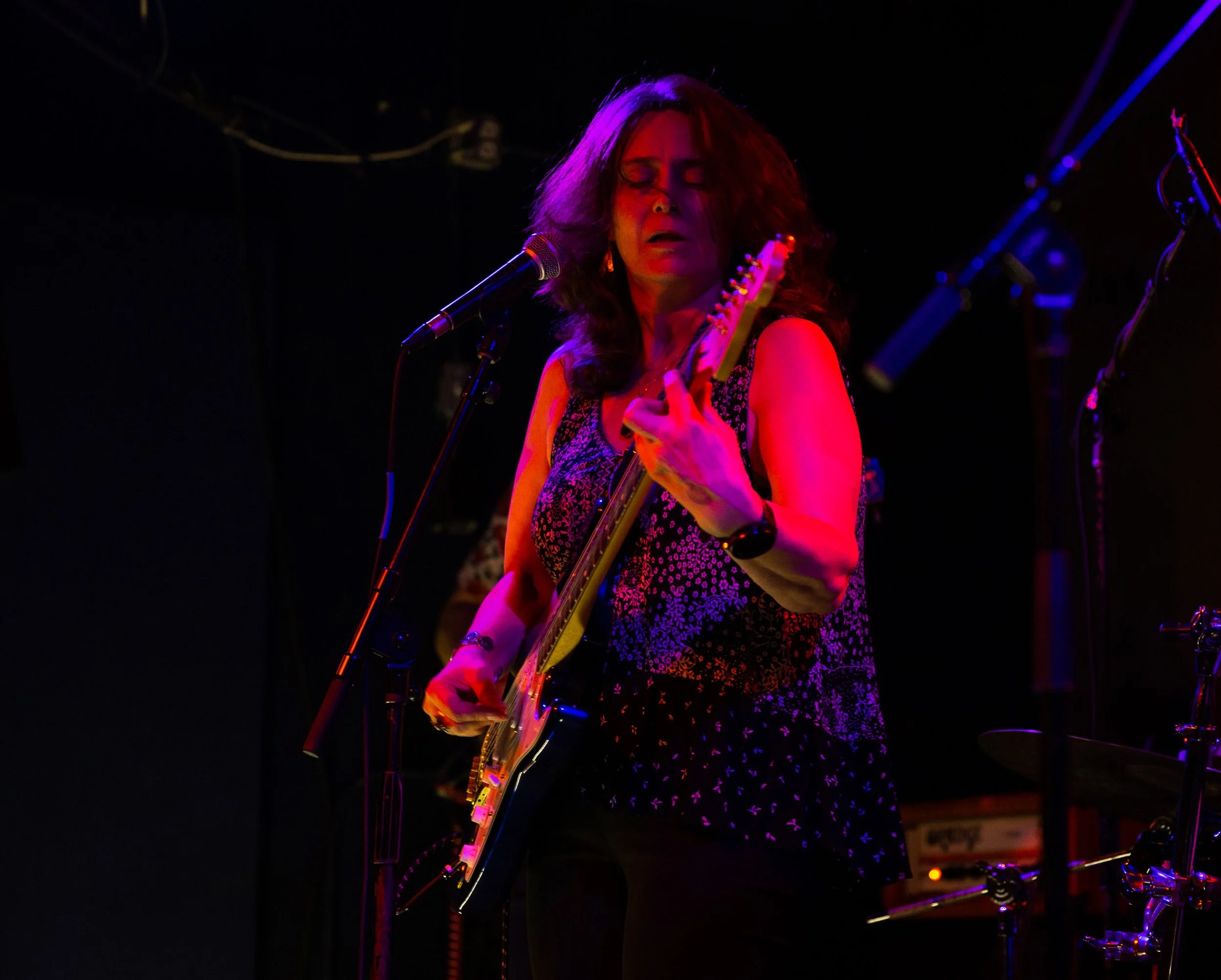
I think the biggest difference between the recording and performing the song live is the energy we get from the audience at our shows, the dynamic we have onstage, the electricity in the room. It's just a real joy to play the song live because it's such a fast, energetic tune, and a lot of fun to sing and jam out to.