Pablo Parada On the Making Of ‘Music to escape to’
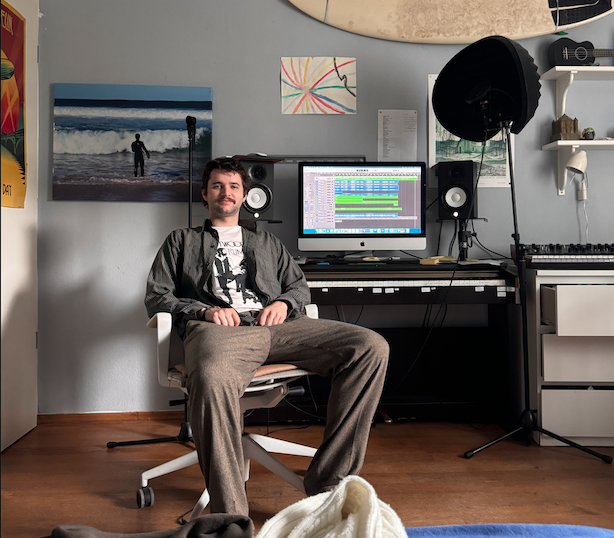
Punk Head: Growing up in Germany with a Russian classical piano background is a unique foundation. How do those darker classical influences still show up in your songwriting today?
Pablo Parada: Mainly in my chord progressions. Most of my songs are in a minor key and use chord changes that you would usually only find in classical music. Some progressions I have “stolen” on purpose, mainly from Tchaikovsky and Chopin, but some I’ve subconsciously taken from pieces I used to play. I actually haven’t played classical music in a while, but I’ve kept the essential “programming” when I improvise on the piano. The german winters are also pretty grim and making music that fits the vibe has helped me get through them.
Punk Head: Vocally, this album explores a wide range — from very low to very high registers. How did you decide when to push your voice emotionally or technically on a song?
Pablo Parada: I liked the contrast between low and high registers because it sounds interesting and gives the songs more variety. I’ve actually had people ask me who the 3 people are who sing my songs and which woman is singing the high pitched parts, when really I did all the different vocals :) I usually don’t adapt the key of my songs to my voice, so I just play chords and sing as high and as low as I can go. But do I like to sing the darker lyrics in a lower pitch and the happier lyrics in a higher pitch, like in “all my dreams are dead” or in “supernova of a broken heart”. Still, a lot of the time I just sing whatever sounds best to me. Recording the higher pitched parts is actually much easier for me technique-wise, so I do try to avoid the deeper vocals sometimes.
Punk Head: You mention being tired of “constant perfect happiness” in media and advertising. How did rejecting that idea shape the tone and honesty of this album?
Pablo Parada: When I sit down on a piano and start singing and improvising I always try to tell stories I find realistic. Stories about rejection, insecurity, loneliness, intrusive thoughts etc. In the movie the guy always gets the girl, in my songs that’s not the case, if that makes sense. A lot of people try to make music that they think others will like, because it corresponds to what they’re used to. They prefer selling a fantasy than reality. I used to think like that as well. But this time I wanted to tell a different story, one where the protagonist is not a winner, not even at the end of the movie.
Punk Head: The title Music to escape to suggests both comfort and distance. Do you see escape as healing, avoidance, or something else?
Pablo Parada: I’d say it’s both healing and avoidance. The title came to me when I was at a party and really wanted to not be there. So in that situation I obviously wanted to avoid the situation I was in, but at the same time find healing in escaping from there. I felt like everyone there was pretending to be cooler, and more perfect than they really are and I wanted to make the kind of music where I could “escape to” in a place like that. I wanted others to see: “Oh look, there’s someone who’s been in the same situation as me, someone who feels insecure and is open about it.” That’s also when I wrote the song “violence” because my thoughts were pretty violent to me in that moment.
Punk Head: At 25, you’ve already experienced a lot of emotional weight. How has making this album changed your relationship with your own sadness?
Pablo Parada: It’s definitely helped me because it’s given me a way to express things I could’t really express otherwise, both melodically and lyrically. I feel like it’s given me purpose in the last year and helped me channel this sadness into something more productive, which is a good way to overcome it.