Pain, Power, and Pop Catharsis: The Rise of Olie N.
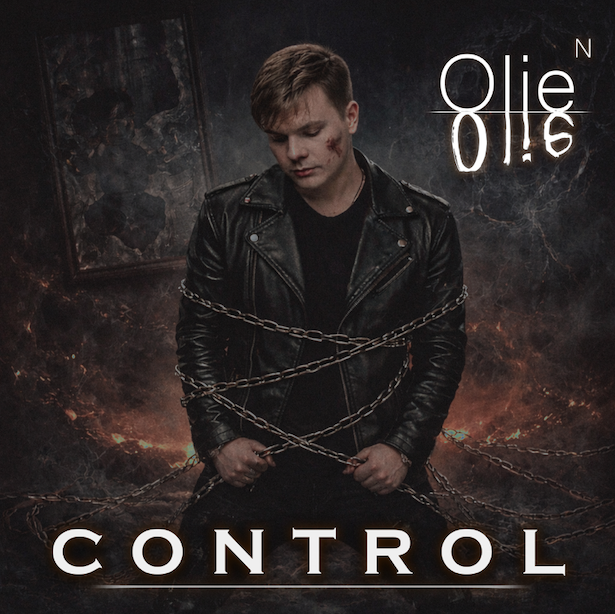
Punk Head: CONTROL explores reclaiming power and autonomy. How do those themes tie into your personal journey as a queer artist navigating the music industry and personal identity?
Olie N.: Growing up largely on my own, and living with Borderline Personality Disorder before I even had a name for it, I spent a long time feeling like I couldn't move forward without someone else believing in me first. Agents, labels, record deals... the rejections kept coming, and they fed this deep belief that I wasn't capable of doing it on my own. When I was finally diagnosed and went through therapy, everything shifted. I started to see who I actually was, and more importantly, I started to believe in that person. That's when I understood: if I want to move forward, in my life and in my career, I have to take control myself. No one is going to invest in me if I don't invest in myself first.
Being queer has had its own challenges too. Early on, some family members were uncomfortable with me showing affection with a partner, which was part of why I left home at 18. Even today, there are moments where I walk into a space and don't feel like I belong. But I've learned to ignore that noise. My confidence takes over, and I refuse to stop living because of how others might look at me. I'm lucky to live in Canada, where people are generally very open-minded and spaces that openly repress that kind of identity are rare. That same energy, choosing yourself over the fear of judgment, is at the core of CONTROL.
Punk Head: The track moves from subjugation to liberation. How did you translate that narrative arc musically and emotionally, and does that same arc continue throughout SHADOWS OF CHAOS?
Olie N.: The first verse of CONTROL is actually based on something that really happened to me. A few years ago, I had a deeply unjust experience with a bailiff who lied about me, painted me as someone horrible, and had police accompany her who physically intimidated me, pushed me against a wall, and tore through my apartment while I wasn't allowed to say a single word. I felt completely powerless. But I fought back through the legal system and won. That shift, from helplessness to action, is exactly the emotional arc of the song. I was also in therapy at the time, which helped me channel all of that into something creative rather than destructive.
Even the production reflects that story. The two isolated snare hits you hear between each section of the song are a direct representation of the knocks on my door that day. I also love incorporating dark, saturated sounds into my music, textures you might recognize from horror films. It mirrors the darkness of my universe and makes the emotional weight of the lyrics feel visceral.
That arc absolutely continues throughout SHADOWS OF CHAOS. The album has two distinct sides. The first is about taking control and confronting frustration: CONTROL, TOY, which is about someone who used me sexually despite my feelings and my lack of consent, and GFY, which on the surface is a rebellion anthem but for me is actually the new version of myself speaking directly to who I used to be. The second side gets darker and more introspective. SHADOWS OF CHAOS is named after the place I lived at the time, which felt like nothing but chaos and shadows blocking my light. HURT ME is about performing for the wrong reasons, chasing the validation of specific people instead of my own ambitions. And the album closes with BEFORE I CALL, a piano and voice song dedicated to my grandmother, one of the only people who was truly there for me. It's a very personal album, and honestly, a liberating one.
Punk Head: Creating in a home studio is intimate and free, but collaborating with Studio 206 introduced polish. How do you negotiate authenticity versus professional sheen in your work?
Olie N.: The process always starts at home. I usually begin by writing lyrics in bulk, sometimes for several different songs at once. Then I sit down at my computer or my piano and open Ableton Live. I'll build a musical loop, which often ends up becoming the chorus, and then look through my lyrics to find which song connects most to what I just created. From there I build out the rest of the track, verses, intro, bridge, and I'm constantly reworking the lyrics alongside the music. I'm pretty perfectionist about it, so the two evolve together until I'm happy with the result.
Once my demo is recorded from my bedroom, I send it to Studio 206. They take everything, the vocal layers, the instruments, the full mix, and rebuild it to a professional standard. They send it back, I give my feedback, and we go back and forth until it feels right.
I was very intentional about keeping it this way. My previous album was made entirely on my own from A to Z, and that rawness meant a lot to me. I never studied music production formally, everything I know is self-taught, which sometimes makes it hard to achieve exactly the sound I hear in my head.
Working with a studio bridges that gap and honestly also confirmed that I'm not as bad at production as I sometimes think. So the balance is simple: I protect the authenticity by keeping the creative process entirely mine, and then I hand it off to the studio to give it the polish it deserves.
Punk Head: As someone handling every aspect of creation, writing, production, vocals, what have been the biggest creative challenges and surprising discoveries in claiming full control over your sound?
Olie N.: The biggest challenge is honestly that I have no formal training in any of this. I took a course in the entertainment industry that helped me understand how the business works, but nobody taught me how to create. That part I figured out entirely on my own, and I'm genuinely proud of that.
The hardest thing creatively is translating exactly what's in my head into something you can actually hear. For this album I changed my approach to reduce that frustration. Instead of trying to build everything at once, I wrote the lyrics separately, then created musical ideas on their own, and then matched the two together and refined from there. It made the process feel less like fighting against myself.
When it comes to recording vocals, I'm constantly thinking about how to make my voice serve the song, what effects could reinforce the message while still being interesting to the ear. And for everything I'm not fully satisfied with technically, that's where Studio 206 comes in. Having someone with the right knowledge to elevate what I've built means I don't have to choose between doing it myself and doing it well.
The surprising discovery is that this method actually leads me to results that feel truly like me. I still get frustrated at the start, but I always end up creating something I'm proud of. And honestly, I learn something new every single day. The day I stop discovering things will be the day I've run my course. I need to keep innovating and keep learning to stay happy in what I do. That drive is part of what makes this whole process worth it.
Punk Head: Looking beyond CONTROL, SHADOWS OF CHAOS promises a two-part conceptual journey. How do you see this era shaping your identity as an artist, and what do you hope listeners carry forward after experiencing it?
Olie N.: What I want people to take away is simple: we all go through different hardships that will hurt us, but that's exactly how we learn and grow. I use my public persona to live my emotions fully through my music, which actually allows me to stay grounded in my everyday life. The songs carry what I can't always say out loud.
This era is going to show both sides of who I am as an artist. The dark electro pop side and the more intimate ballad side. And that's really just a reflection of life itself. There are highs and lows, and it's during the lows that we evolve, and during the highs that we get to enjoy everything we've learned.
As for my identity as an artist, SHADOWS OF CHAOS is the most complete picture of me I've ever put out. It's vulnerable, it's dark, it's honest, and I think that's what will make it resonate.
My message to anyone who listens is this: don't be afraid to stand in who you are and what you believe. Your voice matters, and it's by owning it that you'll actually get somewhere. Take control of your life, accept the darker parts of yourself because they're what push you forward. Nobody will believe in you if you don't believe in yourself first.