Patrick Quinn Wrote ‘Silent Voices’ for Those the World Doesn’t Always Hear
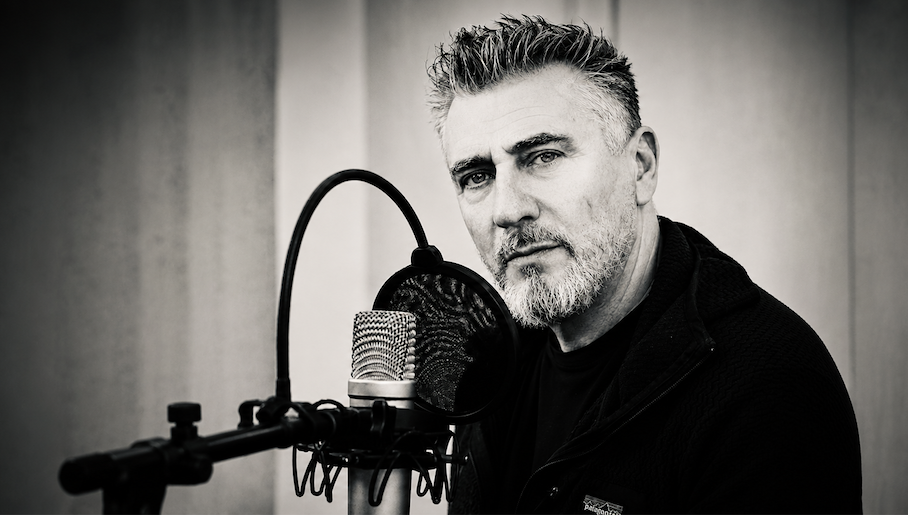
Punk Head: “Silent Voices” is about communication beyond speech. Did writing the song change how you think about silence itself?
Patrick Quinn: Absolutely. Before Patrick, my nonverbal autistic son who inspired this song came into my life, I think I viewed silence much the same way most people do, as an absence of communication. Over the years, however, I have learned that silence can be full of meaning. It can hold joy, frustration, fear, humour, affection, trust, and understanding.
Writing "Silent Voices" forced me to reflect on that more deeply. It made me realise that some of the most profound conversations I have ever had contained no words at all. A glance, a smile, a hand reaching for yours, a moment of connection that cannot be explained but is completely understood.
The song taught me that silence is not empty. Sometimes it is where the deepest communication lives.
Punk Head: You’re known for having a powerful tenor voice, yet this song centres on someone who communicates nonverbally. Did that contrast shape the way you approached the vocals?
Patrick Quinn: Very much so.
As singers, we often think our voice is our greatest tool. Yet the person who inspired this song has taught me that communication goes far beyond language or speech.
I was conscious throughout the recording process that I didn't want to overpower the message. The vocal had to serve the story rather than showcase the singer. In many ways, I was trying to give voice to emotions that Patrick himself cannot easily express through words.
There is a certain vulnerability in that. I wasn't singing at him, I was singing for him, and perhaps for countless other people whose thoughts and feelings are often misunderstood or unheard.
Punk Head: You mention wanting people to feel “seen and understood.” Were there moments during your own journey where you felt unseen as a parent?
Patrick Quinn: Many.
I think most parents of children with significant additional needs will understand that feeling. People often see the visible moments but not the invisible ones. They see a behaviour but not the anxiety behind it. They see a challenge but not the thousands of small victories that came before it.
There were certainly times when I felt isolated, exhausted and misunderstood. Not because people were unkind, but because, unless you have lived that life yourself, it can be difficult to fully grasp.
What sustained me was the love. Not some idealised version of love, but the everyday kind. The love that gets up again when you're tired. The love that worries. The love that hopes. The love that stays.
If this song does anything, I hope it lets people know that their experiences matter and that they are not walking this road alone.
Punk Head: The song seems deeply rooted in emotional duality: grief and gratitude, fatigue and love, silence and connection. Do you think music is uniquely capable of holding contradictions that ordinary conversation struggles with?
Patrick Quinn: I do.
Life rarely fits into neat categories. We can be heartbroken and grateful at the same time. We can be exhausted and deeply in love. We can be afraid of the future while finding beauty in the present moment.
Conversation often pushes us towards certainty and clear definitions, but music allows us to sit inside those contradictions without needing to resolve them.
A song can hold joy and sorrow in the same breath. It can acknowledge pain without becoming hopeless. It can celebrate love without pretending that life is easy.
For me, "Silent Voices" lives in that space. It isn't a sad song and it isn't a happy song. It's simply honest.
Punk Head: The orchestral and cinematic elements give the song a sweeping emotional scale. Were those arrangements meant to reflect the internal emotional intensity many carers experience privately?
Patrick Quinn: Yes, very much so.
The day-to-day reality of caring often looks ordinary from the outside. School runs, appointments, routines, meals, small victories and occasional setbacks. Yet beneath that can exist an enormous emotional landscape that few people ever see.
There is love, pride, worry, hope, fear, resilience and sometimes grief, all existing together.
I wanted the arrangement to honour that hidden world. The orchestral elements were intended to create a sense of scale, because the emotions involved often feel vast, even when life appears quiet on the surface.
We also deliberately incorporated traditional Irish elements, particularly the flute and bodhrán. Ireland, its people, its stories and its music are deeply woven into who we are as a family, and I wanted that heritage to be part of the emotional fabric of the song. There is something timeless and deeply human in those sounds, and they helped ground the story in a place that feels both personal and universal.
In many ways, the music represents what words cannot. It reflects the depth of feeling that carers, parents and families carry every day, often without recognition, and yet continue to carry with extraordinary strength and grace.