Santa Claws Know Nine Years Isn’t Lost Time
Punk Head: Nine years is a long time between albums. Why did Santa Claws need that much time before Sands of Timecould exist?
SANTA CLAWS: Nine years sounds like a lifetime, but life, side projects, and personal evolution simply took over. We didn't want to rush out a record just for the sake of ticking a box. Sands of Time needed to mature. We had to live through those years, refine our sound, and accumulate the right emotional weight for these songs to exist. When we finally reassembled in the studio, the urgency was authentic—it wasn't about catching up with lost time, but about delivering the right album at the absolute right moment.
Punk Head: You describe the record as both Britpop melancholy and alt-rock energy. Which side tends to win when the band is really pushed?
SANTA CLAWS: In the rehearsal room or on stage, when the energy hits critical mass, the alt-rock drive always wins—there’s an undeniable raw, visceral reaction when the amps crank up. But the melancholy is the backbone of the songcraft; it’s what gives the tracks their soul and depth. You could say the Britpop melancholy writes the songs, but the alt-rock energy is what breathes explosive life into them when we play.
Punk Head: What does "Britpop" mean to a French band in 2026 that it didn't mean in 1995?
SANTA CLAWS: In 1995, Britpop felt like a specific British cultural movement happening in real-time across the Channel—a scene tied to a precise era, posture, and geographical snapshot. Today, in 2026, filtered through a French lens, 'Britpop' is less about a local scene and more about a timeless songwriting philosophy. It stands for melodic urgency, soaring chorus hooks, bittersweet harmonies, and an unmistakable guitar elegance. It’s no longer just a nostalgic 90s label; it's a rich harmonic vocabulary that we adapt to our own culture and era.
Punk Head: There is a lot of emphasis on analog warmth in the way you've presented this album. What does analog give you emotionally that a cleaner digital production doesn't?
SANTA CLAWS: Digital is precise and flawless, but analog has a heartbeat—it brings subtle imperfections, saturation, and natural room air that make music feel human and alive. Recording onto tape creates a physical performance dynamic: you aren't staring at pixels on a screen or editing every note to surgical perfection; you’re capturing a collective moment in time. That tape saturation and harmonic depth give the album an organic warmth and intimacy that you feel in your chest rather than just hear with your ears.
Punk Head: What did Stéphane's arrival change that you couldn't have achieved as a four-piece?
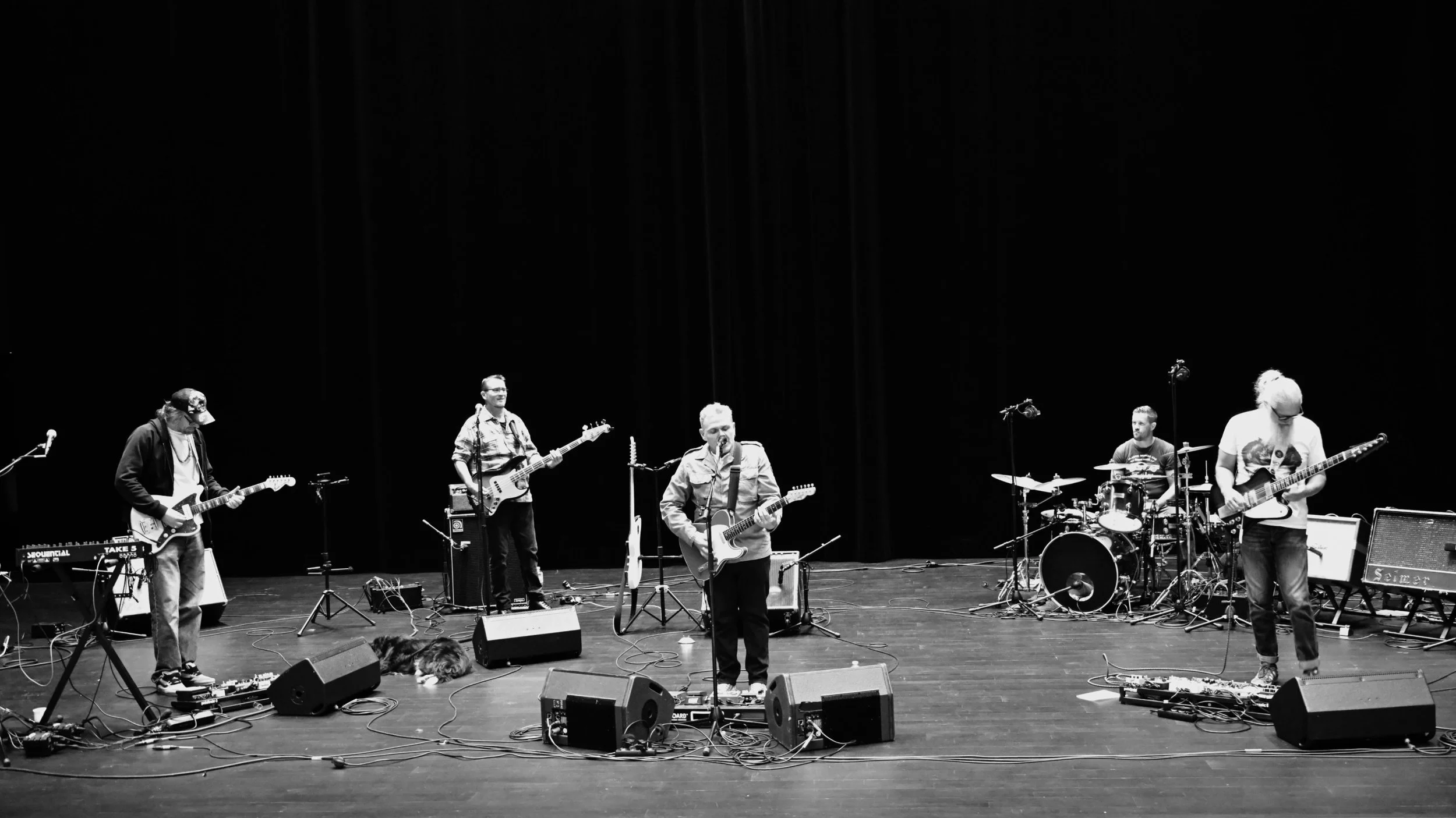
SANTA CLAWS: Bringing Stéphane in changed the balance in the best possible way. As a four-piece, everyone had to cover a lot of ground, which sometimes restricted our freedom on stage and in arrangements. Having a fifth musician unlocked new sonic layers—it allowed us to interweave triple-guitar textures, build atmospheric soundscapes, and leave more air in the music. It gave the sound a far greater depth without sacrificing power, bringing a true five-piece dynamic where every element finds its natural space.
Punk Head: If Sands of Time is a snapshot of who Santa Claws are now, what part of the band from 2017 would you recognize immediately, and what part would you no longer recognize at all?
SANTA CLAWS: You’d immediately recognize our core DNA: the passion for melodies, the Beatles/Radiohead-influenced harmonic tension, and the visceral group chemistry when we play together. What you wouldn't recognize is our relationship with space and time. Back in 2017, we had a more urgent, straightforward rock-and-roll push. Today, we’re far more confident in letting the music breathe, embracing dynamic contrasts, and trusting vintage analog textures to tell the story.