Skylarka On the Making Of ‘Somnorine’
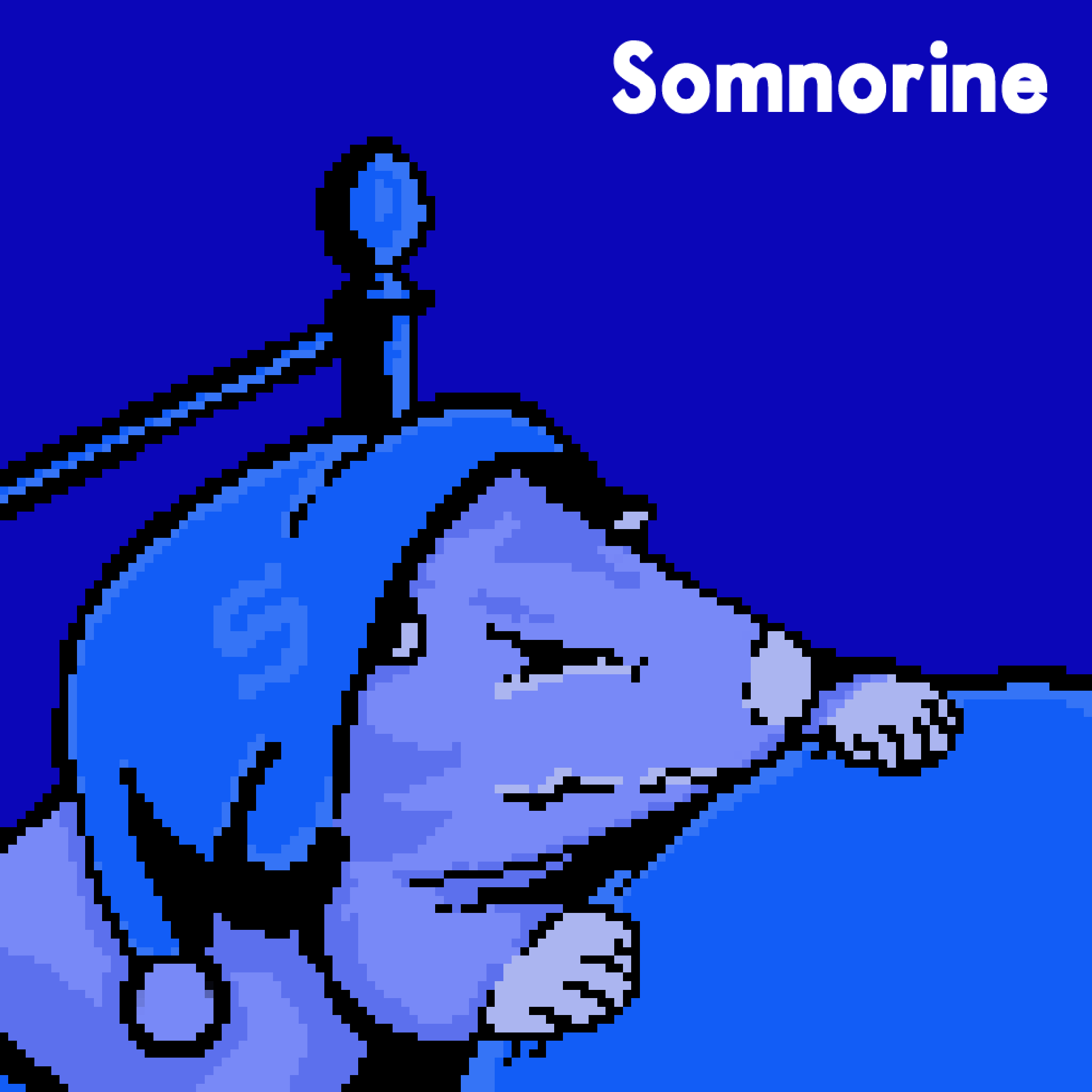
Punk Head: You created most of this album live on Twitch. What initially pushed you to make such a vulnerable, permanent body of work in such a public space?
Skylarka: I don't think there was an initial push specific to do this sort of work publicly per se. I started streaming on twitch a few years ago to give myself a creative outlet post-COVID. I was (and still am) dealing with long-COVID issues that prevent me from playing in a band. Streaming is a way I felt like I could do creative work and build a community online without the pressure to appear in person, and without leaving my house or hauling around gear. So I got into streaming music production that way.
Somnorine didn't actually start out as such a vulnerable conceptual album. A lot of the songs were originally just "it's Saturday so I'm streaming music" one-off projects. I started some songs using dreams as inspiration, but others started as just messing around and eventually grew into the theme. This fall, I found myself with this body of work that all felt thematically connected, so I reworked a few tracks to dial in the flow of the album and built it into a conceptual work and here we are.
Punk Head: How did involving your Twitch community in real time change the way you write lyrics or make decisions compared to working privately?
Skylarka: A lot. Like a lot a lot. When working privately I often will write a set of lyrics. Sit on them for ages. Then revisit and completely re-write them months later. Live it was a much faster and more raw process. Like, I'd write a line and people in chat would be like "Oh that's cool" and then it'd be locked in. I'd move on to the next line. I also find that I work more linearly on stream. When composing, I build songs differently. Like, my whole process shifts a bit and I jump around less. Off stream I often write a lick or a progression, then jump to another lick or progression that interplays or relates to the first one that will come up at a different part in the song. On stream, partly because it makes more sense for a viewer, I will typically build a whole chunk of a song into at least a draft form before moving on to a different chunk.
Sometimes folks in chat even provide realtime feedback, or even a line here or there. Maybe I will be stuck with something, like "I feel like this melody is close but not quite right" and someone in the chat will be like "what if you went down to this note for resolution" or "what if you added a transition note here" or something like that. It's really similar to bouncing ideas off a bandmate sometimes.
Punk Head: Were there moments where chat feedback pushed a track in a direction you wouldn’t have chosen alone?
Skylarka: Oh definitely. I think the two biggest cases were “The Witch House” and “Hero's Homecoming”. In “The Witch House” the phrase "claw and blood and tooth" came from chat. I had the first half of that line and was bouncing around a few ideas, and someone asked if they could make a suggestion and dropped that and I was like "OK that's perfect." Initially my idea for that song was for it to be... a little less esoteric. The verse with that line was going to be the setup for something maybe more like Mo(u)rning Lazarus lyrically, with the song more of a meta-commentary on nightmares generally, not recreating the feeling of one. But once I had that line "Real nightmares are scarier than claw and blood and tooth" I realized I could take it in this totally different direction and make it about a specific nightmare I had, and if the song was about a nightmare, I might as well make the song itself a nightmare, right?
In “Hero's Homecoming”, the song didn't actually even start as a chiptune thing. I was noodling around and I found the main arpeggio and was struggling to write a lead that I felt fit with it. I got a little bit of the current lead and I was getting ready to scrap it and start over, when a bunch of people in Twitch chat were like "Oh I really like that it sounds like a video game" so I started running with that concept. It took a while to get that song to a place I was feeling good about it, and of course eventually I had a fantasy-world dream adventure and I was able to channel that into the track and get it polished up.
Punk Head: How did your ongoing spiritual awakening influence the album’s arc from start to finish?
Skylarka: Honestly, it's kind of what the whole album is about as a story. I call it a spiritual awakening or journey, I don't know if that's even the right word for it but I don't have a better one. For me, that began as tough work in therapy, dealing with pretty crippling thanatophobia I had since I was a kid. Confronting the root causes of that and accepting the inevitability of death led to like, almost embracing it and the fleeting uncertainty of everything and the beauty in that. That led me down the road of exploring consciousness and meditation and the magic of being alive, feeling things fully, and embracing my entire self.
In the album, we start out with the almost furtive “Half-Remembered”. To me, there's fear in that song but even the fear isn't sure of itself. There's fear of the unknown and the unknowable, but there is curiosity and a desire to move. It's the beginning of that awakening. Things are scary, but something has to give. You have to go someplace, because the current situation is untenable and full of tension. Over the course of the album, we move through different feelings and experiences. We see hope, desolation, and beauty. We lose ourselves in the darkness and terror of the dark night of the soul where even the self is lost in “The Witch House”. But we endure it. We come through wandering and aimless, but with acceptance and peace. Eventually we come back to questioning, but with confidence, power, and an embrace of our own grief and pain as a natural part of living.
Ken Wilber has written about a concept called the pre/trans fallacy, which in short means that there are some things that we experience which to an observer may seem the same, but internally for the person experiencing them are extremely different based on what that person has been through. Imagine a child tasting a cake and declaring it the world's best, versus a master pâtissier tasting the same cake and declaring the same thing. I tried to capture my experience with this concept as it pertains to existentialism in the musical journey on Somnorine. In the beginning I'm unsure and almost shaky and fearful, but after the experiences of the album, my perspective on being unsure is different. I am at peace with it. The fear is gone and the sadness isn't something I'm dancing around, it's something I'm dancing with. Without that internal experience and without the understanding of the awakening I've gone through, I'm still just uncertain and questioning things. The album ends on an existential question, after all. But internally and in context? Thanks to the journey I've integrated all of these difficult feelings, and the existential question is OK. It's not scary anymore. It hurts, but the pain is natural and human and only makes the good things that much sweeter. Heck, it's sweet in itself. In the end, that's what I would say the heart of Somnorine really is. It's an album about accepting our own smallness and embracing the beauty of life.
Punk Head: Why did it feel important to end the album with an openly existentialist punk anthem?
Skylarka: I don't think there's a genre out there that is more self-assured than punk rock. Right? There are countless subgenres and whatever, but in the end punk rock is a snotty fucking self-righteous asshole being loud, in your face, and totally unashamed about itself, flaws and all. That's perfect, right? The album ends with the acceptance of our human flaws, the acceptance of not knowing, and the integration of sadness and anger and pain as part of the human experience. It waves those things like a banner. Punk rock just works for that kind of expression.
And the genre shift, it is also just a perfect representation of moving from sleeping to waking. We go through all of these dreamy synthesizers as we travel through dreams and doubts and questions and adventures and then we wake up. No more synths. Now it's just crunchy guitars, acoustic drums, and the human voice.
Believe it or not, I actually wasn't going to include that song on the album at all. But I had it sitting and mixed in a folder and I didn't know what to do with it. I also didn't know what to do for a closer for this album. Then it hit me, kind of like how the song hits you as something totally different with those first guitar chords hit. I threw it at the end of the tracklist and listened through and it just felt right. It worked for what I was trying to say with this record.
It's waking up, but it's waking up a little different than you were when you went to bed. In a good way. You've grown.