
Coma Beach “Jesus' Tears”
Revenge and punks goes hand in hand. There’s certain truth in anger and vengeance: the consequence and aftermath of tragedy that demands contemplation. Inspired by Samuel Beckett’s Waiting for Gordon, “Jesus’ Tears” is an episode from Coma Beach’s debut album, The Scapegoat’s Agony. Originally recorded and released in 1995 and released in 2021, the album depicts the delusional state of an unnamed anti-hero. As he imagined himself being crucified along Jesus Christ, the man vowed to avenge those who was responsible.
Driven and disillusioned, turmoil meets exhilaration in the 7th song from The ScPegoat’s Agony. Sonically, “Jesus’ Tears” is mind-blowing. It depicts a burning transition from the grit and darkness of 90s’ grunge to a piercing angst that can’t escape the room to the eventual “punkification”—revenge. In driven, exhilarating rhythm, the intensified track blows your mind through hauntingly palpable sonics and evocative lyrics coiled in noir aesthetic.
“Jesus’ Tears” is brutal. Riding waves of emphasised backbeats and high-speed flickers of electricity and fire, It has less to do what they channeled, but what they created and provoked. Coma Beach seems to have a way of reflecting societal issues through weaving music making into fictional storytelling. In a sense, The Scapegoat’s Agony is like a mirror into the past, but somehow still deeply resonating with the current.
Read our interview with coma Beach and learn more about the behind stories of “Jesus’ Tears.”
Punk Head: I love how you combine literary fictions and philosophy with music making. ”Jesus’ Tears” has a dark anti-hero take on the Crucifixion ofJesus, what was the creative process like for this track?
Coma Beach: Our creative process would generally work something like this: one of oursongwriters (singer B. Kafka, guitarist Captain A. Fear or bassist U. Terror) would come up with a story idea, mostly already put into concretelyrics; in some cases, those lyrics would have to be translated from German into English, as happened with “Jesus’ Tears,” for example. After that, our guitarist Captain A. Fear would work his inimitable songwriting magic by wedding suitable chords to the lyrics and then off we would rush to our rehearsal basement to blast out the new songs in full force😉.
As track #7, “Jesus’ Tears” fits quite well into the overall narrative of our album The Scapegoat’s Agony, as it depicts one of the unnamed antihero's delusional states of mind, with him imagining being crucified next to Jesus Christ and vowing to avenge himself on those he deems responsible for his suffering. Consequently, the following episode in the antihero's excruciating mental and emotional odyssey, as laid out in “Astray (Fallen Angel)“, witnesses him assuming the treacherous persona of a Christ-like would-be saviour. What could possibly go wrong here?😉
PH: Was there a particular work that inspired you to experiment and experience literature through music?
Coma Beach: Actually, there were several authors, artists and philosophers whose works, consciously or subconsciously, had a major impact on our music and our lyrics. The first one to mention here would be Irish playwright and novelist Samuel Beckett, who was generous enough to lend the title to our album The Scapegoat’s Agony, which is a direct quote from arguably his most famousplay Waiting for Godot and perfectly encapsulates one of the main topicalthreads running through our album: the existentialist view of the world’sutter meaninglessness and the necessity to soldier on in spite of this apparentlack of a higher purpose in the human condition.
Other crucial literary influences included Douglas Adams’s The Hitchhiker’s Guide to the Galaxy, with his satirical-sarcastic approach to the absurdities ofhuman existence; William Shakespeare’s plays, especially some of his tragedies, such as Hamlet, Macbeth or King Lear, with their characters having to suffer through existential and – not infrequently – self-inflicted conflicts; or Arthur Schopenhauer’s system of a radical metaphysical pessimism.
Add to this some deeply unsettling motifs of the-nightmarish-in-everyday-life, as employed in the works of Franz Kafka and director David Lynch, forinstance, and – voilà – you get The Scapegoat’s Agony😉.
PH: What was your history with punk rock?
Coma Beach: Like a lot of musicians, we started out covering several songs from our favourite bands, some of them punk or punk-ish, such as Sex Pistols, Ramones or Die Ärzte, some of them post-punk, such as The Cure or The Jesus and Mary Chain. When we finally began to create our own material, our songs at first turned out to sound more in the post-punk vein: “Passion" and “Absurd", tracks #6 and #10 off our album, are perfect examples of thismore despondent streak of ours.
Starting with “The Past Of The Future” (track #1), “Nothing Right” (track#2) and “A Madman’s Dream” (track #4), our music began to take on moreand more of a raw and unbridled classic-punk quality and energy, whichwould become kind of our signature sound.
PH: Can you tell us more about you as a band?
Coma Beach: Our band was formed in 1993 by singer B. Kafka, guitarist Captain A. Fear and drummer M. Lecter, with bassist U. Terror and rhythm guitarist M. Blunt completing the lineup. After extensive touring throughout Germany, we recorded and released our debut album The Scapegoat’s Agony with the German punk label Impact Records in 1995. Only one year later, we split up and, well, that seemed to have been the end of it. Short, sharp and quick, as it were😉.
In 2021, however, with the advent of various different streaming services andright in the middle of a global pandemic to boot, we decided that the time was right to once again unleash our relentless aural assaults upon an ailing and unsuspecting world: and so here we are😉.
PH: What would you like to tell your supporters out there?
Coma Beach: It has been immensely encouraging and rewarding to find out that there is still an open-minded and enthusiastic audience for the type of music we created almost 30 years ago. So thank you, all our dear supporters out there, known and unknown, thank you from the bottom of our hearts for listening, sharing and caring, we really appreciate it very, very much🙏🤗❤!
TROLN “For Love”
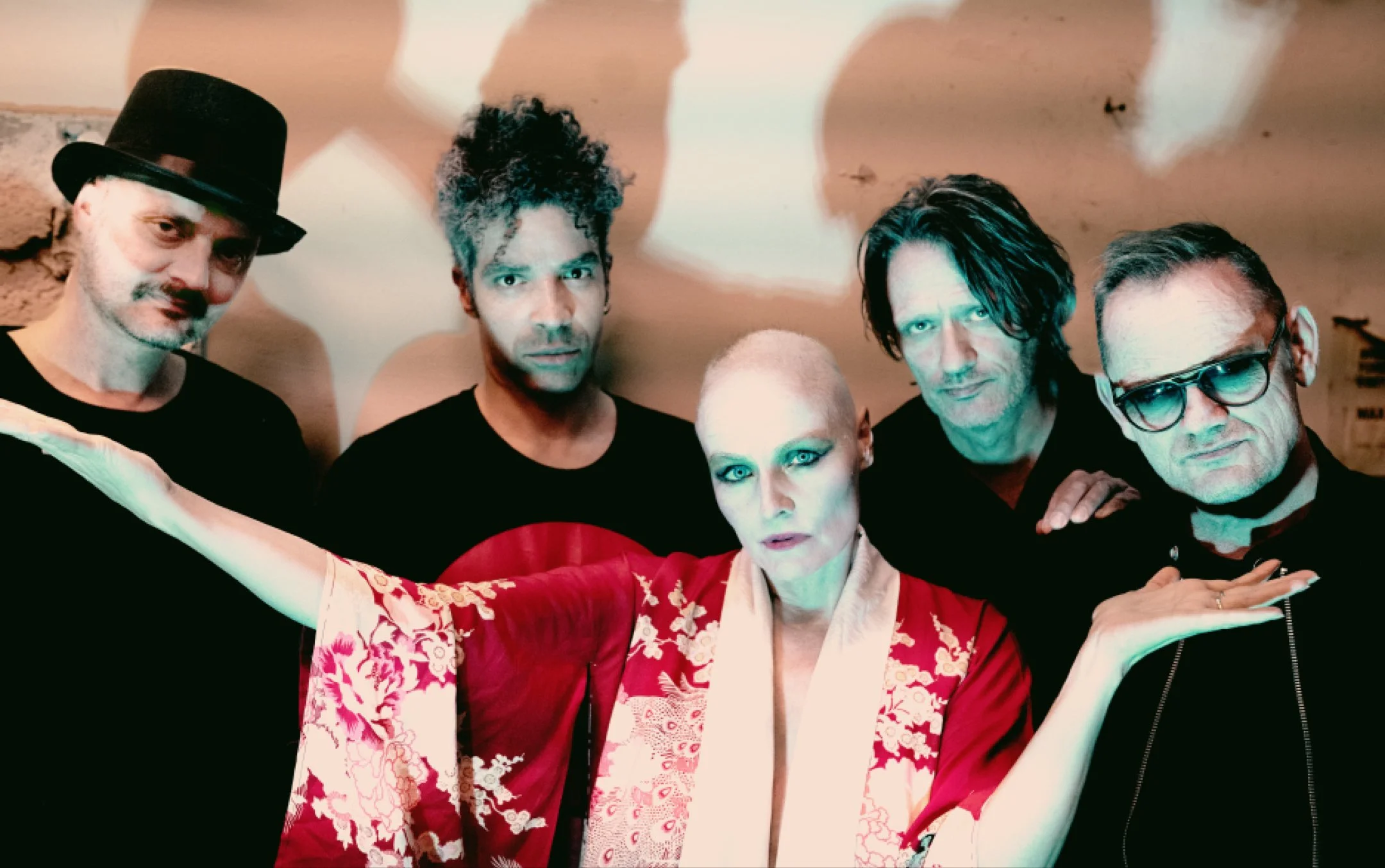
With elements from the tale “Bluebeard,” “For Love” is a spine-chilling post-punk ballad that tackles the horror that lurk underneath the abuse of love. Helene Navne’s stunningly haunting vocal bleeds into her thought-evoking storytelling. With soft and feathery vocals curling like smoke, dark beats send the intrigues and alarm. Immersive, atmospheric sonics that creep in and fade out, pulling emotions like strings, “For Love” is where the alarming, spine-tingling truth surfaces, blood soaking the sweet bubble of love to a heart-wrenching red. There’s nothing romantic about abusive relationship.
There’s plenty of symbolism and poetry in “For Love.” The noise and disobedient dissonance fly in and fade out, alerting the nature of crime. But the beautiful, melancholy melodic storytelling seems to have no clue of what’s going on. “And then she changed her ways for love; and she changed her name for love; changed what she wants to change for love. But that’s not love at all.” The bleeding key is her only clue, but when can she see the monster’s true nature? Instead of focusing purely on the penetrator, TROLN encourages listeners to reflect the patterns in a relationship: how far have they bent themselves for love? What are they forgiving? How have they changed to meet the demand of the other?
We chat with TROLN on their latest release “For Love.” Read more on their inspirations and messages:
Punk Head: I love how you tackle abusive relationship through this stunning, dark tune. What are some challenges that encountered writing ‘For Love?’
TROLN: I met this woman who had just left an abusive relationship, and as I got to know her reactions to it—anxiety, ptsd, fear of being alone etc—I recognized some of this in myself. Sometimes it's only when we experience stuff through someone else's eyes that we really see things for what they are. When I got to know this woman and her story, it helped me realize things about my own past, and how I have sometimes mistaken abuse or control for love. I hope that people listening to this song who may be living in relationships with abuse, control or fear, that they may listen and dare ask themselves the question: is this really love, or is the beautiful word covering up for something it shouldn't?
PH: What was your favorite moment in making the music video?
TROLN:We haven't made the video just yet, but we are working with visuals from the tale ‘Bluebeard,' in which a woman finds out the truth about her murderous husband because of a key, that won't stop bleeding. When the truth is staring you in the face, you can't unsee it even if it has heavy consequences. I love the bleeding key as a symbol for this, and we have used it in our artwork as well as in the coming music video.
PH: What is your creative vision as an artist?
TROLN: My vision is to use the beautiful and emotional language of music to relate to people dealing with life and its hardships as well as its wondrous moments. Music can speak directly to emotions, like no other art form, and without it I would surely be mad myself. If our music reaches someone who feels just a little better or less alone while listening, it is all worthwhile.
PH: Who are your biggest inspirations?
TROLN: People who are authentic and kind. And art that makes me feel and think. I love jungian archetypes in myths, and storytelling that helps us understand the world and people in it.
PH: What would you like to say to your fans out there?
TROLN: If you are in an abusive relationship, please get help.
Dream of a Man in a Top Hat “The Destination”
“In a jumble of thoughts, you can sometimes catch a glimpse (it’s unclear) of something.” — Dream of a Man in a Top Hat “The Destination.”
There are many ways to describe Dream of a Man in a Top Hat’s latest release. On the surface, the song sounds like an introspective nightmare in a wonderland of swirling madness. If you get deeper, you’ll hear a retro fusion of distorted nostalgia. From there, if you put it on repeat, you’ll hear a painting that drifted in all direction until it has become an obscure impression of something you could and couldn’t recognize—an unclear, non-linear representation of a complex experience. Perhaps that’s more keen to the feelings and aesthetic of “The Destination.”
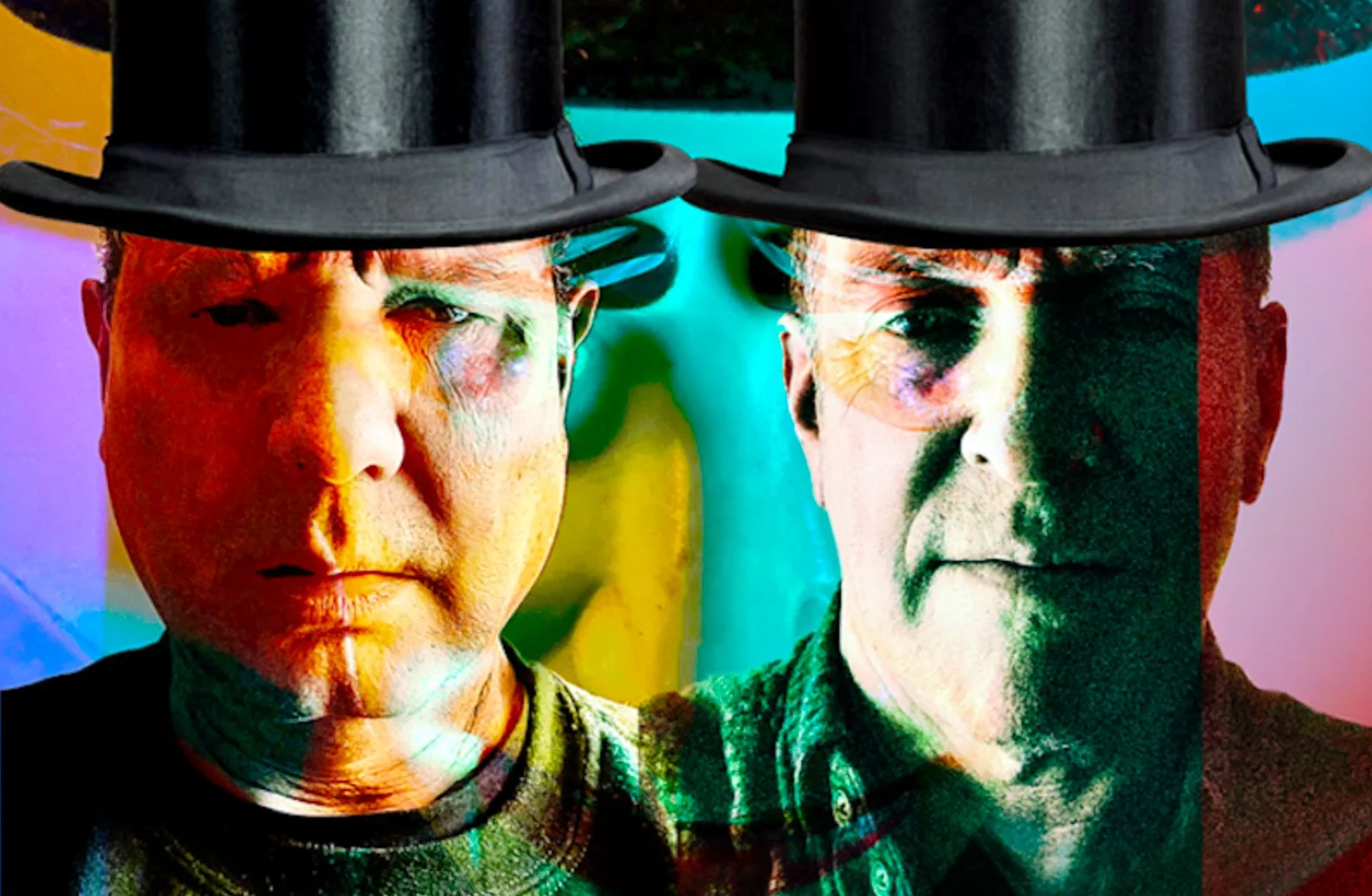
The music duo, Dream of a Man in a Top Hat are no doubt dreamers. They have a very distinctive sound that rips off the pretense of the world and declares who they are. No apologies, no crowd pleasing, no bullshit. They brings to us the maddest dream with warmth and humanly relatable emotions. Stylistically, every song they share has the ability to hit your music sweet spot while throwing you off the tracks with something entirely new. Like two adventurers who are also deep thinkers and psychedelic experts, they deliver the world through a lens of combined familiarity and bizarreness.
“The Destination” is a tune that sort of grows on you. It does take some getting used to if you’re new to Dream of a Man in a Top Hat. Listening to their music is like discovering a hidden door of a new world, a world inside a world. It’s never boring when it comes to their music. “The Destination” is a kaleidoscopic encounter between grunge, experimental, psychedelic, jazz and disco. Drastic, retro guitar riff full of twangs in black distortion. Their rockers’ charm draws you instantly to a different time and place, stirring some nostalgia inside, which soon becomes very addictive.
Things are happening all over the place in “The Destination.” Wherever you look is a scenic intrigue. Dream of Man in a Top Hat manages to paint abstract and impression at the same time. At one point, a modernistic sax stumbled upon this strange world and got lost in their music. Hear from there what it stimulated. From a singular motion, butterfly effects flood in through vivid sonics, stirring a different sight—now you’ve found the key to the hidden world.
Melodies are emotive and stirring, but they are not exactly the way you’d expect them to be. There’s a song hidden below the chaos and commotion, and it’s driving you crazy just to hear it. The treatment here in “The Destination” also reminds you of the experimental aspect of Radiohead.
virgin orchestra “on your knees/give in”
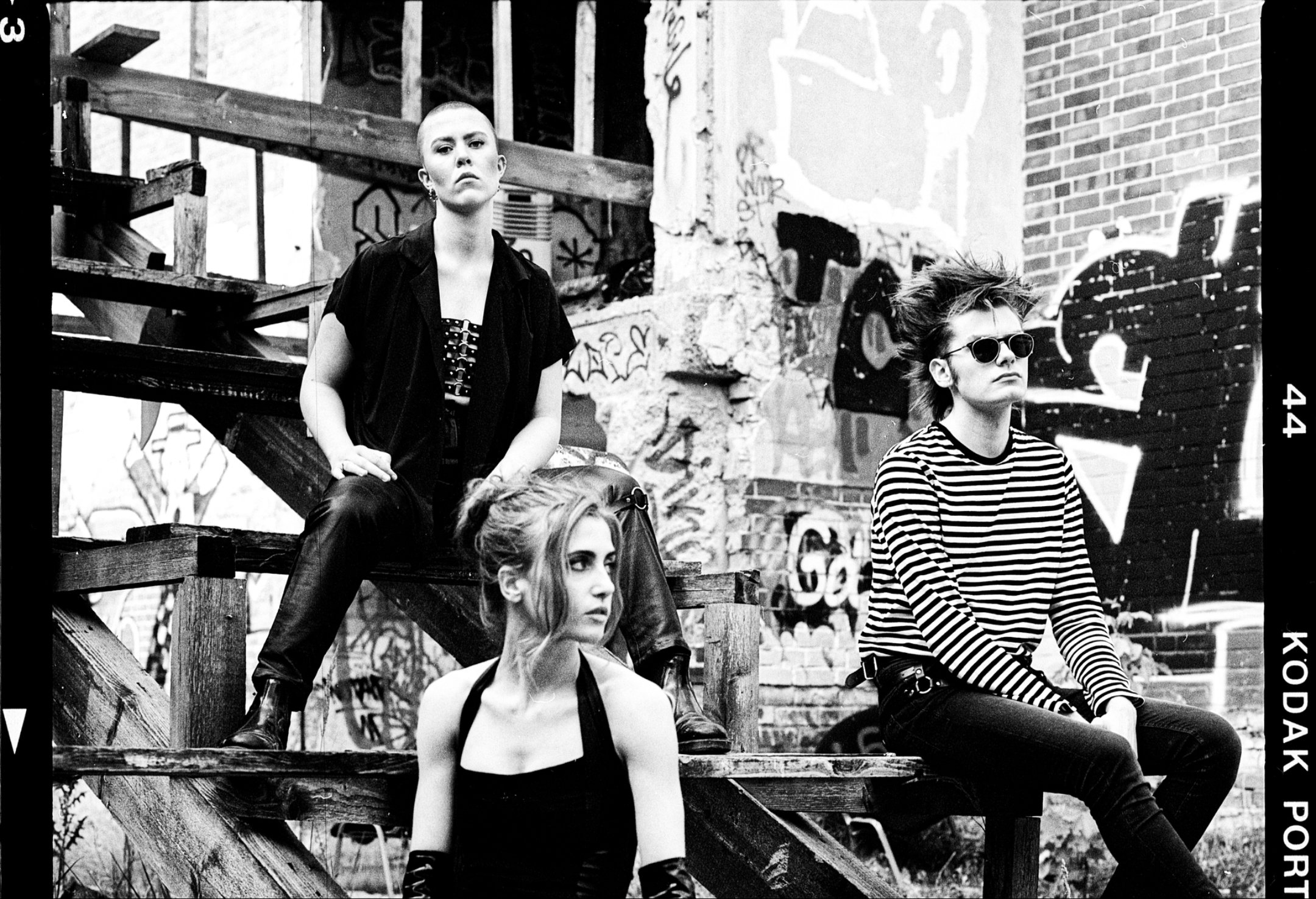
Virgin orchestra, an exceptional experimental post-punk band based in Reykjavík, is gearing up to release their debut album. With a double single release, “on your knees” and “give in,” the three musicians of diverse musical background give listeners a sneak peak of the unusual phenomena they’re about to bring to the world.
Virgin orchestra describes “on your knees” as an “anthem of tragedy.” The track opens with a fluctuating melancholy. Immediately, the bleakness of a piercing guitar takes listeners to where the post-war captives were executed. The drastically tragic single evokes a sense of urgency, leveling between humanism and grim. Uncompromising narrative meets a picturesque post-punk glitch, together in an avant-garde soundscape. “On your knees” is confrontational but deeply sensitive.
The lead vocals in the track reminds listeners of the unorthodox singing voice of PJ Harvey, whose vocal performance alone is a poetry of extreme and atmospheric expression. There are a lot of grounds being challenged here in “on your knees.” Artistic expression in the post-avant garde world seeks more from non-linear and immersive storytelling, and that’s where their sounds seemed to be headed.
If “on your knees” is where blood drops became spots of black, “give in” is the somber dance between a blurred-edged mellowness and drastic horror. The sonic palette evokes a confessional contrast as the scale tips from one end to another. On on end, a fantastic drop of substance dissolve in the blood, blurring the line between poetry and sound, reality and surreality.
The hypnotic, psychedelic soundscape feels eternal, but all of a sudden, the color changed, so violently. Like the surroundings have frozen into darkness and deserted abyss in high resolution, the true horror of being “awake” has never been so close. Virgin orchestra tackles substance abuse with such palpable sonic depiction that is truly provocative.