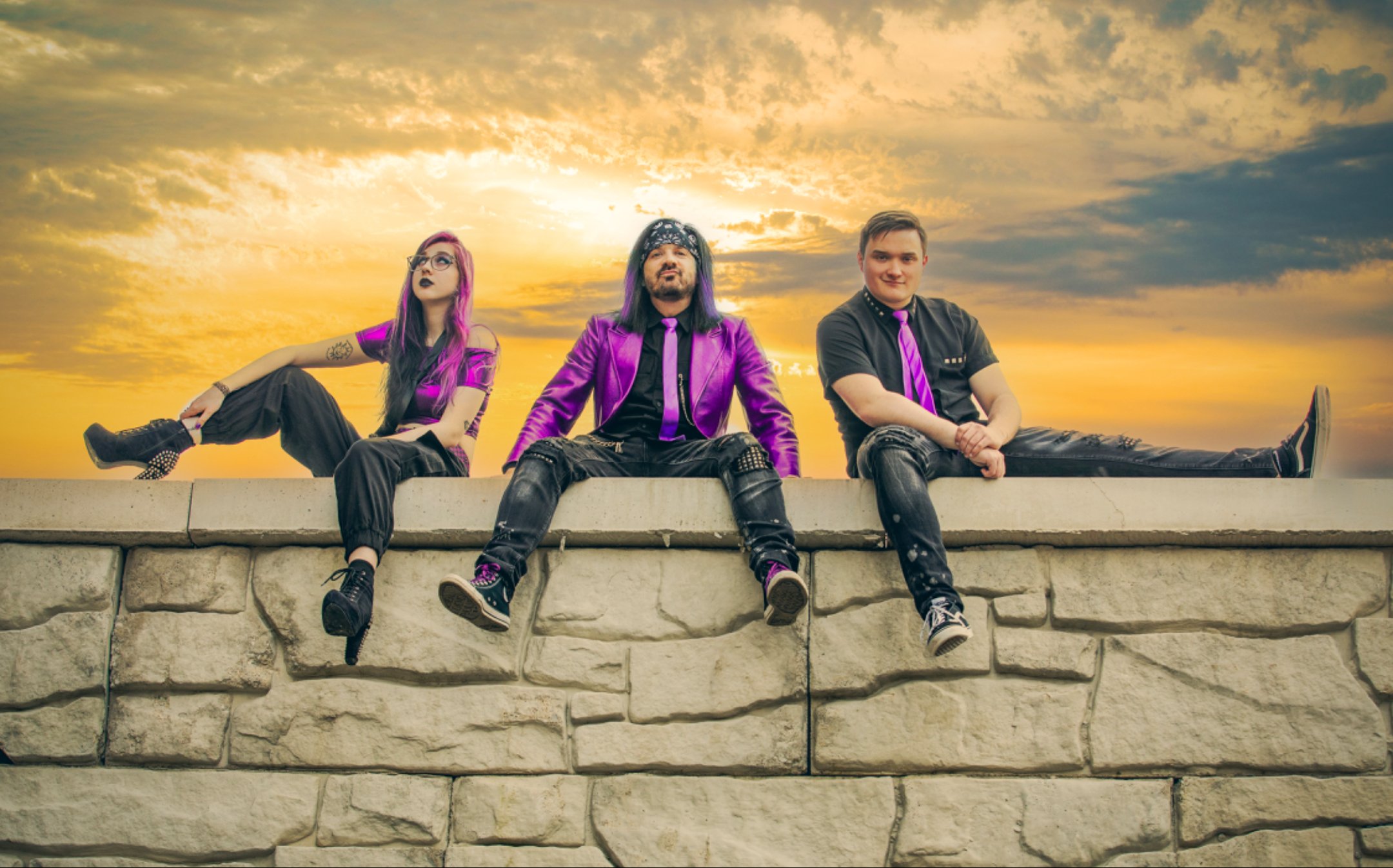
Chip & The Charge Ups ‘What Happened to the Boy Next Door?’
“Paying Back the Devil” is the kind of song that makes you lose your mind and go “oh shit” right from the top. It’s top-notch rock in an entirely new sound. There’s no one else in the scene that’s doing what they’re doing it. A bit bizarre, more abstract than the previous. With a hint of retro, but in a way it’s futuristic. With What Happened to the Boy Next Door?, Chips & The Charge Ups give you some very interesting music to ponder upon. When you hear them, you just know they are going to be the next big thing in rock. The only people who don’t know are the ones asleep.
“Maleena Made Us Change the Name of This Song to Fit in with the Pop-Punk Community” is punk music in the new era. It’s genre-crashing. A bit of surf, and a bit of emo, and a bit of pop. Even smashing into metal at some point, but the ruthlessness and rebelliousness, to hell of traditions is double doses of punk authenticity. Chip & The Charge Ups literally just blow the genre wide open with this one.
“Ultra-Legendary” gives you teeth-grinding grittiness and nastiness, spilling something raw and pure. “Sideways Middle Finger” gives out a cult-gathering vibe. It’s something that can’t be described. It’s mysteriously hard-hitting and contagious. Once you start playing this song, you just can’t ever put a stop to it.
“Welcome to the Neighborhood” ends the album with a stadium filler and a bang. It’s a different kind of rad feeling that makes you tear up. It’s stirringly beautiful and leaves a memorable ring in your ears.
We had the chance to chat with vocalist/guitarist Chip Dominick from the band. Read our interview with Chip and learn more about this record.
Punk Head: I'm very intrigued by What Happened to the Boy Next Door and your innovative, genre-bending sound. Can you tell us more about the story behind this album?
Chip Dominick: We had a bit of a line up change in 2022, going from a four-piece to a trio. Out were a drummer and guitarist and in was our new drummer, Nolan Allen. Right from the get-go, we were ready to start onboarding new original songs. I had 26 written and demoed and the three of us had a listening party, where we took notes on each song and gave each a numerical rating. What we ended up with was a collection of seven songs that we all agreed were top-notch, with six fitting very well together and sharing that genre-bending characteristic you mentioned. Overall, it gave our music a heavier, nastier sound than our previous releases, which was one of the reasons we thought What Happened to the Boy Next Door? would be a good album title!
PH: Which song(s) from the album do you think best represents your artistic vision?
Dominick: I think they all collectively represent our artistic vision. But, I particularly love how "Maleena Made Us Change the Name of this Song to Fit in with the Pop-Punk Community" goes from the poppiest of pop-punk to the moshiest metal and back again. I can see us building on things like that to further ingrain our identity in the future.
PH: What has been one of the most significant moments of your musical journey so far?
Dominick: We have had so many back-to-back-to-back since we finished the album. Our album got a rare 10/10 review in one of the world's most prestigious music magazines. Our song, "Paying Back the Devil," got added to regular rotation on the biggest rock station in our city. We were just guests on a hugely popular network TV talk show. And, I got a call about performing the biggest show of our lives, which we will be announcing soon. I think all of those events can be combined into an unbelievable "moment" that we are experiencing right now!
PH: What first got you into music?
Dominick: My brother introduced me to Led Zeppelin when I was 13. From that point on, I wanted to write be like Jimmy Page and write the most memorable rock riffs of all time as he has.
PH: What has been, so far, your favorite song to perform and why?
Dominick: My favorite has been "Paying Back the Devil." Looking out at people's faces and seeing them recognize it from hearing it on the radio or seeing the video is a rad feeling
Ellery Twining ‘RESULTS’
Ellery Twining is ahead of his time. He foresees a post-pop era before the genre is even defined, but here and now, RESULTS convinces you that a new aesthetic is the inevitable. Before, the post pop genre hasn’t had an artist who can truly define the genre, at least not until Twining entered the scene.
Twining has something very special to share with RESULTS. Following his acclaimed debut release, the sophomore album further pushes the experimentation of form and texture. To answer the question what post-pop is, you need to first listen to his album. The album sees a translucent form of childhood nostalgia combined with a cynical look at past generations in reflection with modernity, pop, and pop culture.
The influences of RESULTS, or more accurately, its rising aesthetic is also echoed throughout different forms of contemporary art. In literature, there’s a rising of non-linear storytelling and expressiveness, which focus on individual artistry and creativity and sees narratives bend the rules of genres. RESULTS share the same thread of individuality, liberation, and expressiveness. Twining’s non-fiction, personalized narrative is entered through a fluid-like deformation of pop and folk lyricism and carried out by the heart of a poet.
RESULTS in a way reminds you of glam rock, avant-garde, and punk, of which forms all share the confrontation and seeking of a more conclusive expression as new movements and changes are emerging across the globe. We are too at a change of time, and RESULTS articulates these lost and undefined feelings. Its form might still be viewed as edgy by many, but it’s well-supported by the change of narratives that are happening in the world. RESULTS doesn’t lack universal appeal. It’s more than ever resonating and needed to be heard.
Punk Head: I love how your experiments in post-pop soundscapes relate to socially aware themes. Can you tell us more about RESULTS and how this project came to be?
Ellery Twining: Thank you! When I was a kid starting out in my first rock band, I realized that the music of the Sixties, that was a thread of the influence on us at the time, could not be understood simply by listening. There had to be a story behind “For What it’s Worth?” I thought to myself. And when I started digging, I found out there was a story. The voluminous threads of the Sixties culture led to a re-examination of the music from the 1970’s, which I experienced on AM radio, in my mother’s VW Bug. Every layer revealed another layer, and I began to understand the dynamic of being truthful in music, versus being “successful”. Having said that, I was determined to sign to a record label as a signature of accomplishment during my Rock Band years, and I thought that would equate to success. I was wrong.
RESULTS is evidence that I learned to do both at the same time; the music, and the intent.
PH: Can you talk about any standout tracks on the album and what makes them special to you?
Twining: “CELLAR DOOR” is the best song I have written, I think. Much of that is what Eric Lichter brought to the table during the sessions at Dirt Floor. I only write songs about events in my life that have actually happened. No fiction. I knew all of these kids in the song. It has a certain healing element, but it is also a fingerprint.
PH: How do you stay inspired and motivated to continue pushing boundaries in your art?
Twining: It’s a responsibility, yes?
PH: Who are your biggest influences?
Twining: I read an interesting interview recently with Geddy Lee of Rush, and he was asked about influences on their music. His response was perfect-“Have so many influences no one can distill them.” Cocteau Twins absolutely changed my life. (I suppose I am breaking my own reveal)
PH: What advice would you give to other artists who want to explore experimental art forms?
Twining: The canvas is quite filled out. Find the empty space.
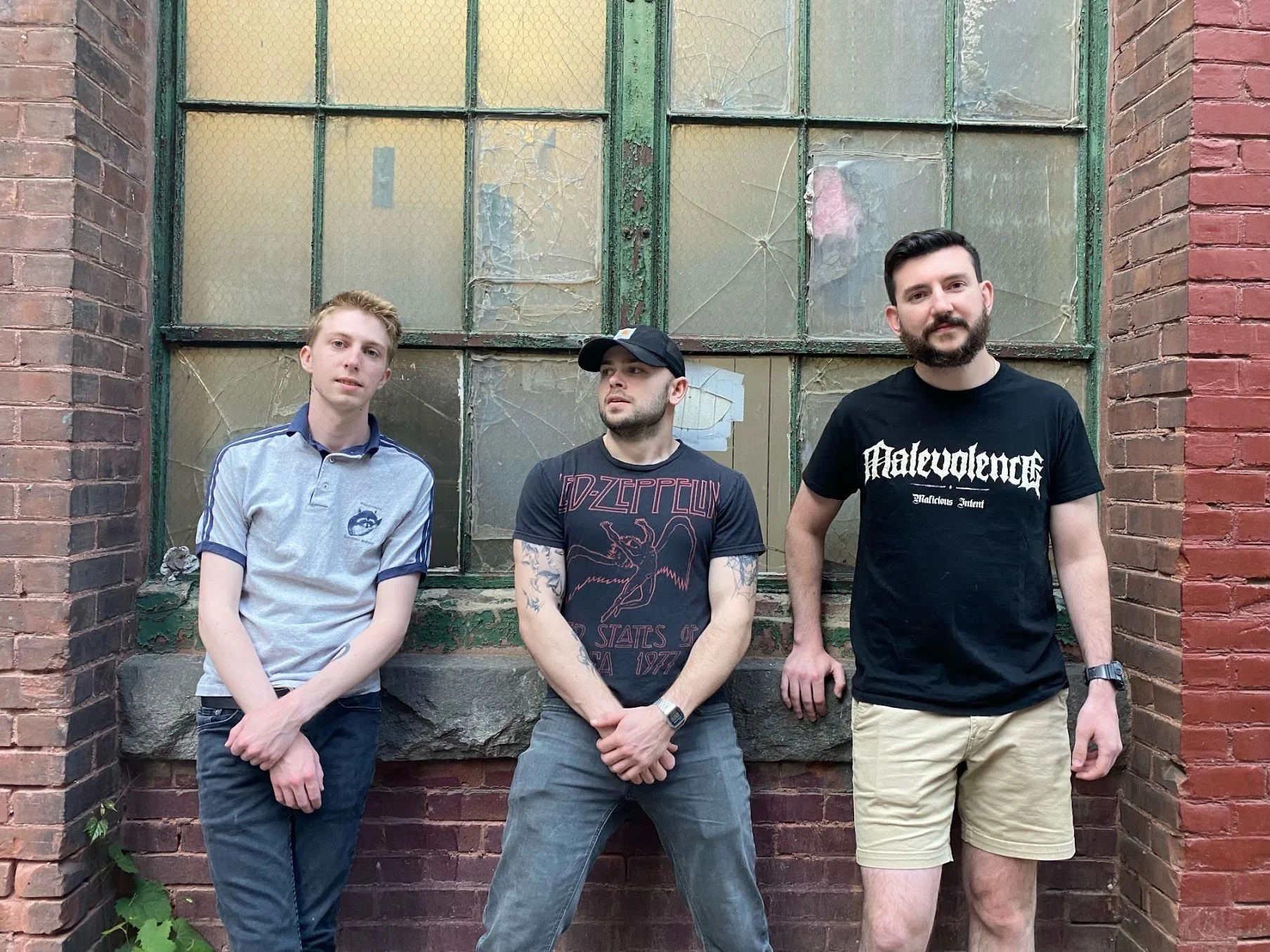
Craetor ‘Surrender’
Surrender is a mind-bending EP where the storms of styles wrap you up in an immersive noise-coiled boom, heating up the ground beneath you. Ghosts, old and new, scream and soar throughout the EP, while their faces are bent and distorted, forging into new ones. Surrender is something very special. The worlds and feelings stirred by these songs didn’t exist in this world until Craetor drags them out of thin air. It’s truly something new and gritty in the landscape of rock, and haunting enough to experience severe deja vu.
“Intro” is heavy as well as atmospheric, emotive and psychedelic. As if it’s derived from the same string of desert blues, a scenic long-shot messes up your heart and mind. It’s hard to describe the exact you see, but the baking of the sun and the bleakness and shattering of noise becomes a feeling, an undissolved haunt that gets under your skin.
“Riot” is a hysteric, gritty underground punk wrapped up in the heat of noise. It’s warm, almost a burning feeling, but the high contrast and almost an high altitude brightness give you a caged exposure. At the same time, it remained free-spirited and rebellious, deteriorating deeper into a metal, swampy doom land with over-heated psychedelic. The palpability of these feelings prove that Craetor is on a completely new level, just a few months after their last release.
“Stone” gives you the same goosebumps from Nirvana’s grunge songs. Even the soaring guitar has Kurt Cobain’s ghost screaming into it. “Stone” is a wicked track. Just when you’re on the edge of your seat, waiting for a cathartic break point, they punch you in the face with a sudden change of direction, coming back with a sort of skeleton aesthetic, goth impression wrapped in its grunge sonics.
“Wretch” has a hint of suffocation in its soundscapes while the vocal line is pure cathartic. It continues up the vines of grunge and punk from the previous two songs, but much darker and deeper intense. At some point, you see a man running, hitting the walls, against the world. The battle and struggle live so vividly in “Wretch” and among the instruments.
“Wither” comes in the sounds of death’s heavy footstamps. A heavy track with a thick, metallic texture, laced with hauntingly captivating melodies. Withering is a poetic idea, and the mourning of what has been, and “Wither” captures death, the process of death and its aftermath.
Surrender is purely a mind-blowing experience. Read our interview with the band and learn more about backstory of their unique sounds.
Punk Head: I love the grit and authenticity in Surrender. Tell me more about this EP. Is there a story/theme? And what’s the story behind it?
Craetor: For Surrender we really wanted to accentuate the warm tones that are present on a lot of our favorite albums. We opted to record the album ourselves in order to maintain a certain analog sound, which definitely comes through in the grit. As part of the process we used minimal overdubs in order to preserve as much of the raw sound we produce as a three piece. We’re really interested in creating the most robust sound possible with just the three of us, and we tried to translate that as much as possible into the EP.
PH: Can you talk about any standout tracks on the EP and what makes them special to you?
Craetor: For us the standout tracks are “Stone” and “Wither.” The tracks epitomize the blend of doom, psych, and stoner rock that we wanted to achieve on the EP. The writing process behind these was very collaborative, and brought the best out of all of us.
PH: Who would you most like to collaborate with if it could be anyone in the world?
Craetor: There isn’t really any particular artist we would like to work with. For us right now our goal is to keep producing more music and evolving our sound. Naturally we would like to make the switch from working independently to working with a label, and there are a number of which we would love to be involved with. Labels like Heavy Psych Sounds or Electric Valley Records that carry a really diverse array of artists are the types of groups that we’d ultimately like to work with.
PH: In finding your sound, how did you guys land on stoner rock?
Craetor: Stoner rock ended up being the natural meeting ground for all of us as musicians. We all share an interest in the palm desert scene, and in particular looked at Kyuss as inspiration for our first tracks. Initially we tended to lean more into the punk/thrash realm, but over time we’ve found ourselves more in the stoner rock niche.
A large part of that is due to our backgrounds individually as musicians. Our guitarist tends to lean into the heavy psych realm, our drummer into the hardcore scene, and our bassist/vocalist into a doom tone. Melding these sounds together has really dictated our genre.
Finally, stoner rock is a loose enough term that gives us agency to experiment within the genres we are interested in. We’re constantly evolving our sound, and we like the freedom to pull elements from doom, psych-rock, grunge, and metal without boxing ourselves in too tightly.
Loose Bolts “Could I Stay Here?”
Through the looking glass, “Could I Stay Here” gazes into a distant past. With the innocence and impulse of a young man foraying into the world of romance meets the maturity of a grown man, “Could I Stay Here” is a nostalgic swirl of emotions. Loose Bolts stirs up luscious, almost ethereal blend of shoegaze textures, still carrying the anguish and grit of emo. He creates a bittersweet time heist around the theme of love, loss and growth, taking you on a sonic adventure in the early aughts.
Loose Bolts makes nostalgia an impressionistic, reverberant lush in this single. Yet, his guitar still has a gritty edge to its ring. The epic swell of emotions and catharsis eventually calls back his 2015 punk spirit—rebellious, energetic, confrontational, still having these sharp and contrasting big feelings. But that person is also romantic and tender. There’s a beautiful vulnerability and simplicity bouncing between the sonic walls during the fleeting seconds when “Could I Stay Here” rushes to climax. He channels something incredible that bends the law of time.
Though nostalgia is easy to feel and understand, “Could I Stay Here,” on the other hand, is a sophisticated creation of art. Loose Bolts reminds you of The 1975 meets Community Spirit-era The Academic. Raged with introspective thoughts and deep feelings, each brush on the sonic landscape has its organic characteristics and personality. These sometimes contrasting feelings and thoughts form a multi-layered abstract sonic painting that gives you distinct experiences under different shades of light. For some, “Could I Stay Here” gets under your skin and draws you to a deeply emotional state. For some, it’s the escape into the taste of a loss love and its purity. But at the end of dreams, you always wake up, with the life you lived feeling twice its size—that’s what “Could I Stay Here” does.
Read our interview with Loose Bolts and learn more about him as an artist.
Punk Head: I love your unique blend of styles in "Could I Stay Here?" How did everything come together?
Loose Bolts: Thank you! I recorded the first demo in 2018 and was actually considering keeping it a bare bones acoustic track. A few different versions and tweaks were made before recording the final version in 2021. I didn't really consider having such a chorus-drenched lead guitar or making the song sound so dreamy up until the 2nd time I re-recorded a full band version back in Florida (which would have been the 3rd version). I actually have a podcast/DJ set series called "Loose Talk" on Youtube & Spotify exclusively that goes into detail about this exact topic if you'd like to check it out!
PH: Was there any challenge that you encountered while making the track?
Loose Bolts: I suppose so. More so up until the point where I went to record the final version here in Nashville. That process also had a hurdle or two, but nothing really worth mentioning, other than I very quickly learned that I needed to hire a good engineer more than I needed to hire anyone to "produce" this song in particular for me. The worst of it initially was just people I tried to finish an earlier full band version of it with being flaky... That's "the biz" sometimes. Otherwise, it was mostly exciting uncovering this song's identity over the course of 3 years.
PH: What motivates you as an artist?
Loose Bolts: Different aspects of the whole thing motivate me in different ways. That's like asking "what motivates you to go to work in the morning?" Overall though, I'm a bit of romantic thinker, or a dreamer I guess you would say, but I think there's so much value in that as long as your thinking is grounded somehow. Sometimes I'll find myself watching clips or compilations of people doing really kind or even really heroic things (individually or collectively) and they usually make me think "As fucked up as life can be, there is still beauty in the world." In some way, I'd like people to have a similar reaction to Loose Bolts. Something like "As fucked up as life can be, this guy dedicates himself to creating beautiful artistic expressions, simply because he feels driven to do so. That's inspiring."
PH: What do you aim to accomplish in the near future?
Loose Bolts: Other than releasing an EP later this year, I'm just focused on reaching new fans online. Once the demand seems to be there, I'm going to start touring. :-)
PH: What would you like to say to your fans out there?
Loose Bolts: All it takes is a little Temerity.

Dominik Matzka “Was ist dann los”
“Was ist dann los” (what’s the matter), is about perspectives. An ode that takes the form of open-ended “what if” queries. Behind each disaster and destruction is rebirth and rebuild. A loss is always accompanied by an opportunity for new, but Dominik Matzka goes even deeper than what we all know. Through thought-provoking questions and mind-opening twists, Matzka invites you to really see your situations for what you have missed.
“If truth can’t be named; if the flames can’t be burned; if we’re in fact the fire not the wood; if our veins are full of gold…”
With picturesque cinematic epic thundering through underneath, coming to you in deep, ground-shaking pulses, the surrounding of nature and its spirits is woven into Matzka’s smooth and earthy voice. His music feels like a call to return to truth. The world seems to have slowed down in “Was ist dann los,” you see moments and life on a big screen and are not deterred by your own emotions, but seeing it flowing through your eyes. One image, in particular, sticks out.
The falling house image first occurs in the lyrics, in which an ancient tower is then discovered. What’s interesting is how it’s being projected in a much more profound way into the sonics. As modern folk texture meets medieval polyphonic-inspired chants, even no crumbling of destruction is heard, a deeper, vertical revelation and expansion into history, intelligence and origin in “Was ist dann los” can be observed, and its movement is more than ever conscious. But it has been in the fabrics of Matzka’s songs since the beginning.
Deep in both folk music and sacred music and with the broad board of history under his thumb, there has always been a curious and spontaneous trace to ancient art and its forms in Matzka’s music. Combined with his own modern acoustic sensibility and instincts for creating organic sound designs, his music is a mending and a continuation of old and new. Deeply refreshing and therapeutic.
“You can think of literally any problem as a chance to learn something. In fact we need crisis and dark times to learn things we otherwise wouldn’t,” says the artist.
Read our interview with Matzka and learn more about his fifth single “Was ist dann los.”
Punk Head: I love how intimate and immersive "Was ist dann los" is. Tell us more about the story behind this song. How did everything come together?
Dominik Matzka: Well, first, something broke apart. When my former relationship ended in 2017, I had a key moment. On the bus home, I felt that this was exactly the situation I should be in. Right now, in this emotional and mental mess, there was the chance for personal growth. In that moment, the melody for „Was ist dann los“ evolved in my imagination. The lyrics then developed around a game-changing thought: „What if this problem is actually a gift?”
As a living thing, the song has gone through some radical changes, too. First, I recorded a ton of background vocals like those you hear in the end. They were inspired by the rough energy of medieval polyphonic chants. In 2020, when I got the opportunity to work with the Film Orchestra Babelsberg during my film music studies, I took the chance and arranged „Was ist dann los“ for orchestra.
PH: Is there a particular message or theme you hope listeners take away from this single?
Matzka: You can think of literally any problem as a chance to learn something. In fact we need crisis and dark times to learn things we otherwise wouldn’t. This is just as true for social, economical and ecological problems as it is for personal issues. But the real boost – also for society’s learning curve – is playfulness.
PH: What has been one of the most significant moments of your musical journey so far?
Matzka: This year I’ve committed myself to the fact that I don’t make music for money. I do it because it’s fun, and as a kind of service to the divine spark in all of us. That’s why I chose to earn the majority of my bread as a music teacher, not by selling my ability to compose and produce. I want to create music from within, and I don’t want to compromise on that anymore, just in order to survive as a full-time musician.
PH: What is your creative vision as an artist?
Matzka: As an artist, I don’t need one big vision. Many small visions – usually one per project – are totally sufficient.
As a human being however, I do have a vision. In my boldest dreams, humanity realizes that happiness can’t be reached by staying greedy and busy. Instead, we somehow manage to escape the treadmill of capitalism and learn to care for ourselves and each other on a basal level. This whole process starts with unpleasant questions, and one way to ask those questions is through making art.
PH: How has studying at Filmakademie Baden-Württemberg made an impact on your music career?
Matzka: Studying at Filmakademie has helped me get into touch with lots of people from different film departments. A win-win situation: Filmmakers can commission me to write scores for them, and I can commission them to make music videos and visual art for me. During the time at Filmakademie, I received many tips from fellow students and teachers that have helped me improve my music production skills quite fast. I’ve also learned to look at every part of the music production process as a means to tell the story.
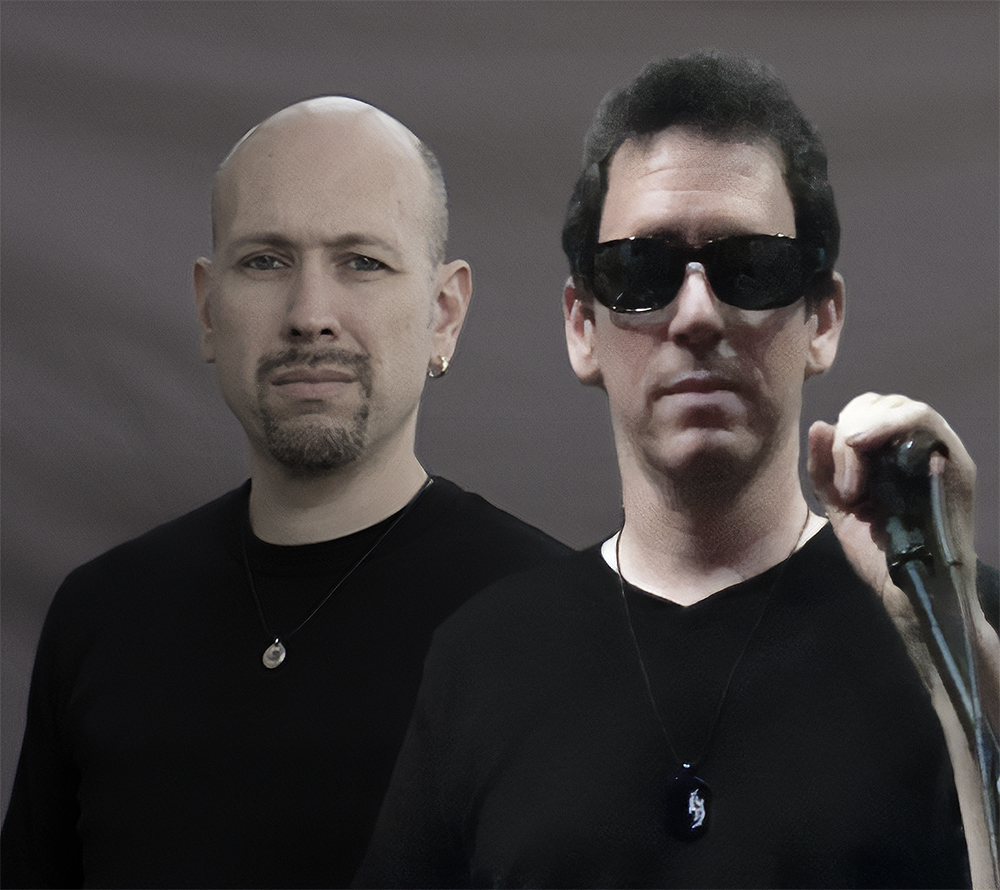
Chris Wirsig & Audio Terrorist “Tainted Love”
It was Ed Cobb who wrote “Tainted Love,” and Gloria Jones who performed it originally. However, the song wasn’t popularized until Soft Cell and many others gave it a spin. Today, Chris Wirsig & Audio Terrorist rages back with their hyperpop-infused electro banger, channeling the dark and demons living in the unknown corners of “Tainted Love.”
The latest “Tainted Love” opens with a dazed, mind swirl. Like losing the grip of reality accompanied by a burning sensation, Chris Wirsig & Audio Terrorist takes your whole perception away with a powerful, mind-bending storm spiral, completely dominating your ears and heart. They are definitely not gentle or has any intention to sugarcoat. This is the dark and unheard story of “Tainted Love.”
A sort of chaos and flames fluttering through the soundscape veins, creating a strong, almost palpable visual imagery, and that’s Chris Wirsig, the award-winning producer and composer, who is known to manipulate your emotions and perceptions with a storm of sounds. Audio Terrorist’s dark and gritty vocal only intensifies the already deeply evocative daze. Like a great disturbance that stirs in your heart and head, his vocal draws you to the depth of abyss with a hint of wicked allure—the almost unnoticeable rock n roll phantom is lurking in the dark, gazing you deep in the eyes. And the world keeps tumbling, head over toes.
Their version of “Tainted Love” leaves a strong enough impression to make you forget about all other version. Their hyperpop, electro, psychedelic complex is many steps palpable and impulsive than Ed Cobb and less personal than Marilyn Manson. They create a character and a deeper story within these fixed melodies and lines. Essentially, through their music, your heart is beating along the music’s rhythm, and you’re inside its emotive and intellectual perception. That’s a very powerful thing. Even though you have heard of “Tainted Love” a thousand times, they give you a brilliant one more time, for you to sink in and ponder, and discover something you don’t already known about this classic tune.
Read our interview with Wirsig and DuArte and learn more about their collaboration.
Punk Head: I love how inventive the soundscapes are in "Tainted Love." Tell us more about this collaboration.
Chris Wirsig: Thanks very much. Kalib and I have played the song live when I was touring California with my band no:carrier, and we always said we need to make it into a polished studio version. Somehow the song fell to the wayside, but recently we resurrected it, and I thought it’s a great time to do it in an updated, Hyperpop-infused version.
Kalib DuArte: We did one of those “one band morphs into another gigs,” and so our cover of “Boys of Summer” (great video by the way) became a transition track between Audio Terrorist and no:carrier. Chris was like “hey, we need more than one track with you on it” and so he did an arrangement of “Tainted Love.” My producer said, “what if we sing it more as a harmony and strip away the melody?” It seemed weird at the time, but now it seems very current. Just how it goes sometimes.
PH: Can you describe the emotions or feelings you hope this single evokes in listeners?
DuArte: The song has a classic 60’s melody seducing you into feeling good about a bad situation. To get stuck in it. It’s a real tension in it. I want our version to not do that, and it to make you feel “hey, this isn’t right” because it is not. If it feels bad, get the f@
PH: What did you enjoy most about making the track?
Wirsig: I loved playing with that classic and making it a little darker, maybe a bit more sarcastic than even the famous Soft Cell version. With Kalib’s vocal style on this song, it was easy for me to go very “electro” on it, and really dive into the sound design to make it edgy yet danceable.
DuArte: Showing that even a classic can be approached in a new way which isn’t imitated by the original from the 60’s, the famous version from the 80’s, or anyone else’s other covers. Us taking risks and thinking “have we gone too far?” and shelving it. Then listening to it later and saying, “it wasn’t the wrong idea, but it was the wrong time for the idea. “
PH: What has been, so far, your favorite song to perform and why?
DuArte: An original Audio Terrorist song or a cover tune? Original: “Caravan of the Soul” cuz at heart I’m a bit of a crooner. Chris played a great version at a gig. Covers: “I’ll Melt with You” by Modern English. You know when you cover a song and the guys in the audience get so jealous of how their gals are responding to it that they look like they will take you out back and beat the shit out of you, you are on to something… ;)
Wirsig: That’s hard to answer. I definitely enjoyed performing “Tainted Love” with Kalib back then. But at the moment my favorites are the songs by Angels On The Battlefield, an Epic Metal band I’m playing keyboards and some other more exotic instruments for. We’re about to release a first, kick-ass single soon.
PH: What would you like to say to your fans out there?
Wirsig: Thanks for listening to the music – stay curious.
DuArte: Thank you for all the support over the years! One random positive engagement helps keep me going down an experimental collaborative path, and not turn Audio Terrorist into a dance floor pop cliché. Even if it is a cover, it should be an original take on it.

Eide Olsen “Anchored”
Good music rarely need much of a description. It takes you on a journey and makes you think deeper about life. It brings back long-forgotten feelings and lift up your spirits. “Anchored” is all those things. With the golden glitters of jazz dissolves into a dark-soaked sonic palette, filtered through cinematic, scenic lens, transcending into a sonic landscape that’s timeless and unique. The atmosphere is a little hazy and smoky, but only from the brewing of rich and complex emotions.
Is life truly worth it? Once or twice in our life, for some, maybe many times too often, we find ourselves in deep water and asking the very question. In most cases, we let out a long sigh and keep on keeping on, but the deep mental pain and exhaustion leading up to existential crisis is beeping in high alarm. “Anchored” comes in the threads woven from this question. Eide Olsen aims to uplift those in deep water. In truth, he takes the listeners on a much needed, soul-searching trip.
Like a sonic film that rolls before your mind eyes and like a semi-lucid dream, “Anchored” drops you into deeper introspection. Thunders came rumbling underneath Olsen’s airy deep voice. Like a time capsule itself that sees the concentration of years of living, “Anchored” captured him in soul-baring state, authentically channeling the deep pains and fights into his music. There’s so much that goes on, spiritually and emotionally, with the words and melodic landscapes splashing against the sonic shore.
Listening to “Anchored” is like taking a walk of solitude or a cross country trip where you face your most feared demons. Such journey is turbulent and thorny, but also memorable and life-altering. It holds a special place in your heart, and every time you think about it, you’ll remember how far you’ve come. “Anchored” is like that movie you keep revisiting. It’s deep and epic, therapeutic and stirring.
The harmonious echos and resonance comes from a remarkable 14-year-old vocalist, whose innocence and ethereal voice adds another layer to the song.
Below we chat with Olsen on the creation of “Anchored” and his musical styles.
Punk Head: I love the intricacy and message "Anchored" send. What's the inspiration behind the song?
Eide Olsen: Most of us sometimes find life in general challenging but maybe just once or twice during our lifetime we actually feel it necessary to (sincerely) ask ourselves the question, is it worth it? And if we ever come to that point it's almost impossible to find a way out of the overwhelming darkness. The song aspires to give an answer on how to overcome such mental pain, but honestly I do not know if it does.
PH: Can you talk about any collaborations you had while making this single?
Olsen: The girl that sings along with me on the song is only 14 years old and in my opinion a remarkable talent. The hopeful innocence of her voice becomes a strong contrast to the darkness of the lyrics. Also I would like to mention Irek Wojtzcak, the soprano saxophone player. Renowned throughout Europe as a jazz avant-gardist, Irek in this piece shows a new side of his talent, filling the melodic landscape with the most endearing and beautiful colors.
PH: What is your creative vision as an artist?
Olsen: To me music is like colors reflecting thoughts and feelings. My creative ambition is to be honest in the ways I put it all together. Lyrics, melodies, expression and production - when all the variables connect and fit - it comes out as a whole, and the listener can feel that there is something there! If I can make that happen, the song fulfills its mission and that is the reward I seek.
PH: Who are your biggest influences?
Olsen: The singer/songwriter tradition holds a lot of names I could mention but if I have to start from the top: Paul Simon, Billy Joel, Mark Knopfler, Phil Collins, Paul McCartney... So yes indeed, it is fair to say I am a bit old-school.
PH: What is the one thing that you’d like your fans to know about you?
Olsen: That I am an almost fanaticly romantic person that lives by the rule: Use your head about tomorrow, but the heart about today!

Day Nah “Wild and free”
Electrifying, funky, and bluesy. “Wild and free” is a fantastic track where the wildness and playfulness held in one’s sacred space is given a voice. Day Nah tunes deeper into her feelings and intuition, harvesting the strength and potentials from her ambitions and passion. Vocals blossoming in chiming groove with a unique blend of sonic palette that evokes the heart and memory of funk, blues, rock and soul music,“Wild and free” sees Day Nah in full control, glistening in eccentric retro aesthetic yet does not lack its modern edge.
If there’s one thing that strikes out the most to you about “Wild and free” is how the song has proven that Day Nah has the range and potential no less than a mainstream singer. Her powerhouse of a voice charms in expressive recurrence, desires to be heard on stage, by millions. Day Nah has what it takes to command the attention of big crowds.
The soulfully and freely expressed melodies go to unexpected places in “Wild and free.” They convey different colors, evoking a wide range of feelings and emotive experiences without the aid of anything else. Her melodies are mesmerizing and lingering—“Wild and free” is the kind of song you won’t be able to forget for a long while. That’s how good Day Nah’s singing is.
Like many, Day Nah was once trapped in social constraints and expectations of who she’s supposed to be. After years of struggling, she decided to not let fear further decorate her action, but to follow her true calling. “Wild and free” speaks about letting go and letting free. Like the cleansing flame that burns away the old and sparking new energy and opportunities, the track is at the crossroad of old and new.
Read our interview with Day Nah and learn about her artistic journey.
Punk Head: I love the unique blends of sounds and expressive vocals on "Wild and free." Tell me more about the song. How did everything come together?
Day Nah: The period in which I wrote and recorded “Wild and free” was one of the most turbulent of my life. I had recently embarked on this creative journey with producer Radu Constantin and the plan was to create a unique EP where our different creative influences come together. After writing and recording Baby Cosmic Crazy and sharing it with different musician friends and other friends, I was filled with lots of hope and excitement for what was to come. It seemed like, professionally speaking, all of it was coming together for me, I had finally found my calling and my purpose.
At 33 years old, a year with great religious significance, after trying and completing several educations and working in different fields, I felt like I was finally onto something. On a personal level, after a very long relationship, I felt somewhat stagnant and restless with a strong need to experience a lot more, to meet new people, to experiment, to be playful, to fall in love again. Somehow my professional and personal vision for my future didn’t quite match the reality of my life at that point and I felt like I wanted to break free from everything.
Even my work password in that period was breakfree33, being inspired by the Queen classic song and by Jesus’s death and resurrection year, which I was quite obsessed with at that time. It’s probably worth mentioning the song was written after the first Covid lockdown, in a period when I, like many others, was starving after social contact and the pure joy of getting wild and free on the dance floor or at music festivals. So, for me, this song is the realization of my inner nature for what it is: raw, driven, carnal, passionate and the celebration of this realization.
PH: Can you describe the emotions or feelings you hope this single evokes in listeners?
Day Nah: I truly hope this song can inspire listeners to feel free to be who they want to be, to accept, embrace and celebrate their feelings and emotions, whichever they might be. I also hope it can empower them to acknowledge their true nature and calling, whatever those might be. And last but not least, I hope the song can inspire listeners to trust their own intuition, as this accompanied by reason and a good strategy will lead them to their best selves.
PH: What has been, so far, your favorite song to perform and why?
Day Nah: So far I’ve only performed acoustic versions of Baby Cosmic Crazy and it has been a wonderful experience, with much more of an intimate and personal feeling than the studio version of the song. I am very much looking forward to performing my songs with a full band, which hopefully will happen already this summer.
PH: What is your creative vision as an artist?
Day Nah: As an artist, I think it’s important to inspire others to follow their heart, not their fears. We often make choices based on fear, because we’re always taught we have to strive for safety and because of that we compromise so much of our inner nature and passion. I, personally, don’t come from a family where emotions and feelings were acknowledged, shared or accepted, so music has always been like a safe space for me to explore and express my emotions and believe me, I have lots of them! For this reason, music and singing have always felt like my superpower in tackling uncomfortable emotions and truths about myself and the ones dear to me. So, I believe that my creative vision as an artist is to inspire people to leave fear and overthinking behind and muster the courage to believe in their dreams and in their intuition. In my opinion, ”trusting your own madness” is a must if you want to live a purposeful, fulfilling life and at the same time feel alive and vibrant.
PH: What is the one thing that you’d like your fans to know about you?
Day Nah: I make my decisions from the heart, but it’s not always been this way. For a very long time I had difficulty trusting my intuition for important decisions in my life, like which career path to follow. And, as mentioned previously, I started and even completed several educational programmes and had so many different jobs but I was avoiding my true passion and calling for fear of displeasing others, especially family and friends. As soon as I decided to dedicate myself to music in a serious way, I was motivated by my dream and passion and started feeling empowered, stronger and happier.

Coma Beach “Jesus' Tears”
Revenge and punks goes hand in hand. There’s certain truth in anger and vengeance: the consequence and aftermath of tragedy that demands contemplation. Inspired by Samuel Beckett’s Waiting for Gordon, “Jesus’ Tears” is an episode from Coma Beach’s debut album, The Scapegoat’s Agony. Originally recorded and released in 1995 and released in 2021, the album depicts the delusional state of an unnamed anti-hero. As he imagined himself being crucified along Jesus Christ, the man vowed to avenge those who was responsible.
Driven and disillusioned, turmoil meets exhilaration in the 7th song from The ScPegoat’s Agony. Sonically, “Jesus’ Tears” is mind-blowing. It depicts a burning transition from the grit and darkness of 90s’ grunge to a piercing angst that can’t escape the room to the eventual “punkification”—revenge. In driven, exhilarating rhythm, the intensified track blows your mind through hauntingly palpable sonics and evocative lyrics coiled in noir aesthetic.
“Jesus’ Tears” is brutal. Riding waves of emphasised backbeats and high-speed flickers of electricity and fire, It has less to do what they channeled, but what they created and provoked. Coma Beach seems to have a way of reflecting societal issues through weaving music making into fictional storytelling. In a sense, The Scapegoat’s Agony is like a mirror into the past, but somehow still deeply resonating with the current.
Read our interview with coma Beach and learn more about the behind stories of “Jesus’ Tears.”
Punk Head: I love how you combine literary fictions and philosophy with music making. ”Jesus’ Tears” has a dark anti-hero take on the Crucifixion ofJesus, what was the creative process like for this track?
Coma Beach: Our creative process would generally work something like this: one of oursongwriters (singer B. Kafka, guitarist Captain A. Fear or bassist U. Terror) would come up with a story idea, mostly already put into concretelyrics; in some cases, those lyrics would have to be translated from German into English, as happened with “Jesus’ Tears,” for example. After that, our guitarist Captain A. Fear would work his inimitable songwriting magic by wedding suitable chords to the lyrics and then off we would rush to our rehearsal basement to blast out the new songs in full force😉.
As track #7, “Jesus’ Tears” fits quite well into the overall narrative of our album The Scapegoat’s Agony, as it depicts one of the unnamed antihero's delusional states of mind, with him imagining being crucified next to Jesus Christ and vowing to avenge himself on those he deems responsible for his suffering. Consequently, the following episode in the antihero's excruciating mental and emotional odyssey, as laid out in “Astray (Fallen Angel)“, witnesses him assuming the treacherous persona of a Christ-like would-be saviour. What could possibly go wrong here?😉
PH: Was there a particular work that inspired you to experiment and experience literature through music?
Coma Beach: Actually, there were several authors, artists and philosophers whose works, consciously or subconsciously, had a major impact on our music and our lyrics. The first one to mention here would be Irish playwright and novelist Samuel Beckett, who was generous enough to lend the title to our album The Scapegoat’s Agony, which is a direct quote from arguably his most famousplay Waiting for Godot and perfectly encapsulates one of the main topicalthreads running through our album: the existentialist view of the world’sutter meaninglessness and the necessity to soldier on in spite of this apparentlack of a higher purpose in the human condition.
Other crucial literary influences included Douglas Adams’s The Hitchhiker’s Guide to the Galaxy, with his satirical-sarcastic approach to the absurdities ofhuman existence; William Shakespeare’s plays, especially some of his tragedies, such as Hamlet, Macbeth or King Lear, with their characters having to suffer through existential and – not infrequently – self-inflicted conflicts; or Arthur Schopenhauer’s system of a radical metaphysical pessimism.
Add to this some deeply unsettling motifs of the-nightmarish-in-everyday-life, as employed in the works of Franz Kafka and director David Lynch, forinstance, and – voilà – you get The Scapegoat’s Agony😉.
PH: What was your history with punk rock?
Coma Beach: Like a lot of musicians, we started out covering several songs from our favourite bands, some of them punk or punk-ish, such as Sex Pistols, Ramones or Die Ärzte, some of them post-punk, such as The Cure or The Jesus and Mary Chain. When we finally began to create our own material, our songs at first turned out to sound more in the post-punk vein: “Passion" and “Absurd", tracks #6 and #10 off our album, are perfect examples of thismore despondent streak of ours.
Starting with “The Past Of The Future” (track #1), “Nothing Right” (track#2) and “A Madman’s Dream” (track #4), our music began to take on moreand more of a raw and unbridled classic-punk quality and energy, whichwould become kind of our signature sound.
PH: Can you tell us more about you as a band?
Coma Beach: Our band was formed in 1993 by singer B. Kafka, guitarist Captain A. Fear and drummer M. Lecter, with bassist U. Terror and rhythm guitarist M. Blunt completing the lineup. After extensive touring throughout Germany, we recorded and released our debut album The Scapegoat’s Agony with the German punk label Impact Records in 1995. Only one year later, we split up and, well, that seemed to have been the end of it. Short, sharp and quick, as it were😉.
In 2021, however, with the advent of various different streaming services andright in the middle of a global pandemic to boot, we decided that the time was right to once again unleash our relentless aural assaults upon an ailing and unsuspecting world: and so here we are😉.
PH: What would you like to tell your supporters out there?
Coma Beach: It has been immensely encouraging and rewarding to find out that there is still an open-minded and enthusiastic audience for the type of music we created almost 30 years ago. So thank you, all our dear supporters out there, known and unknown, thank you from the bottom of our hearts for listening, sharing and caring, we really appreciate it very, very much🙏🤗❤!
heavy on the heart. “Mr. Know It All”
Heavy on the heart. may be new to the scene, but they are not to be overlooked. Like a rolling fireball, they fill up every venue and acoustic space with fierce energy and infectious melodies. “Mr. Know It All,” inspired by a real-life jerk bags, who was dating multiple girls with the same name at the same time, sends a message to everyone who’s in the dating scene—know your worth and pay attention to red flags. With flaming guitars shooting fire into the sky and lead singer Nikki’s powerhouse vocal that rocks those highly relatable lyrics, “Mr. Know It All” is a heavy hitter, easy to love.
As a debut single from heavy on the heart., “Mr. Know It All” takes something from pop and punk and rubs it with emo. Catchy, loud, unapologetic and full of angst, the song is definitely sending all the jerk bags out there in flame. There’s so much passion in heavy on the heart.’s music. Their sound comes from a place of empowerment and liberation, and even though the track falls into the heavier side, the listening experience is fun-filled and cathartic.
Read our interview with the masterminds—Nikki and Costas and learn more about their separate and collective journeys as musicians.
Punk Head: I love how cinematic and infectiously powerful "Mr. Know It All" is. Is the song inspired by a real-life event/person?
Nikki: Yes, Mr. Know it All was actually inspired by a real person. I was dating a guy that was dating multiple girls with the same name, at the same time so he wouldn’t confuse us when he talked to us or took us out. He acted like the knight and shining armor all women would dream about. He said everything right and did everything right, until he didn’t. One day Costas and I were sitting around talking about how we could write this song from a female perspective and I told him about this guy and he obviously laughed but said it could be super relatable and this incredible song was born!
PH: Is there a particular message or theme you hope listeners take away from this single?
Nikki: The message I hope that is taken away from this song is know your worth! Not another soul on the planet will give it to you. You deserve the best no matter who you are but do NOT put up with red flags from a person that is scum and not worth your time!
PH: How did your band members initially come together?
Costas: Nikki and I began writing music in December 2020. We initially started writing pop songs and were just going to create a little studio project. I was playing in a band known as PRSNA at the time. PRSNA broke up unexpectedly and abruptly in the summer of 2021 and Nikki and I decided to form a band. Initially it was going to be be a duo.
We hit the studio in September 2021 and recorded 6 songs. Nikki got pregnant and we decided to use the time formulate a band and continue writing new material. Our drummer, Nick Kolokathis came along in November 2021 and we instantly clicked. While Nikki was on maternity leave, Nick and I used that time to try out bass players. It wasn’t until October 2022 where Andrew Nicolae came along and really rounded out the lineup.
We spent the next few months working out kinks, writing and rehearsing. We formally introduced heavy on the heart. on January 27, 2023 opening for The Color Fred and Alex Melton.
PH: How is the music scene in Long Island?
Costas: The music scene on Long Island has always been an up and down slope. It is a very “clicky” place. Almost a bunch of smaller scenes running parallel to each other. I personally feel these smaller scenes are alive but they are not thriving the way they should be. I truly believe in strength and numbers and at the end of the day, music is not a competition. We don’t compete for championships. It would be nice to see the gaps bridged between all these sub scenes and I think it would be beneficial to all involved.
If scene 1 is drawing 50 people, scene 2 is drawing 20 people, scene 3 is drawing 100 people, then combining those scenes would bring roughly 170 people. I think we get so comfortable that we forget there are other ways to expand our reach. Only so many times you can rotate the same 10 bands on a bill before the numbers start dwindling. Before it gets “old.”
There are certainly promoters trying to bridge the gap and I truly respect the hell out of all of them for doing it. Long Island breeds so many talented, amazing and unique bands and they all deserve to be seen and heard. We should be making it easier for them instead of being a hindrance.
Another thing that has been plaguing our scene lately is tribute and cover bands. Truthfully, there is nothing wrong with people paying homage to the bands and artists who inspired them to play. Bars, venues and event halls should be splitting the time between tribute acts and original bands. We all play a role in this emergence and while cover bands serve their purpose and have their place, we need to focus on original and emerging artists as well. I think within the near future, we will see a little shift in this momentum though. There is only so many times a venue can book the same tribute band or multiple tribute bands who are paying homage to the same artist. With original music, the sky is the limit to how far it could go. When it comes to tribute acts, there is a finish line with where it could go before they have even played their first show. This is not a knock to anybody. Just my thoughts on the matter. I respect anybody who can get on a stage and do their thing.
PH: What is the one thing that you’d like your fans to know about you?
Costas: Playing music is something I do to feel complete. To feel whole. To feel normal. To feel like me. It’s one of the few things nobody can ever take away from me. If you are passionate about something, do it. Don’t stop doing it. Keep on doing it. We only have one life and we need to live it to its fullest.
Nikki: Singing is something I am so passionate about. I was a classically trained singer when I was younger when I was 18 I got into a car accident that crushed my larynx and I thought I would never be able to sing again. I went through the next few years still singing in the shower and performing hit concerts in my car to myself however something was still missing. In December of 2020 I decided that I was going to gift my husband an original song and I reached out to Costas for his help. We wrote and recorded the song in just under three weeks. Thanks to Costas guidance and knowledge in the field, a huge flame was relit and I knew that I needed to get back into singing. I finally told Costas this is something I would absolutely love to continue and asked if he would continue working with me. The rest is history. Singing is part of my soul and makes me feel so alive. Especially after having my beautiful son I want him to see that you should never give up on your dreams.

Magna Zero ‘The Great Nothing’
The void is a gift, and through it, nothing becomes everything. There’s much power in the nothingness. For some, it’s a mirror to gaze into one’s soul, and for the other, is where the answers surface after the painful rebirth through long, dry tunnel. The Great Nothing is just like its name suggests—magnificent, inside nothing there’s everything. Through these seemingly random yet noise-coiled odyssey into the wormhole of our existence, transcendence and celebration is the result.
The essence of The Great Nothing lies between psych and desert, space and evocation. A sprawling, mind-bending quest into nothingness, but instead of dropping you into a deep hole of frozenness and isolation, Magna Zero discover the meaning of it all. There’s celebration in the void of music, flamboyant firework in the abyss that gazes back to you. They chew and spit the same turbulence of existential crisis, but turning under rocks, the raw, magnificent beauty of nature touched them. And they bring it into their music.
Behind nothingness, there’s everything, all the marvelous, gorgeous scenes that music is capable of creating, all the unspoken questions, emotions that are woven together are there. And they see it too. There’s deep appreciation runs through The Great Nothing like veins..
Magna Zero brings a whole world into your ears. Sensory awakening, gritty, introspective and translucent. Sonically, they remind you of Guns N Roses meets Elton John, a sort of hysteria and exhilaration wrapped up in retro aesthetic. “Under The Dirt” takes you to a dirt-fueled groove-infused on-the-road rock concert. Their glitchy sonic collage is simply so pleasurable to listen to, and the deeper you go with The Great Nothing, the more sensory evocative their sonics are.
With vocals that have the charm and power like a cult leader yet remains out of touch, Magna Zero is unstoppable. “Oblivion” has the flattering soundscapes as if the inside of a red hot iron, but instead of finding it burning, it’s freezingly cold. “Step Into The Light” turns on Magna Zero’s spacious intimacy with a clean sound. The Great Nothing showcases their versatility to stimulate a range of experiences.
Punk Head: The Great Nothing showcases Magna Zero's versatility and range as a band. I love the unique blends of sonic palettes in this album and how it constantly inspires listeners to expand. Can you discuss any specific elements or themes that contribute to the album's ethos/aesthetic?
Chris (Guitar): Letting go and being free was a mantra for me. No ego. Just expressing yourself through your instrument in any way you seem fit. Most of the tracks that made it on the album came out of free jams where this mantra got to flourish.
Dave (Drums): Specific themes/aesthetics would be “lose yourself to find yourself,” “darkness = light”—you can't have one without the other, and “the scientific truth of the universe that we somehow tap into.” It’s incredible to experience what comes out of three of us in a such a natural way when we play music together. We definitely seem to connect with a wormhole to “creation.”
Jason (Vocals/Bass/Keys): For me, the ethos of this album is about journeying to a state of inner peace and oneness with the cosmos, through embracing nothingness from within and transcending the self to experience unity with everything. To be unconditionally free; one must first allow themselves to become nothing. A black hole’s transformative power of creation through destruction illustrates this well, which is why we chose it as the cover image for the album.
PH: Which song(s) from the album do you think best represent your artistic vision?
Jason: The messages of peace, love, and unity in songs like “Step Into The Light,” “Endure,” and “We Are All” are what I hope most strongly resonate with our audience. And yet, every song from the album illuminates some aspect or another of the collective and individual quests to better know unconditional love and compassion.
Dave: Every song to me represents the artistic vision—the vision is really out of our control...it just happens from the love we have for each other and the love for music.
Chris: I could pick any song, but I feel “All Must Go” really showcases our collaborative efforts and what can come out of our free jams. I’m glad it opens the album.
PH: Can you tell us more about you as a band?
Chris: We’ve been fortunate to be close friends most of our lives. Our music is second to that.
Jason: Much like friends finishing each other’s sentences, we sense where each of us is going musically in our improvisational work together. It’s very much a creative conversation, a language of rhythm, vibe, and melody that we co-create.
Dave: Our band is really us as musicians that love creating and jamming to whatever music seems to come out. We literally don't have any control or vision or pre-concieved definition/notion as to how the music will be. It just seems to take its own form from free jamming with each other.
PH: Are there any specific musical or lyrical influences that play a role in the creation of this album?
Dave: All these songs were born from improvisational free jamming that we eventually carved and molded into the tracks/songs that you hear/experience now. It's pretty damn cool.
Jason: I was listening to a lot of Pink Floyd, The Cure, Black Sabbath, Rage Against The Machine, and Bob Marley at the time we were creating The Great Nothing. I’d like to think the spirit of those artists and many others seeped into the DNA of the album in some way.
Chris: A lot of the album was conceived and written during the pandemic. I think it was inevitable it would have an influence on the vibe of the music and lyrical content.
PH: What is the one thing you'd like your fans to know about you?
Jason: Our band creates music for everyone, regardless of color, creed, politics, gender identity, who one loves, or infinite other differences that some would have divide and weaken us. Music is a powerful reminder of our shared humanity, through which we can unite for a better world.
Chris: Being fans of live music ourselves, we’re excited to showcase the album and more live!
Dave: Met one of music/drumming heroes, Matt Cameron (drums for Soundgarden/Pearl Jam) literally a couple weeks ago at the L.A. Airport. We shared a few words and a handshake. Something I'll never forget.

Heterogeneous ‘This is a New Genre Called Static Pop’
A fascinating crossing of pop and noise exists in Heterogeneous’ own creation of Static Pop—a new genre that is essentially different from everything you’ve heard before. This is a New Genre Called Static Pop is far from noise pop, but its raspy-edged vocal style and modal, monophonic approach slightly recalls a genre called metal. But if you listen to it a little closely, you’d find the way noise is coiled up into everything has nothing to do with metal but noise aesthetic.
From “Playing Ball In The Dark,” the sort of a “sticky” relationship between the rhythm section and the melodic announces its disobedience and rebel to the usual rules of rhythm in popular music. Instead of playing into a repetitive pattern, it simply flickers spontaneously. Certain patterns are formed, but mostly an evocation to a greater audio-visual stimulation.
There’s so much character in this music that instead of sounding like a song, it’s its own person. “Noise man” talking and singing, telling stories in each chapter/episode. It’s relatable and sophisticated. With each song, it shows a slightly different side of it. Sometimes a little goofy and sometimes a little scary and emotional. It has a diverse range of emotions and moods, but at core, you know it’s the Static Pop you know. With This is a New Genre Called Static Pop, it feels like a relationship can be formed between the listener and the genre.
“It’s So Hard” ventures into monophony, which offers a gateway to understand Static Pop. It resembles medieval music and eastern music, but remains in its own lane. Instead of using the established western music system, the music in this album seems to be between modal and atonal (noise, for example). There’s always the element of melody and it’s captivating, but it doesn’t obey the same minor or major scale. “Something” is a perfect example of how Heterogeneous pushes these lines further.
Read our interview with Heterogeneous and learn more about Static Pop.
Punk Head: I absolutely love Static Pop, this new genre you created. Tell us more about it? When did you first have the idea?
Heterogeneous: I’ve always had the idea of creating new genres even before I started working on Static Pop but I guess Static Pop really came together during production with the distorted wall of noise or "static" feel to it if you will. I wanted to blend Noise music and Pop music together even since I got into noise music.
PH: How did you come up with the name Static Pop? What's the inspiration?
Heterogeneous: I came up with the name Static Pop after all the songs were finished. I was listening to the album and I just thought Static Pop fits the feel of this album nicely, it also has a nice ring to it, although it could be considered more Punk than Pop. The inspiration for this album came mostly just from the want to create something new and original. I wanted to leave people thinking "I never heard anything like this before.”
PH: What are you most proud about This is a New Genre Called Static Pop?Which song do you like the best and why?
Heterogeneous: My proudest thing about this album is that it's completely D.I.Y. I've been fascinated with the D.I.Y scene for a while now. There's a couple joints on Static Pop that I really fuck with but if I had to choose just one it would probably be "Slanted" because the lyrics are very true to my life. That or "Playing Ball In The Dark" because it just slaps.
PH: Can you tell us more about you as an artist?
Heterogeneous: As an artist I always try to bring new things to life. I don't like the idea of turning music into a formula or just riding the current trends. I always thought music should be, at least in one way or another, truly original and from the heart, even if it's a little rough around the edges.
PH: What is the one thing that you’d like your fans to know about you?
Heterogeneous: As the name suggest, you can expect diversity from me. I plan on bringing new genres and sounds to the table. If you dig hearing truly unique and original music then I believe I can scratch that itch. I fucks with anyone who fucks with me. Let's grow this shit together.
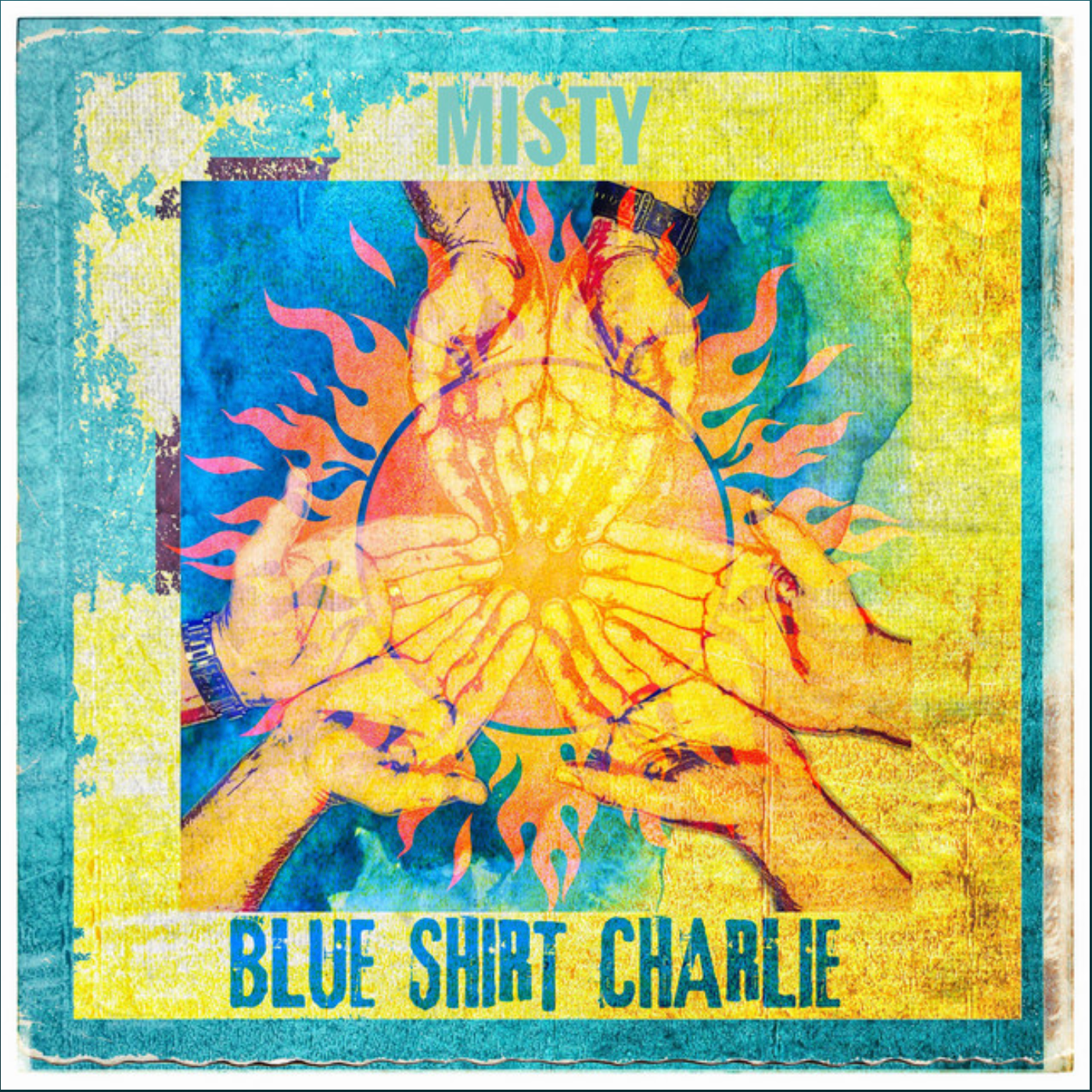
Blue Shirt Charlie “Misty”
“Misty” is the kind of song that sink you into a moment at the same time taking you on a journey. In its slow brewing of rippling guitar soundscapes, outside noises and turmoils are stripped away. You feel your heartbeat slow down, and your thoughts become clear, your heart begins to really feel and breathe. In this intimate, almost personal setting, Blue Shirt Charlie takes you to a state between bleak and sultry, between on the road and gazing into the campfire.
The Eagles lives in “Misty,” and so is the era of classics. The phantoms of so many iconic songs flash through your ears, but it’s not really them that makes you tear up, it’s the weight of powerful, life-soaked lyrics that stir something inside you. A truth and a perspective. It tells the story of a cynical person, who has given up on love stumble upon a kindred spirit. It’s about gratitude with the unescapable undertone of life’s harshness and tender blessing.
“Misty” gives you goosebumps. Blue Shirt Charlie makes the kind of music that still echos in your ears even when it ends. The state it invites you to, and the conversations it sparks doesn’t end when the song ends. It lives on, and you know, you can always come back to this moment when you need a little grounding or soul-searching. Somehow there are answers in Blue Shirt Charlie’s music even though the questions are not always visible.
Punk Head: I love the genuineness in the sound and storytelling of "Misty." Tell us more about the track. Did the story find you or the other way around?
Blue Shirt Charlie: The narrator in “Misty” is somebody who quit—gave up on finding a meaningful relationship connection. When we catch up with them, they’re grateful—stunned—to wander into a kindred spirit. Maybe love is indifferent to whether or not you think you deserve it. One of Richie’s lyrical strengths is conveying a lot of narrative information in a few words—“You were shy and strong like you had nothing to prove.” I love that line—it’s about the partner, but shines a light on the narrator’s insecurities and maybe disillusionment with our photoshopped, auto-tuned world.
PH: What do you like the best about this track?
Blue Shirt Charlie: We love its slow burn. Our early, discarded takes kept escalating the music into a big, bold ending. It took a lot of restraint to keep it linear, but that kept the mood intact. Because the song’s about gratitude—that’s a pretty level emotional state—so maybe keep the amps at 5 and most of the cymbals in the van.
PH: What is your creative vision as a band?
Blue Shirt Charlie: We let the songs do the driving. I mean…we’d prefer to write “Hotel California,” but if all we can come up with is like “Mambo Number 5,” we’ll still try and make you listen to it.
PH: Who are your biggest inspirations?
Blue Shirt Charlie: First, U2’s classic The Joshua Tree. The outro of “With or Without You” captures the beauty, sadness, glory, grit and speechless longing that this album is soaked in. The soaring chorus and The Edge’s jubilant digital delay on "Where the Streets Have No Name.” The pulsing bass and desperate kick of “Exit." All this and more is why this album kept me on the planet as a teen. Also—dang—The Old 97’s…turn the lights off and listen to “Bel Air.” Then tell me I’m wrong.
PH: What is the one thing that you’d like your fans to know about you?
Blue Shirt Charlie: There are 100 million songs on Spotify. The fact you spend a couple of minutes connecting with things that rattled around in our brains feels amazing.

Groovy Shirt Club ‘Electric Flowers’
Electric Flowers draws you in with intoxicating vibes and rich soundscapes. Deep and meaningful lyrics that feel like a gateway into our lives. Groovy Shirt Club seems to get all your happy feelings and knotty thoughts and the songs on Electric Flowers are soundtracks to accompany each down and glorious moments. Between the jazzy hums and full, sunset colors, Electric Flowers take you to such a special place, with nostalgia, memory and retro love. Intoxicating, introspective and kind of therapeutic.
“A Walk in the Park” is a memorable song. Smooth but vibrant, modern but subtle. It has a little jazzy flair with a vocal and a brass in conversation. Then there’s the occasionally soulful vocal harmonies that shine in between moments. Just like a soundtrack from a movie, it’s sultry and danceable, romantic and optimistic. As a song about love, it feels just like love.
In tender piano, the heartfelt vocals in “Midnight Blue” draws you in. It paints a vivid scene of a character taking a contemplative walk in the rain, under the moonlight. There’s the immediacy of imagery, of seeing these characters going through their separate lives through music. It makes a really powerful visual presence, making these scenes almost palpable with moods and tastes, characters in motion.
“Midnight Blues” marks an important moment in Electric Flowers. From there, the album seems to spiral deeper and deeper into the world of motion picture. Like soundtracks in a movie, “Everything Like New” and “Can You Hear Me” each store a mood—a moment that’d last forever, preserved in songs.
“Everything Like New” has the strong desire of nostalgia and the touch of change to it. The deeply touching song delves into a time of change, looking at the new life, looking back at the old life. Soft vocals and deep piano in echoes. While bluesy notes and slight jazzy percussion adds a hint of somber. “Can You Hear Me” signals a life-changing climax. It’s sophisticated, drastic and even chaotic. Fate and choice meets at a crossroad. Uncertainty and heaviness woven into the sounds. And “Every Time You Walk Away” brings the grand jazzy embrace we’ve all been waiting for. With a walking bass and a slow but graceful groove. Butterfly piano. Soothing deep voice.
There’s so much to sink in from Electric Flowers. Groovy Shirt Club really brings quite a meaningful experience through their songs. Everyone can find a piece of themselves, a reflection of a moment in their lives in the album. And to have that perspective is priceless.
Read our interview with the band and learn more about the “movie” behind Electric Flowers.
Punk Head: Absolutely love the authenticity and storytelling in Electric Flowers. Tell us more about this album. How did everything come together?
Groovy Shirt Club: I've always written songs with a reflective and philosophical view on life. Contemplating relationships, love and life itself. The stories come from actual experiences and the authenticity shines through because the arrangements, performances and recordings are all done in live takes by musicians who are great friends and share the same mindset. Some of the songs began as tracks for a film soundtrack but the movie ran into problems and was never completed. I forged ahead regardless as I was really enjoying the writing process and collaborating with old mates to get the tracks down. The sound of the group then just emerged naturally as everyone threw the best of themselves into it without fear or criticism or anyone damping down their creative flair in an attempt to fit the songs into a commercial box. In production terms, there was a deliberate conscious decision to not use any samples, electronics, midi files, loops, or software trickery. Every single note is played by the band. And so as the production process went through the mixing and mastering by the wonderful Francis Gorini at London Mastering Studio, he maintained that creative flow and allowed the tracks to breathe and sound natural. So what we have as a result is us and absolutely nothing else.
PH: Which song do you like the best and why?
Groovy Shirt Club: This is difficult. I love all of them. But I would say that, wouldn't I? But if I had to pick one, I would go for “A Walk in the Park.” I was going through a bit of a Burt Bacharach phase and I wanted to create a vibe and feel for a song in homage to him. I immersed myself in all things Bacharach from his 60's period, which for me was his purple patch. What I came up with I hope does him justice without being a pastiche and also sounds contemporary and fresh. John's bass line and Neil's drumming drive the song with a lovely, lilting laid back power. Bruce's keys add an understated finesse and the subtle but sumptuous harmonies from Ola round the song off beautifully. The cherry on the cake was getting Chris Storr on board to play trumpet. Once he confirmed he was available, all I said was give it the full Herb Alpert and left him to it. The song came together perfectly, almost like IT was deciding what we all played to make it work. With all the darkness around us these days, I love that this song has such a light, airy, innocent fun about it, reminiscent of those 60's classics.
PH: Can you tell us more about Groovy Shirt Club?
Groovy Shirt Club: We've all been around too much to worry about doing anything other than just being ourselves. We are serious about what we do but don't take ourselves too seriously. There's a raw honesty with no egos. Each of us takes things constructively and will adapt their contribution for the betterment of the whole. No one person is more important then the rest. It's our joint effort, in sympathy with each other which makes Groovy Shirt Club work.
PH: Who are your biggest inspirations?
Groovy Shirt Club: Between us our influences and musicians who inspire us is enormously broad and I think you can hear that in the songs. It ranges from Billy Joel to Beethoven, The Beatles to Buddy Rich. Aretha through 50's rock n roll all the way to Zeppelin.
PH: What is the one thing that you’d like your fans to know about you?
Groovy Shirt Club: We are genuine people with a great sense of humour, integrity, a real love of music and enjoy creating something that we hope resonates with people.
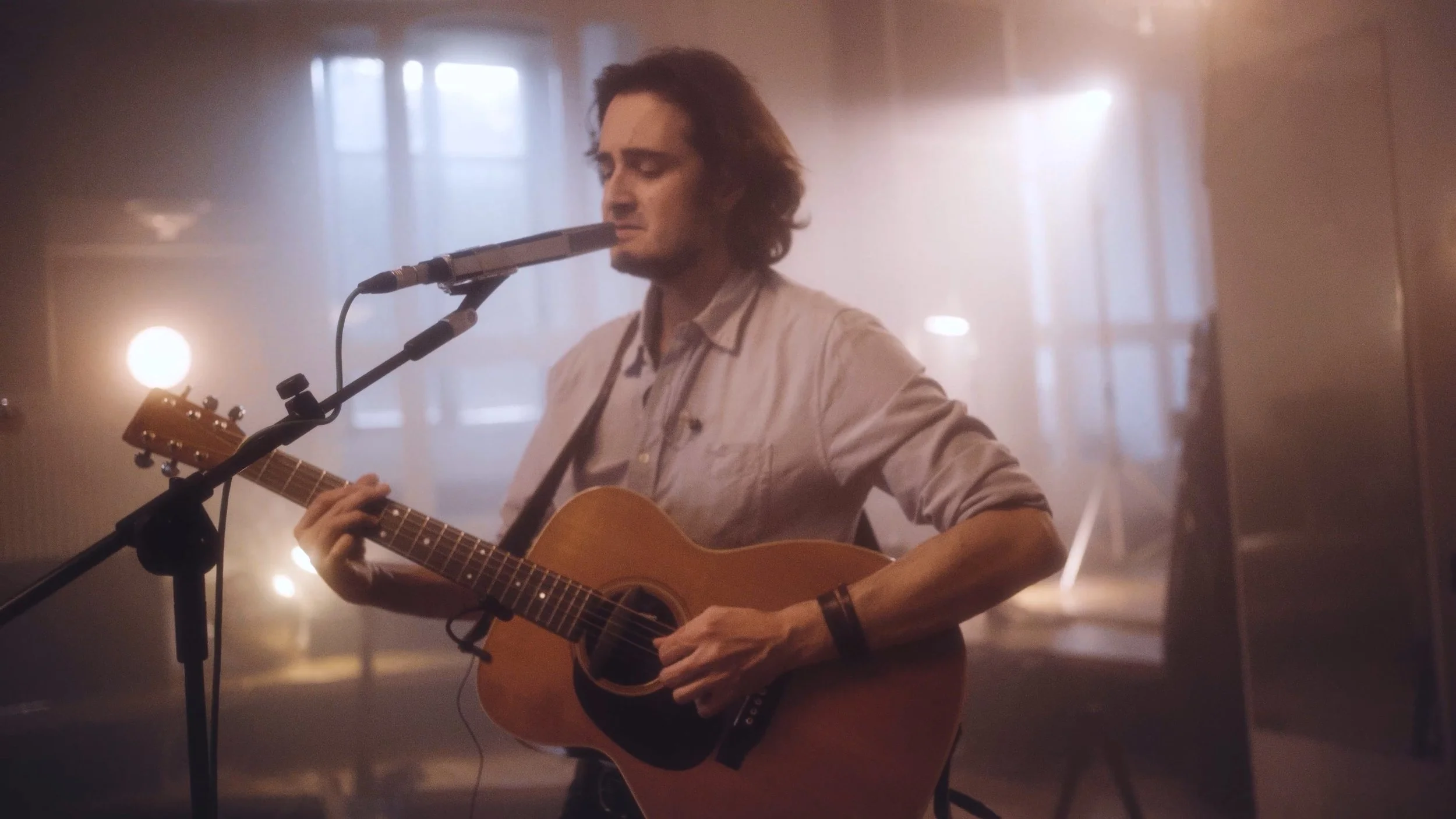
Neo & Neo “Behind the Walls”
Neo & Neo might have made memories palpable with “Behind the Walls.” His road-worn voice breaks at the right point, tearing a piece of love from the walls of the past—just a moment longer to stay in its warmth. Neo & Neo surprise you just how much can be expressed through one song. Only a few minutes have passed, but it feels like you have aged years along with it, traveling back in time and stealing what has slipped away from the tip of your fingers. You just know there’s a novel worth of story behind this song.
Neo & Neo’s rich and expressive vocal performance touches hearts, deep in the thoughts of a love well-preserved in memory. From the very first note, Neo & Neo slows down time with an introspective finger-picked guitar like a slow dance down memory lane. You’d want to savor every second. Then the depth of the cello meets the steady counter-clockwise guitar that turns back time. Through a mysterious, fantastic omission of a swirl, the track sweeps you off of the present and drops you into the grand tunnel of time. Technology, love, and fantasy intertwine together, becoming something much bigger than each of them.
But the time-travel tale doesn’t just tell you the story of a man who loved a girl. It encourages you to think back over your life and asks yourself the same question. If you had the chance to go back in time, when would you go? Who would you see again? and who would you see again? Through this spiraling sonic mirror, it’s a reflection that reaches deep into your soul—your most desired longings, regrets, love and joy. “Behind the Walls” creates a genuine moment of contemplation.
Read our interview with Neo & Neo and learn more about his big plan for the future!
Punk Head: I love how you wove time travel into the song's storytelling. What inspired you to write the song in the first place?
Neo & Neo: The song was inspired by many things, for example, the ‘90s tv series Buffy The Vampire Slayer had a specific episode where demons come into town making it impossible for everybody to talk and scream, so they could quietly steal your soul. The song, obviously, was also inspired by a “time machine,” one that I saw at a rollercoaster fair. It made me think about what I would do if I had a time machine at hand, and I imagined I'd go back in time to meet a certain someone earlier, to spend more time with her. So, ultimately, it's a love song, maybe even the most meaningful one I've ever written.
PH: What did you enjoy most about making "Behind the Walls"?
Neo & Neo: In the original recording of the song (release: 2018) I played all the instruments myself, and it was more of an acoustic version with some digital elements as well. Bringing the song alive again with the whole band, was a new and very soothing experience. Moreover, it was a pleasure to work (again) with Nico Schmied, who is one of the most talented people in Switzerland creating music videos and live sessions for artists.
PH: What is your creative vision as a band?
Neo & Neo: “Behind the Walls” (Live at Hardstudios) is the first out of three live sessions. The next songs will come out in May and June. Further than that: I go where my heart leads me. I have a feeling that things will get a bit more exotic, and a bit harder, too.
PH: Who are your biggest influences?
Neo & Neo: The National, The Slow Show, Mazzy Star, Coldplay, Band of Horses, Black Sea Dahu.
PH: What is the one thing that you’d like your fans to know about you?
Neo & Neo: I started to play Guitar with 12, because I wanted to be able to play Cohen's Suzanne
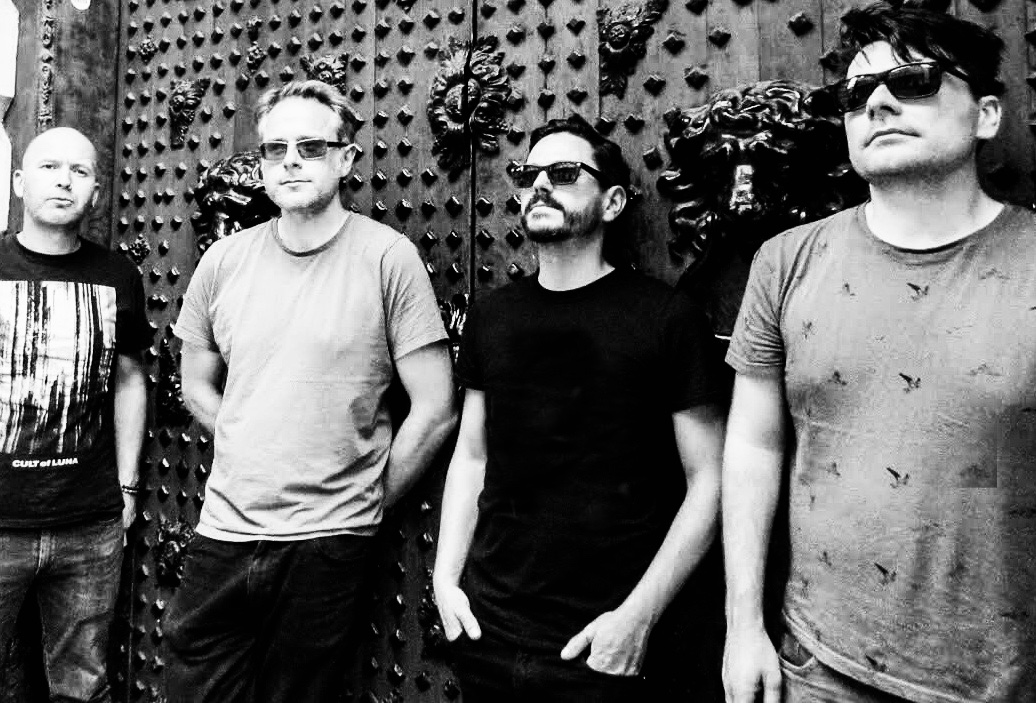
The Idle Silence “Close”
“Close” immediately summons the commotion and chaos energy of punk. As if hailing from a different era, the raw, primal clashing of threats, sweats, and passion is very much alive in The Idle Silence’s latest single. But there’s also a kind of disruption that rips the song in two pieces while keeping going on. The jarring dissonance is hard to ignore. It’s done intentionally no doubt, through the bending of a note, stretching to test the extreme.
There are broken glasses in “Close,” edging out in all directions. It's shocking and bizarre, vibrating between semi-industrial and semi-noir, messed up in acid and 90s rock. It’s haunting to hear the vocals floating illusively somewhere separate, like the acid sun above and outside the rest of the song. That slight hint of bizarreness makes you question everything hanging above a noise drone.
“Close” sees The Idle Silence reunite with the old punk rock sound, but in fact, they are reinventing it into something completely different. They break the old sounds and repatch them, which makes things shift a little. And that intricate asymmetry is enough to separate them from all others.
If there’s a punk revival coming, The Idle Silence would be one you don’t want to miss.
Read our interview with the marvelous four-piece band from Somerset below!
Punk Head: I love how you mend nostalgia with modernity in "Close." Is the track inspired by a particular influence?
The Idle Silence: There's definitely an element of old punk in there. I was listening to a lot of Buzzcocks, Damned, Slits, Skids and all of that sort of stuff at the time when I wrote it. But also newer bands like Screaming Females & Speedy Ortiz, who I really love. They're always on my rotation. So I suppose that's why it sounds that way.
PH: Was there any challenge that you encountered while making the track?
The Idle Silence: The biggest challenge for me is always singing in front of other people. It's fine with the rest of the band, and luckily our producer was very easy to be comfortable around. Other than those hang ups, it's a pretty straightforward song. Sort of.
PH: What is your creative vision as a band?
The Idle Silence: That's a very deep question. I suppose we want to people to like our music without watering it down at all. As songwriters we have a pretty even split between being very personal and taking on the big subjects and as a band we are on the line of being quite accessable and catchy and horribly noisy.
PH: How is the music scene in Somerset?
The Idle Silence: It's a big county (for the UK) but quite sparse and pretty rural for the most part. There are healthy scenes in the bigger towns and some really nice venues. We've met and played with some great bands here and we love playing anywhere people want to see us, really.
PH: What would you like to tell your supporters out there?
The Idle Silence: Thank you for listening to our music, all the streams and downloads mean a lot to us. And there's plenty more where that came from.
Love Ghost “Jealousy”
From the very first note, the deep moody guitar riff portals you to Love Ghost’s darkest confession. “Jealousy,” like the town that holds his love and dreams, pain and demons, drops into a world with heaviness in the air. His mind and heart flow through the guitar strings, bleeding out the notes.
With lyrics that read like diaries, confessional and real, we see Jealousy, the red-eyed monster that calls on the demons, luring you into a thorny path of hurt and pain. Old insecurities and PTSD become the lost river of the abandoned town, forming a transparent, almost innocent yet unbreakable barrier. The melodic guitar backdrop that always floats behind shapes the looming yet suffocating feeling everyone who’s been in the same mental space could easily relate to.
But relatebility isn’t the only thing to take home with from “Jealousy.” Though setting its scene in a mental ghost town where everything seems to be lost, it offers a way out. Love Ghost throws noise-infused punches in clashing percussions. He seeks to break the walls that keep him a prisoner. He fights and bleeds, and he will not stop until all the demons are gone. The chorus offers such catharsis that it almost feels therapeutic. He’s fighting back, and it gives you hope.
Inspired by real-life struggles, “Jealousy” is a rather personal song from Love Ghost. Known for wearing his hearts on his sleeves, songwriter Finnegan Bell pours himself into his music. “Jealousy” has his heart beating all along. Though darkness lurks in the background, there’s not a time you’re alone.
Read our interview with Love Ghost and learn more about the stories behind “Jealousy.”
Punk Head: I love how vulnerable and cathartic "Jealousy" is. I can hear that it's a rather personal song and writing a song like that and putting one out can be nerve-wracking for some. How has the process been for you?
Love Ghost: Thank you, I’m honored that you listened to the song and that you enjoyed it. And yeah, I always get really anxious before I release a song especially one that is on the more personal side. But no matter how anxious I get before exposing myself in a more vulnerable way, I always have to remind myself that shedding light on these issues gives a voice to a lot of people that are suffering from similar mental health issues that I have. Or have gone through similar situations… I mean music always functioned as a diary for me, and if my expressing my emotions can help some people along the way, then it’s all worth it.
PH: What was your favorite moment in making the music video?
Love Ghost: Shooting in the rain room was really fun, creative wave is awesome to work with, they’re super creative. But yeah the rain room scenes felt super epic and the flashing lights made it feel like I was fighting a battle of sorts. A battle with my demons.
PH: What motivates you as an artist?
Love Ghost: Honestly, it’s less of a motivation at this point as it is an urge, I have the urge to write music daily, I’m an imagination fiend. If I don’t write a new song every couple of days I start to feel really dull. But I’m also motivated by the sense of identity from being a music artist and the adoration I could potentially receive.
PH: Who are your biggest influences?
Love Ghost: Alice In Chains, Nirvana, Lil Peep and Juice Wrld to name some. But honestly, I listen to a wide range of music, I also find inspiration from artists such as Bob Marley and the Sex Pistols. I was also get influenced a lot by various poets like Charles Bukowski and Edgar Allen Poe. That might sound cliche but I’m just trying to push myself out of my comfort zone and find new influences.
PH: What is the one thing that you’d like your fans to know about you?
Love Ghost: I feel like what I’d want my supporters to know about me is that I’m honestly just hella relatable.
Fish And Scale “Stay!”
There’s magic in Fish And Scale’s music. Something mystical and powerful. Something that touches your forehead gently, but immediately stirs an epiphany. “Stay!” is a song of magic, but in truth, the song is naked compared to the ones that are lusciously dressed and heavily layered. Fish And Scale, in its unfiltered voice, open an honest dialogue with the inner self. Underneath his modest words, finger-picked guitars flow through gently.
There’s nothing very special about it, if you look at the surface. In fact, at first, you’d find it too simple. But when the music starts, the camera focuses on Fish And Scale, aka Roland Wälzlein, and there’s that moment when he gazes into the camera, the stripped-down transparency and nakedness in his eyes just shock you, and that’s exactly what it feels like listening to his music.
It’s an honesty that is hard to explain, but with Fish And Scale, you’d let him peel off the pretense layer by layer. There’s a profound trust between the listener and the singer, and it doesn’t come easily. It hardly ever happens. But you’d let him shake you up, give you goosebumps, draw your soul back into the moment. And his words, intense as they are humble, is nourishing as water to fish, and sharp like a sword. “Stay!” does something to you. In its humble escalation toward the catharsis, a tearful epiphany is at its climax. With songs like “Stay!,” you walk away feeling whole.
Read our interview with Wälzlein where we talk about his music journey.
Punk Head: I love the richness of your song and how it speaks to the audience with authenticity. Is there a specific real-life event that inspired "Stay!"?
Fish And Scale: All my songs are “autobiographical.” I write about the things I experience in me. “Stay!” is about a dialogue between the mind and an all-knowing inner entity. We are all connected inside this infinitely wise version of ourselves.
PH: What do you like the best about this track?
Fish And Scale: When I listen to this song I always get goosebumps :-) Especially at the end when it comes to a final peak.
PH: What was your favorite moment in making the music video?
Fish And Scale: I did the video with a good friend of mine. we shot the movie in his recording studio. His little kid was sometimes with us, it was fun.
PH: Can you tell us more about you as an artist?
Fish And Scale: I grew up in Franconia (a southern part of Germany). As a six-year-old child, I survived a serious heart operation. This life-and-death experience stayed with me all my life. Existential questions are reflected throughout my lyrics. A turning point was my first stay in a “silent retreat”, which completely changed my understanding of life. „Stay!“ is also inspired by that.
PH: What is the one thing that you’d like your fans to know about you?
Fish And Scale: I thank all the people who listen to my music and are inspired and touched by it

THORN “We Are Happy (Of The Pale Criminal)”
“We Are Happy (Of The Pale Criminal)” sets in an uncanny portrait of extremes, dissociation and sensual experimentation. The track is a gateway into THORN’s unorthodox songwriting, sinking into the connotation of modern life. Fueled by unfiltered grits and dirt, driven by nerve-splintering noisescape, “We Are Happy” sees piercing percussions and eerie vocals bottle up with explosive illusive sonics. Like the mirror of the craze between drug-infused, sexually-driven encounters and a born-to-die mindset that gives up on the search for a deeper meaning, “We Are Happy (Of The Pale Criminal),” in its raw, spicy confrontations, gives you something to think about.
THORN’s music is all written from the perspective of mental health awareness, exploring the relationship between mind and action. His songwriting, as reflective as it is transparent, always has a deeper poetic monologue that runs parallel to the music. The soundscapes thread out from there, delving even deeper into the mind, resulting in those unimaginably vivid sonics that tells a horrid and oftentimes, unbearable truth.
“We Are Happy,” but are we? “We Are Happy,” but where are we? You can’t help but think about these questions while listening to the track.
Read our interview with THORN, where we talk about his REAL music influences and the distance he’s gone to create “We Are Happy (Of The Pale Criminal).”
Punk Head: I love your authenticity and aesthetic in "We Are Happy (Of The Pale Criminal)." Can you tell us a little more about the track?
THORN: It took a lot out of me. The vocal take was done at about 4am in pitch black. I was just sitting there choking myself, drinking shots of whiskey and spitting.
PH: What do you like the best about this track?
THORN: The grit, the dirt, sounds mean. I like.
PH: What is your creative vision as an artist?
THORN: The change & renewal of mainstream metal & rock. Unifying the alt under one banner.
PH: Who are your biggest influences?
THORN: If I'm honest, the people closest to me. Luca Centro has been the biggest musical influence in my life. I tend to answer Nosferatu or Jesus as a joke, but yeah, my friends are the real answer.
PH: What would you like to tell your supporters out there?
THORN: You can be the change you want to happen. You are more than you think. You are worth everything this world has to offer. Be the spark, to light that flame. Big love x
thurane ‘: authentic worship :’
Born out of a time of struggles and hardships, : authentic worship : elevates life to inspire. Bleak soil bears the most resilient souls, but it seems that it might have been God’s imprint in the sultry and energetic soundscapes. Unlike any worship album you’ve heard before, : authentic worship : sees a vivid, heartfelt blend of Rock n Roll and worship music. Drawing inspirations from the 60s and 70s rock, God’s messages are embedded in the soaring guitars, mesmerizing hooks, and infectious vibes, bursting modern pop sensibilities. Like Imagine Dragon meets The Beach Boys meets The Beatles. Sonically, at the core, the songs in : authentic worship : are genuinely good.
Thurane gives you a different worship experience. Through the highly captivating hooks that move listeners to sing and chant along, they are brought closer to the presence of God and to each other. God is with you, no matter where you are. : authentic worship : is a genuine celebration no less, filled with love and passion and nurtured by the best of rock n roll. Meaningful messages and introspection offer something to everyone who listens.
“Worthy” centers on the mantra of “you are worthy.” The beautiful rock ballad is a love letter to its listeners—to whoever feels lost and needs to hear the message, “Worthy” offers a shoulder to cry on and a home to feel safe again.
Inspired by Romans 8:28, “And we know that in all things God works for the good of those who love Him, who have been called according to his purpose,” “It’s All Good (ATAGIY)” evolves around a timeless groove that draws back to the 60s and the late 70s. Being the first track on the EP, the song certainly surprises you with just how good the music really is. But what really touches you is the unity and love that this EP evokes.
Thurane is a contemporary worship music artist based in Youngtown, AZ. : authentic worship : is the debut EP from the artist. Released during the global pandemic, what initially seemed to be a setback turned out to be a blessing. Just like many obstacles that originally posed a threat to producing this EP, they eventually worked out the way it meant to. Read our interview with Thurane and learn the stories behind : authentic worship :.
Punk Head: I love the retro, classic sound of : authentic worship : and the message it seeks to deliver. Is there a real-life event that inspired you to write the EP?
Thurane: From 2016 to 2020, I had a multitude of struggles including my mother-in-law's health struggles (she's still hanging in there!). As a part of multiple, challenging issues; I was driven to my knees in prayer, praise, worship, and submission to God. This is where the heart of authentic worship lies: our willingness to worship in ever deeper, meaningful ways when struggling with life's complications, issues, and failures. While not one specific real-life event inspired the EP, it was a multitude of issues that prompted me to complete and release the record.
PH: How did everything come together?
Thurane: It took a spotty, patchy mix of multiple: producers, engineers, studios, musicians, photographers, art designers, mastering engineers, 3 distributors, 2 publishers & a CD manufacturer to get this project out! A multitude of mishaps along the way...it was a miracle, if small, to get it completed and released. Now to finish the Worship Servant album...
PH: Which song do you like the best and why?
Thurane: "It's All Good (ATAGIY)", the opening track, is my personal favorite because the central theme of the song is inspired by Romans 8:28 and turns the oft-used "its all good" blow-off phrase often used on its head. Even bad is ultimately turned into good for those who love God and are called according to His purpose, hence, all things are good in Him (and to us) despite our misfortunes and failures.
PH: What is your creative vision as an artist?
Thurane: I am particularly inspired to bring the melodic sensibilities of music from the 1930s to the early 2000s and bridge them to current production & music styles of today. With that, I'd like to explore more minimalist approaches from just a voice with one guitar or piano accompaniment; to full-blown symphonic, theatrical orchestrations enhanced by banks of guitars. Along with that, lyrics express more unique ways to glorify God and inspire believers to worship Him in Spirit and in Truth.
PH: What is the one thing that you’d like your fans to know about you?
Thurane: I want them to know that despite my own sins, faults, hypocrisy, and contradictions—I really am a true believer in Jesus—and that they would be blessed by likewise following Him despite their own sins as well.