ASWEWERE Turns Rush Hour Into Something Human
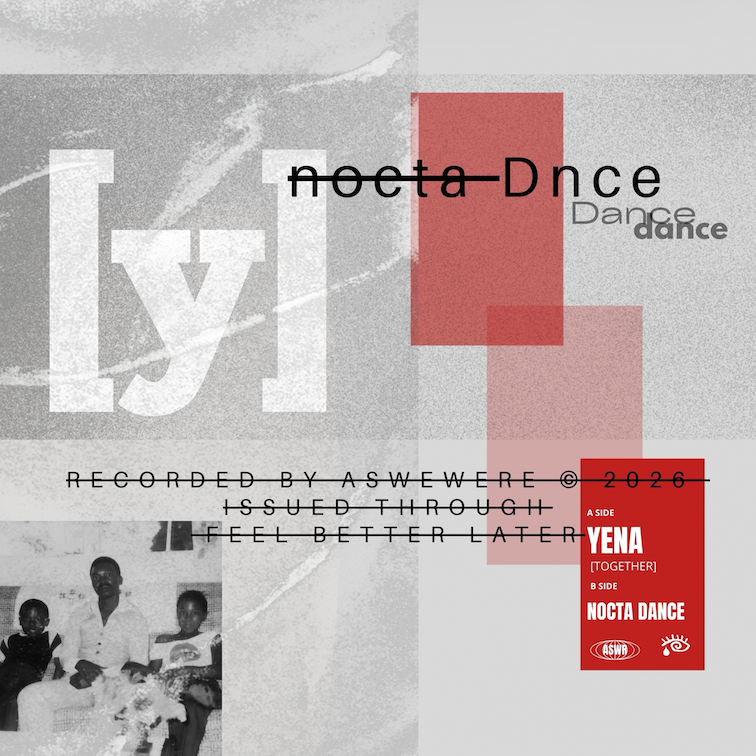
Punk Head: You describe Manchester at 6PM as cold, emotional, and constantly moving. When did that specific time of day start sounding like music to you?
ASWEWERE: I wouldn’t say that 6PM itself sounded like music to me. For me, it was more about capturing the emotions I felt during that time.
If you grew up in Manchester, you know that around 6PM the city is at its busiest. Everyone is moving with purpose — people finishing work, meeting friends, heading home, chasing opportunities. You see so many different walks of life crossing paths for a brief moment.
There’s an energy to that time of day that’s both chaotic and emotional. It’s the transition between the pressure of the day and whatever comes next. I wanted the music to capture that feeling — the movement, the ambition, the loneliness, and the hope that all exist in the city at the same time.
Punk Head: “YENA” seems to hold two worlds at once, Manchester and multiple African homelands. How do you avoid turning that into a contrast story, and instead make it feel like a single emotional environment?
ASWEWERE: I believe that when I create, I’m telling a story—not a specific type of story. To me, it’s simply the story, shaped by everything I’ve been exposed to through culture, art, and life experiences.
There are so many people like me who have grown up surrounded by different cultural influences or have been fortunate enough to experience different places and perspectives. That exposure shapes who you are, and that’s what makes each person unique.
So I don’t see Manchester and my African roots as two separate worlds that need to be contrasted or blended together. They’ve always existed at the same time in my life, so they naturally exist together in the music.
My approach is always to capture emotion and tell an honest story. With YENA, it’s a story about people trying to build a life in a new world while staying connected to the values that matter most—community, family, and being there for the people closest to you.
Punk Head: “YENA” centers fathers and male caregivers in a space where they are often not the ones being musically celebrated. What made you feel that story was missing from the conversation?
ASWEWERE: I feel like it’s a conversation that’s been missing more broadly, not just in music.
We often overlook the sacrifices that fathers, brothers, and male caregivers make to keep families going. A lot of the time, their support is seen as something they’re simply expected to do, rather than something that’s recognised or spoken about.
There are countless songs celebrating mothers and acknowledging everything they do—and rightly so. But I think there’s space to also recognise the men who show up every day, often quietly and without recognition.
For me, YENA is that thank you. It’s an opportunity to acknowledge the love, sacrifice, and sense of responsibility that so many fathers and male caregivers carry, even when their stories aren’t always part of the conversation.
Punk Head: If the drums are your African roots and the atmosphere is Manchester city centre, what does the bassline represent in that relationship?
ASWEWERE: Bass lines represent the changes in life and how far life can change.You can go from one state of mind to another.
Punk Head: The song holds sadness and forward motion at the same time, almost refusing closure. When you were finishing it, did you ever feel tempted to resolve it into something more traditionally “uplifting,” or was the tension the point from the start?
ASWEWERE: I don’t think emotions are ever that clear-cut. It’s rarely as simple as saying, “I’m happy” or “I’m sad.” Most emotions contain pieces of something else—joy can hold grief, hope can exist alongside uncertainty.
As a writer, I don’t think I can just decide to make a “happy song.” What I can do is tell an honest story about a moment when I felt joy, or loss, or both at the same time.
That takes a lot of reflection and self-awareness, because everyone experiences emotions differently.
So with YENA, I never felt the need to force a more traditionally uplifting ending. The tension was the point from the beginning because that’s how life feels. Not every story arrives at a neat resolution.
I wanted YENA to make people feel something real and allow them to bring their own experiences into the song.