Why the Darkest Voice in Aurealis’ “Cursed” Comes From Within
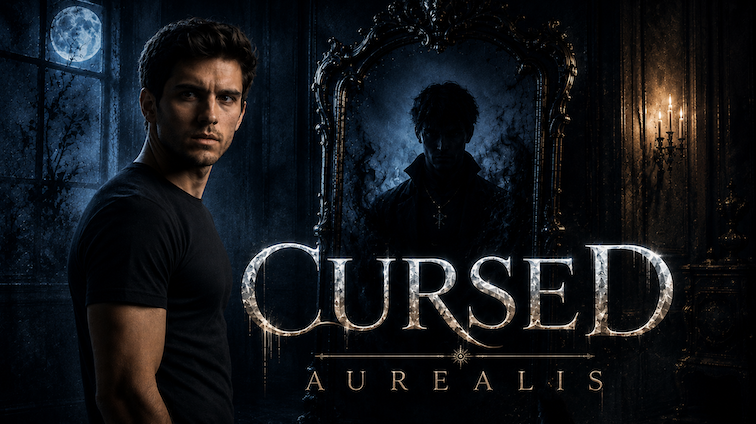
Punk Head: The song centers on a voice that says every dream will fail. When did you realize that voice deserved its own character?
Aurealis: I think that voice became a character because it never felt like a simple passing thought. It felt persistent, almost like something standing beside you and narrating your future before you’ve had a chance to live it.
“Cursed” was written years ago, and even then the song felt like it was built around that inner presence: the part of your mind that turns fear into certainty and tells you not to hope too much because disappointment is inevitable. At some point, I realized the voice was not just part of the lyric. It was the antagonist of the song.
That is why the shadow-self became so important to the release. The voice needed a form. It needed to feel close, familiar, and unsettling, because it is not a stranger. It is the part of yourself that sounds convincing when you are already vulnerable.
Punk Head: Mirrors appear repeatedly throughout the visual concept. What do mirrors represent in the world of this song?
Aurealis: In the world of “Cursed,” mirrors represent confrontation. They are the place where the character has to face the thing they have been trying to avoid.
The mirror is not just about appearance or reflection. It is about recognition. It asks, “What if the thing haunting you is not separate from you?” That is the emotional center of the song for me. The fear is not only that something outside you is working against you. The deeper fear is that the voice telling you every dream will fail may already be living inside you.
Visually, mirrors allowed that internal battle to become something physical. The shadow can appear, shift, follow, or step forward. It turns an emotional experience into a cinematic one.
Punk Head: Was there a specific image, lyric, or sound that became the foundation for the entire project?
Aurealis: The foundational idea was the line and feeling behind “every dream will fail.” That is such a devastating thought because it does not just describe sadness. It describes the loss of trust in hope itself.
The whole project grew out of that emotional space: the moment when you want to believe in something, but another part of you has already decided the ending will be painful. That feeling shaped the lyrics, the darker production, and the visual language of mirrors and shadows.
Musically, I wanted the track to feel like it was moving through a beautiful but uneasy space. The synth textures, the controlled rhythm, and the layered vocals all support that feeling of being trapped inside your own thoughts while still trying to sing through them.
Punk Head: Did the music video reveal anything about the song that wasn't obvious when it existed only as audio?
Aurealis: Yes, absolutely. The video made the internal conflict more visible and, in some ways, more direct.
When “Cursed” existed only as audio, the voice was emotional and lyrical. You could feel the despair and the tension, but the video gave that voice a body. It made the shadow self into a presence that could be seen, followed, feared, and confronted.
The video also helped clarify that “Cursed” is not about a traditional outside villain. It is about psychological haunting. The mirrors, shadows, and confined spaces helped reveal that the real struggle is happening inside the character. That visual world deepened the song for me because it showed the audience where the song actually lives: in that space between fear, memory, reflection, and self-confrontation.
Punk Head: Is the shadow figure in the video meant to be an enemy, a reflection, or something else entirely?
Aurealis: The shadow is all of those things, which is what makes it unsettling.
It is an enemy because it tries to take control. It feeds hopelessness, doubt, and fatalism. But it is also a reflection because it comes from somewhere inside the character. It is not a monster arriving from the outside. It is a version of the self that has been shaped by fear.
I see the shadow as the inner voice made visible. It represents the part of you that tries to protect you from disappointment by convincing you not to hope at all. That can feel like protection, but it can also become a prison.
So the shadow is not purely evil. It is wounded, familiar, and dangerous because it knows exactly what to say.
Punk Head: Many songs about inner struggle focus on overcoming adversity. “Cursed” seems more interested in the moment when hope starts slipping away. What drew you to that specific emotional territory?
Aurealis: I was drawn to that moment because it feels very honest. Not every inner struggle immediately turns into triumph. Sometimes the hardest part is not the victory; it is the moment before you know whether victory is even possible.
“Cursed” lives in the space where hope is still present, but it is losing strength. That is a painful emotional territory because when hope starts slipping away, joy often goes with it. You are not only afraid something will fail; you begin to feel as if failure has already been decided.
I did not want the song to pretend that darkness disappears easily. I wanted it to sit inside that feeling and make it visible. But I also do not think “Cursed” is a song of surrender. Even in its darkest moments, there is still movement, still a pulse, still a voice singing through the shadow.
For me, naming that shadow is part of resisting it. The song does not offer an easy answer, but it does suggest that recognizing the voice is the first step toward not letting it write the ending.