How NINA and Radio Wolf Captured the Sound of the Night
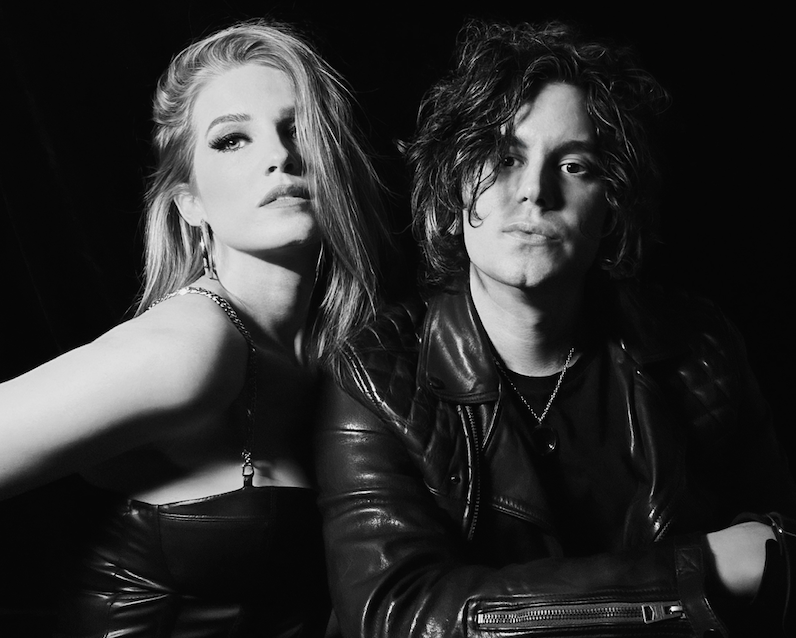
Punk Head: ’To See You’ feels like a movie playing after midnight — was there a particular night or moment that inspired this nocturnal mood?
NINA: We work best late at night when the rest of the world is asleep. It’s magical making music in those hours—it feels very natural to us, almost like our inspiration is synced with the moon. Most of our album JUKEBOX DREAM was written at night, so creating ‘To See You’ felt less like one defining moment and more like a series of late-night creative sparks coming alive—I guess that’s what gives our sound this nocturnal feel.
Radio Wolf: When we recorded ‘To See You’ in Berlin, our studio overlooked the night skyline. We watched clouds drift through the darkness while shaping the song together, and I think that atmosphere naturally inspired a lot of the spacey movements in the track.
It’s definitely more of an atmospheric mood piece than a literal narrative. There’s a feeling of being drawn toward something mysterious and irresistible—another presence, a memory, a sensation, maybe even the night itself. I think that sense of surrendering to the unknown is part of what gives the song its nocturnal atmosphere.
Punk Head: Your sound blends dark-pop romance with electronic rock intensity. How do you decide where to push the darkness versus the shimmer?
NINA: Well, you have to trust your instincts. The darkness and shimmer can work together as long as it results in the song being emotionally coherent. The sonics can balance, complement or move in a counter direction to accent certain emotions—a raw, grungy guitar riff from Radio Wolf can actually highlight a more hushed vocal from me. These counterpoints all add up to the larger emotional world of the album.
Radio Wolf: Our shared tastes in music are broad so we start out from a big space with lots of contrast. Contrast informs a lot of what we do. For instance, sometimes the vocals are soft and dreamy while the drums or guitars hit harder and this creates a certain tension that works in the recording. Then again, halfway through the process we might decide we need to reverse that energy or even change the key or tempo completely. Some songs changed multiple times before they found their final form. Even when we begin with a very clear idea, the music often evolves into something unexpected. We’ve learned not to fight that because letting go usually leads us somewhere more interesting.
Punk Head: Working with a producer like Radio Wolf must feel like a cinematic ride — what’s the wildest sonic experiment you’ve attempted together so far?
NINA: Radio Wolf has a ‘jukebox spirit ethos’. His range is very wide, encompassing early electric blues, rock ’n’ roll, pop, synthwave, right up to and including modern electronic music. He’s kind of genre-free actually, regarding electronica less as a genre and more as a creative tool to help create music with expansive emotional range.
Coming from the mainly synthwave movement, I was inspired by his openness to experimenting with other forms. Vocally, I felt challenged and invigorated at the same time. I also felt wildly confident.
Looking back, the creation of the entire album was an experimental wild ride for us. We never knew what was going to come out of us next, lyrically or sonically. There was always another unexpected turn. I think you get a good sense of this on the title track ‘Jukebox Dream’.
Punk Head: The ‘nocturnal sonic world’ of Jukebox Dream feels almost like a universe unto itself. When building this album, do you think visually, narratively, or purely musically?
NINA: Definitely all three. We’re both drawn to a certain aura in the visual arts and cinema—the beautiful and surreal work of David Lynch and the dark romantic gothic horror of Mario Bava films being just two examples—so we naturally think visually as well as musically and emotionally. A certain sound or tone can summon up an image, and it works the other way around too. We’d like to think our music evokes a personal visual narrative in the listener’s mind.
Radio Wolf: We actually see things while writing. Even when it’s abstract, there’s usually still a beginning, middle and end emotionally, visually or narratively. ‘Jukebox Dream’ and ‘Tokyo Cowboy’ are good examples because I could vividly picture scenes and stories unfolding while we were creating them. ‘My Dark’ was more about mood and pure feeling—the only real image was shadow. ‘Don’t Trust The Night’ felt like the soundtrack to a neo-noir film that never existed while we were writing it.
I call it ‘cinema-of-the-mind’. Just before our collaboration I’d worked on producing a film soundtrack, so I became inspired to create more cinematic and immersive music in general. Coming together with NINA and sharing our love for the nocturnal world of certain films, we musically ‘painted’ these songs in colours and shades inspired by the visual arts we admire as well as the emotions inherent in the lyrics. In the process we were shaping an album—a world that was unmistakably ours.
Punk Head: Performing these songs live across European cities — how did audience energy shape the final recording choices?
NINA: Most of the album was already close to finished by the time we started performing the songs live, so we mainly adapted things for the stage rather than changing the recordings themselves. ‘To See You’ was one of the exceptions. During our Paris show supporting Cannons, the atmosphere in the room felt so electric that we spontaneously extended the guitar solo and I improvised additional vocal parts live on stage. Luckily, a fan recorded the performance on their phone so we were able to revisit that energy afterwards and went back into the studio to work some of those moments into the final version before mastering.
Radio Wolf: We usually see the album and the live show as two separate experiences. The record is more psychological and immersive—something you can disappear into privately through headphones. Live performance is much more physical and unpredictable. There’s volume, sweat, crowd energy, improvisation and real-time chemistry between everyone in the room. That unpredictability is important to us, which is why we always leave space for things to evolve differently every night.
More From NINA with Radio Wolf
Radio Wolf
Website | Instagram | Facebook
NINA
Website | Instagram | Facebook