
Molly Willis On the Making Of “Hypocentre”
What was the initial spark or idea that led to the creation of "Hypocentre?"
I wrote a lot of the songs off this project at one of my old jobs, actually. I'd scribble lyrics that popped into my head in the margins and then try to record a voice note of the melody on breaks before I forgot it. I think “Hypocentre” was one of those. My mental health always takes a bit of a hit in September, and the song's very literal - September can indeed do one.
Can you talk about the recording and production process for "Hypocentre?"
This was probably my favourite song to record so far. I got to work with Jack from Mama Oh No. He was studying music production and being taught by Jonny Cole, who I made my first EP with. He thought we'd be a good mix, and Jack was awesome to work with. He took the track in a more psychedelic direction than I was expecting, but I wouldn't have had it any other way. He was also extremely patient. There was a whole hour or so where I just couldn't take of one of the guitar parts that I was happy with. I even asked him to play it for me instead, but he insisted that my messy version fit the song better. Anyone who can embrace messiness and imperfection is probably a good person for me to be working with.
What do you like the best about this track?
I'm really proud of the guitar riff on it. It's super simple, but I don't care, it fits perfectly. This song had been sitting around gathering dust for two years before I wrote that riff, because I knew I wanted it to be a rock song, but I was still pretty new to writing for lead guitar. I actually sang it to myself before I played it, which is why I think it's kind of catchy - it's made to be sung.
What inspired you to pursue a career in music?
I realised there was nothing else I wanted to do more. It took me a while - I've been singing and writing songs since I was a kid, but university was always my goal, and while I was there, I had set my sights on being a journalist. Once I was out of that environment and my future was wide open, I realised I didn't miss journalism at all and didn't have the drive for it - I had just been sucked into the idea of doing something 'important'. What I did miss was music.
Are there any specific venues or festivals that you dream of performing at?
I mean... is there a musician alive who doesn't dream of playing Glastonbury? It feels ridiculous to even say it, but it'll always be the one. Stick me on a box with a karaoke mic, I don't care. I'll even play next to the Portaloos. If I get within spitting distance of Worthy Farm with a guitar strapped around me, I'll feel like I've peaked.
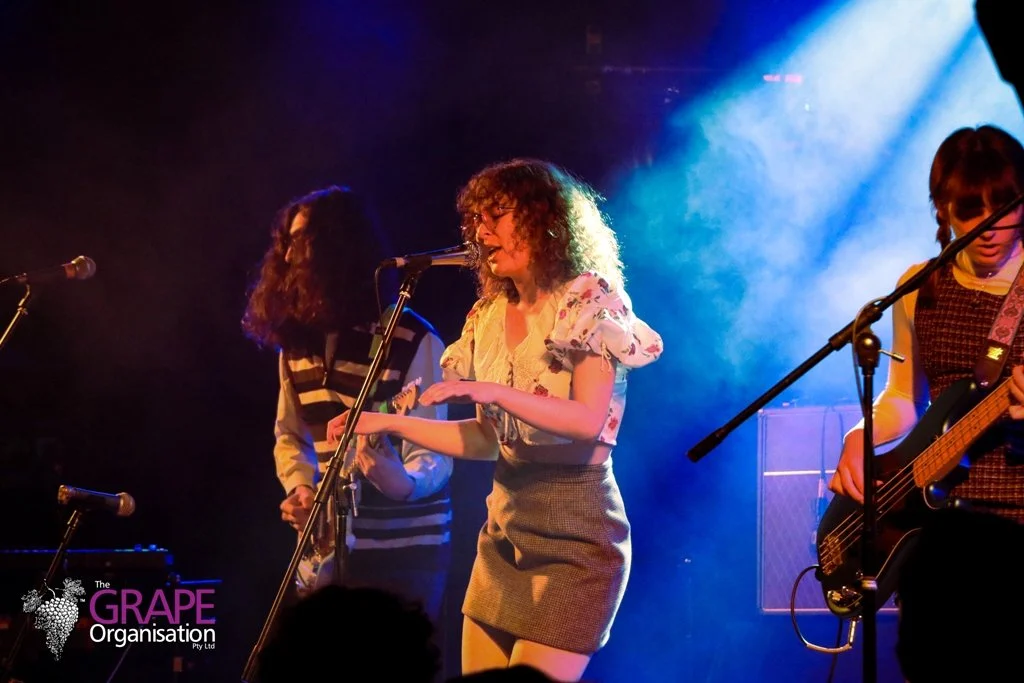
Mums Favourite On the Making Of "Wind in the Willows"
What was the creative process like for this particular "Wind in the Willows?"
Our musical journey began with the electrifying heartbeat of the bass riff, setting the song's pulse racing. Once that mesmerizing rhythm was locked in, the rest of the music flowed effortlessly, like a natural symphony waiting to be unleashed. We knew we wanted to write a song about the Italian Greyhound, Willow, and our literary lyricist, Sasha, manages to tie that to the wind and the truth.
Can you talk about the recording and production process for "Wind in the Willows?"
With only a precious two-day studio window and an intensive preproduction session to sculpt our sonic vision, we meticulously crafted the essence of our song. Over the course of six months, we honed our live performance of the track to perfection, ensuring that every note was not just played, but passionately delivered with tight precision.
What has been one of your favorite memories along the path to making this single?
Our studio sanctuary at MixMasters in South Australia is a cherished haven. It exudes a timeless, vintage aura that envelops us in a world of musical immersion. Here, the blissful isolation liberates us to channel our full creative energy into the art of recording and playing our instruments, resulting in a truly magical sonic experience.
What has been the most memorable experience or achievement in your music career so far?
In our relatively brief journey, we've been fortunate to seize some remarkable opportunities, yet nothing quite compares to the thrill of opening for Joe Camilleri and The Black Sorrows. As a live music ensemble, this was a momentous chance to command a colossal stage, captivating a vast and attuned audience while pouring our hearts and passion into our music.
Our accolades include a South Australian Music Award nomination in 2022, a testament to our commitment to the craft. Moreover, sharing the stage with venerable acts like Master's Apprentices and Wolfmother has been a priceless experience. Collaborating with these seasoned, established bands has not only enriched our musical journey but also provided invaluable guidance that lights our path ahead.
What do you enjoy most about performing live and connecting with your audience?
Experiencing the collective harmony of a captivated audience as they unite in a symphony of voices while witnessing a vibrant room pulsating with the timeless enchantment of live music. The energy that bounces between us and the audience is what drives most people to perform live!

Govorukha On the Making Of “Scissors”
What was the creative process like for "Scissors?"
It was one of those songs that I wrote in about a few hours. I remember sitting in my studio apartment around 5 years ago with literally nothing around me - I just moved in, so all I had was a mattress on the floor and no Wi-Fi. It helped me in a way - I had a long “me and my guitar” moment :)
Can you talk about the recording and production process for "Scissors?”
Recording took place in my apartment. And I must say, it’s quite challenging when you have road construction going on seven days a week and a lovely, but a loud dog. So, oftentimes, I had to wait for that few-hour gap between the end of the workers’ shift and the silent hours. Then, make sure upon each take that my dog is not making any noises. I think there is still a guitar take somewhere in the project where my dog makes a really deep sigh as if she is tired of me recording one strumming pattern again and again.
Also, “Scissors” is the first song I took seriously from a production standpoint. I saved money, enrolled in a production course, received great help with some invaluable tips and eventually with some guidance did all the mixing in my bedroom.
What are you most proud of this track?
I’m truly proud of the overall mix. It could have always been better, especially, when I’m hearing it again now, but at the end of the day I’m just doing my best to level it up every time. I even left my demo EP out I released last year on all the platforms as I reminded myself where it all started and how the quality improved with practice.
Can you tell us a bit about yourself and how you got started in music?
I was born in Russia at the Chinese border and later on moved to Saint Petersburg to study. For a few years, I’ve been based in Czech Republic, where I have my solo acoustic project and a post-punk/gothic rock band. All my childhood my dad would sing me some songs from around the world - from Scorpions and Modern Talking to Toto Cutugno and Joe Dassin. He would also let me strum the guitar while he was changing chords and singing. That way I felt involved in the process in a way and even imagined myself playing in front of someone one day. So I think getting interested and then starting in music was inevitable in my case.
I remember asking my parents for a guitar for my 15th birthday. I had tons of motivation to learn but with the birthday still 5-6 months ahead…I just couldn’t wait. So, eventually, I grabbed my dad’s 12-string fender and got started. It was incredibly hard to begin with a 12-string guitar from scratch, but I liked the challenge.
Are there any specific artists or musicians you dream of collaborating with?
Honestly, I haven’t thought about it in terms of my solo project. But I think I would love to do something with either Flatsound or Damien Rice :)
Old Man Soul Club On the Making Of “Smiling Boogaloo”
Can you share any interesting or unique stories or perspectives in "Smiling Boogaloo?"
“Smiling Boogaloo” is an antidote to worldwide pessimism. Been too long since someone said, "For fuck sake, put a smile with that, your killing me". From the top to the bottom there is a tone of disapproval, disrespect, and disregard towards the people and we can help that by not giving into it and trying at least to have a grin or three.
You see it in the shops, the bars, the streets, so yeah it's my way of saying don't let the bastards get you down to myself and all on the planet.
Were there any memorable or standout moments during the recording sessions for "Smiling Boogaloo?"
The track was recorded very spur of the moment, I'd written the lyrics on my phone in bed at 4 a.m. that morning so as not to wake the house up. When my wife and kids popped out shopping I just went for it and it was best part done by the time they came back. I love the little guitar slide that I "borrowed" from "The Monkey Speaks His Mind", which gives it a lovely looping groove.
What has been one of your most favorite memories along the path to making this track?
To be honest I wasn't expecting to release it until my wife and daughter nodded me in the right direction. They'd listened to the demo and were bopping to it you know, always a good sign. The feedback so far has been 100 percent from all ages and ilks.
Can you tell us a bit about yourself and how you got started in music?
I'm Steve Hanshaw, I've been involved with numerous band and solo escapades. Old Man Soul Club is my thing, a bubble of mine I can go to and make music as alter egos really I suppose. There's no set agenda or style intended for each song really, I just take the songs to where the song wants to go. I play in an acoustic Folk, Roots, and Blues duo "The Seventh Sons" too, we've just completed the writing of an LP and I also present a Radio show once a month for "Cultural Popcorn" on Radio 614, Columbus, Ohio.
I started playing at age 16, self-taught through years of swearing at the guitar, and jokes, I just kept going, until I sussed it and I'm still learning, I love learning. I always wanted to write songs you know, a writer of songs.
Where do you find inspiration for your songs or musical ideas?
Inspiration comes in many forms and disguises. Ideas come a lot and I have to be careful, you can have so many you don't complete the last ones. I listen to lots of different music due to presenting and researching for the radio show I do. So I guess there's some level of subconscious musings and inspiration, but mostly people give me inspiration. I really enjoy the process and can only explain it as maybe like a jigsaw or crossword puzzle, lots of different words, sounds, and images floating about and if you can get your mind to be still enough it'll all fall into place.
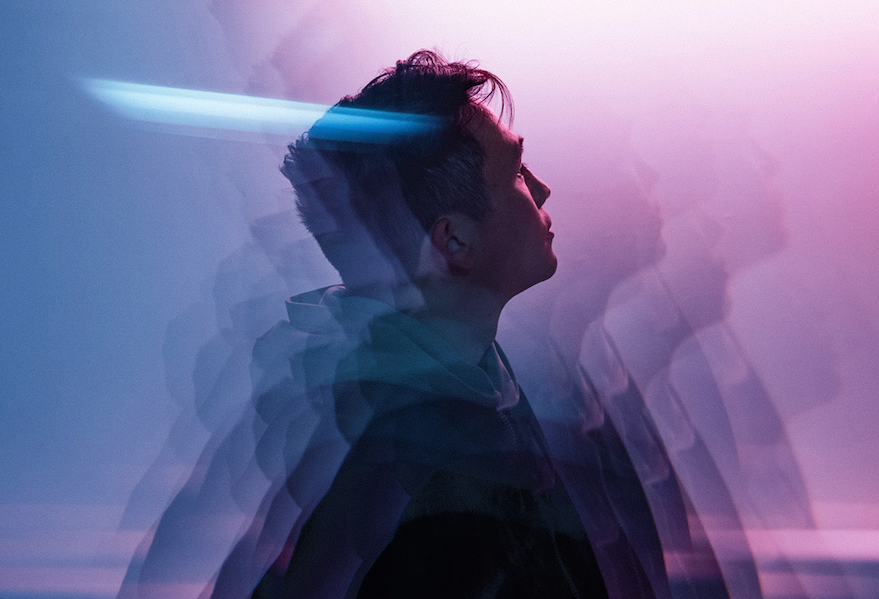
Actve Captve On the Making Of “Ellis Island”
Can you share any interesting or unique stories or perspectives in "Ellis Island?"
With the debut of their latest single, “Ellis Island,” Actve Captve, the versatile rock/soul/pop band led by multi-instrumentalist Justin Han, explores the poignant and universal themes of love, loss, and hope. The song artfully parallels the emotional turbulence of a heartrending breakup with the journey of immigrants who leave their homelands in search of new beginnings, much like the thousands who passed through Ellis Island in pursuit of the American Dream. Drawing from Justin Han’s personal experiences, this new single delves deeply into the complexities of human emotion and relationships, capturing the dichotomy of leaving behind a cherished world while simultaneously holding onto the hope of creating a new one.
Were there any challenges or breakthrough moments during the songwriting process for "Ellis Island?"
The most challenging part of the process was harnessing all the various talents needed to create music at the professional level. From finding a producer who shared the same musical references and goals, to a mixing engineer who was on the same page, to a mastering engineer who had the experience necessary to tie all the disparate influences and styles together. Instrumentally, “Ellis Island” is deceptively simple, and requires a deep well of experience and musicality to perform the way the parts are intended. Thankfully, Actve Captve has a deep well of talent and artists to pull from in bringing the artistic vision to life.
Can you talk about the recording and production process for "Ellis Island?"
Produced by Jason Heninger, mixed by Israel Doria, and mastered by Justin Colletti, “Ellis Island” stands as a testament to Actve Captve’s meticulous attention to sonic detail. Cassie Brandi’s soulful vocals add an almost gospel-like quality to the track, recorded at Blue October’s Orb Studios in Austin, TX. The musicianship is further anchored by the rock-solid drum work of Kyle May, recorded in Nashville, Tennessee. songwriting process for a piece like "Ellis Island" can be both challenging and rewarding. One challenge is capturing the depth of emotion and significance associated with such a historical and emotional location. Always aiming to strike a balance between honoring the past and creating a song that resonates with contemporary audiences.
How do you approach creating something new and different?
Actve Captve is built on a philosophy of collaboration and the belief that every perspective is valid and full of fresh ideas and potential for innovation. From writing to recording to mixing and mastering, there is a new opportunity to remain open-minded and take creative risks at every stage. Of course, there is such a thing as too many cooks in the kitchen, so remaining mindful and intentional about who is brought into the creative process, and at which times, is key.
Are there any upcoming projects or releases that you're particularly excited about?
The band is very excited about the single that will follow “Ellis Island”, which is titled “Away From You” and is the biggest exploration into new sonic territory that the band has made yet. Pulling from contemporary pop and hip hop production references like Cautious Clay and Juice WRLD while retaining the emotional vulnerability and authenticity of songwriting influences like Alanis Morissette and The Smiths is the cutting edge of the band’s future sound, and we can’t wait to share that song with the world in October.

Livi Jacobs Releases “Copacabana”
“Copacabana”, Livi’s fourth release, is a song focusing on the desire to break free from daily routine. The lyrics emphasize wanting to escape the repetitions of every-day life, no matter where to. Shutting off ties to “real- life” and exploring the unknowns of this world, finding oneself again. Livi states that she feels lost sometimes in the noise of the world and when she wrote this song, she captured the feeling of wanting to escape just for a little while. The production enhances the beachy, dreamy feel Livi is portraying, using the guitar as rhythm instruments and relying heavily on acoustic elements.
Livi Jacobs, is an Austrian born and raised singer-songwriter, now based out of a small remote town on the southwest coast of Florida. Since her early teenage years, she knew she wanted to pursue music. She spent her last years traveling the country, honing her craft. Attending workshops, the Idyllwild Arts Academy where she majored in songwriting, moving to Nashville and then to LA, working with people who she could learn from and who shaped her as an artist.
Livi is a new-comer in the industry, having released three songs prior to “Copacabana”. Within three months of her debut, Livi has accumulated over 70,000 streams and over 1,000 playlist adds, building her following steadily with every release.
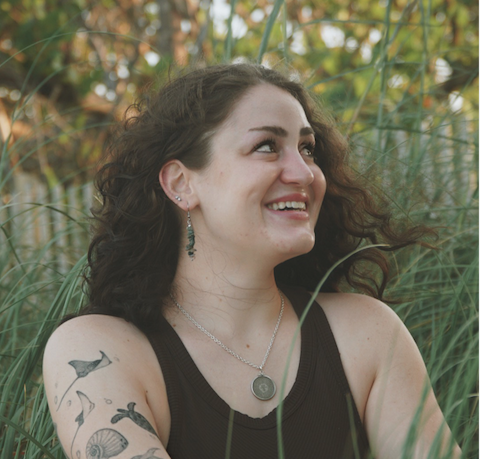
Zanne Hanna On the Making Of “In My Dreams (Ft. Austin Atlas)”
What was the creative process like for this particular "In My Dreams (Ft. Austin Atlas)?"
I wrote “In My Dreams” at the beginning of this year as a way to process my breakup from a five-year relationship. I kept a running list of observations in my notes app on my phone. These were mostly random thoughts that I had that felt like they truly came from my own mind and not an outside source. I was visiting the beach often and observing the tides and literally looking at my own feet and realizing they were attached to my body. In a conversation with my best friend, we discussed what it felt like to experience a breakup. She said how it was weird to feel like you were grieving someone who was still living. She said “to lose someone but not in death” and now she has a writing credit for the song!
Can you talk about the recording and production process for "In My Dreams (Ft. Austin Atlas)?"
This song is my first collaboration with another producer. I reconnected with my friend Andrew (Austin Atlas) at this popular hometown bar over the summer, and we saw it as a great opportunity to finally work on a song together! I sent him an acoustic demo of the song first which I had envisioned as having a more EDM feel to it (his specialty). Then I recorded my own vocals in my home studio and edited, comped, and tuned them. I sent over an Ableton session with some guide tracks of basic demo sounds to give him a sense of how I wanted the song to feel. From there he sent back demos of the instrumentation he produced, and then we moved on to mixing and mastering from there! Andrew is an incredible talent and truly brought this song to life from a vision that only existed in my brain.
Were there any challenges or breakthrough moments during the songwriting process for this single?
Typically I write a song from start to finish in a few sittings, editing along the way and revisiting it before I record it. This was my first attempt at collecting lyric ideas over a period of time and practicing some real patience. Once I had the hook line, “in my dreams I’m always right,” I realized I wanted this song to be a collection of psychedelic observations into one huge revelation: I lost someone who thought very little of me, and that was an objective fact.
Are there any specific themes or topics that often find their way into your songs?
I tend to write a lot about my experiences with loss and grief, and about how I perceive myself in my own body and in social situations. In this song, there are themes of delusion and my experiences with OCD. I tend to infuse a lot of my writing with ocean imagery since I grew up in Florida and spent my college years missing my hometown. I tend to miss the places where I’m not and have a hard time being present in my own life.
How has studying at Berklee College of Music made an impact on your music career?
At Berklee, I chose a very technical path, studying audio engineering, sound design, audio electronics and acoustics, and even music cognition. I fully expected to be working in a recording studio or a technical space for the rest of my career. More recently I’ve reconnected with my creativity and recognized that while my technical expertise is a HUGE help as an artist, it was really feeding my ego and a strange desire for academic superiority that I developed from being in a magnet program in high school.
Vinter On the Making Of “Mirror”
What was the creative process like for this particular "Mirror?"
It’s been a long process. “Mirror” has been around in different forms since 2016 and every now and then I would go back and explore the melodies and rhythms in different ways. This involved things like slowing them down, different keys, and time signatures, but generally, the main melody was always played on the guitar. Over the years drums were added as well as other instruments such as marimba, horns, clarinet, and synths.
Were there any challenges or breakthrough moments during the songwriting process for "Mirror?"
Whilst the melodies of the song have been very similar throughout its different incarnations, I wanted to do something a bit different and explore unconventional time signatures. I eventually settled on 6/8 and the song really clicked from this moment onwards. It’s a time signature I really like, especially for a song like “Mirror”. It’s different enough to make you feel melodies in a fresh way without being too jarring.
What did you enjoy most about making "Mirror?"
Recording guitars is always fun because of the instant gratification, but making the music video was another highlight.
Could you share some of your musical influences and how they have shaped your sound?
The influence of minimalist composers such as Steve Reich and Terry Riley is particularly evident in a song like “Mirror”, especially in the repeating interlocking phrases, but also in electronic music like Tangerine Dream, Rival Consoles, and Jazz instrumentalists Portico Quartet who I feel exist in similar musical landscapes.
Are there any upcoming projects or releases that you're particularly excited about?
Absolutely, a couple more singles will be released before the end of the year which use the same instrumental palate as “Mirror” but go in very different directions with singing too. Some soundtrack work I’ve done will be coming out too which is exciting.
Matthew S. Horner On the Making Of ‘The Dark Room’
What was the creative process like for this particular 'The Dark Room?'
The process was to not let myself be restricted by insecure thoughts or self-talk really. I always have a ton on my mind. Music should be therapeutic. I did what I wanted to do on this rather than write what I thought would be popular or what labels wanted to hear. I just got tired of feeling like I was writing to suit. This is me locking myself in my studio which is a small room with deep purple lights and a mellow atmosphere and a pink neon light that reads "lets get weird" surrounded by the merch from bands I love and souvenirs from travels.
Can you talk about the recording and production process for 'The Dark Room?'
I switched to mic'ing up my guitar amps and creating my own tones with a tube amp and my Epiphone goth thunderbird bass. The guitars are two Les Paul's that I love to use. I typically start with drums and build off of them with rhythm guitar then bass and leads then vocals.
Production is all my friend and producer Adam Buckley. He is in the U.K. and I am in the U.S. so it's a lot of email. I have never been as excited and shocked by the things he does. He just gets me musically.
Which song do you like the best and why?
This is really tough... it would be a toss-up between "storms" because it is by far the most exciting and therapeutic song I've put together. It's also one of the most personal songs. It felt great to get the past off my chest and add a motivational verse to it. I also love "dark heart" because it is pure honesty from me. An inner look at who I am and how I move forward. I will always have a pop punk dad element to me cause I am a dad and grew up with bands like Blink182. That’s what "Dark heart" brings to the table.
What inspired you to pursue a career in music?
I don’t know if I'd call it a career... I’m pretty small potatoes at this point. I just love music. It’s the universal language of life. I’m still learning and always will. I'd love for people to know my music. Really, I just want to leave something behind after my time is up.
Are there any specific themes or messages that you aim to convey through your music?
Just to let loose and don't hold anything back. Don't write for anyone but yourself. If you like it then write it. There will always be haters and harsh criticism. That's perfectly acceptable. Music is subjective. As long as you dig it then you're doing just fine.

Anoush On the Making Of ‘ONE’
What was the creative process like for this particular 'ONE?'
The creative process was all-consuming. Music came to me in every situation and I was writing faster than I could record & produce, so it was nice to capture some of it and turn it into an album.
What was the initial spark or idea that led to the creation of 'ONE?'
Something awakened in me during the Covid lockdowns and that’s when the music really took off. Once I started writing, I was hit with a tidal wave of inspiration. The floodgates were open and the ideas kept coming.
Which song do you like the best and why?
My favorite song is “I SEE YOU,” because it’s the most fun to play on the piano.
Can you share a bit about your musical background and the journey that led you to where you are today?
I grew up in an Armenian/ American household and was always exposed to many different cultures and genres of music. My classical training started when I was a toddler, but I am still learning and playing. I love how music offers a bridge between language barriers and connects people. That's a beautiful thing.
How has your music evolved since you started as a singer-songwriter? What have been some key milestones in your artistic journey?
When I first started writing, the music that came through was more folksy and meant to be played on an acoustic guitar, but I don’t play the guitar, so I had to figure out how to create the sound I wanted on piano. It took a lot of experimentation to come up with the sound I’m playing with now, but it worked out for the best because this is the music my lyrics needed.
My biggest milestone was gaining over 100k new listeners on Spotify after releasing music for the first time in April, starting with "Cherry on Top."
hyyypnos On the Making Of “tattoo”
What was the creative process like for this particular "tattoo?" Can you talk about the recording and production process for "tattoo?"
The creative process on this song wasn't too different from how my collabs with Dummi typically pan out. Bro comes over to my home studio, we start hangin’ out & shooting ideas for what vibe we're trying to create, and after some elbow grease, I finish the main loop for what the song will be, and then from there I just started freestyling and came up with the vocal melody for the hook, then from there, the song almost wrote itself. we wrote and recorded the track in one night! I am merely a vessel for the creative energy of the universe lmao.
What did you enjoy most about making this single?
Listening to paradise front to back for the first time. this single is from a project that is meant to be listened to as a whole, & the way that “tattoo” jumps in after the song before it is just... *chef's kiss* to me. i can't wait to share the rest of this project with you guys.
Can you tell us a bit about yourself and how you got started in music?
Well, hi! I am Elliott! I try to be the quietest person in the room, observe, and soak up as much knowledge from others as I can. I believe you can learn something from everybody. my musical influences funnily enough mostly come from metal and hardcore music. I play guitar every day and played drums for several years too. I loved listening to bands like Coheed and Cambria, Haste the Day, Underoath, Periphery, and The Contortionist in middle and high school. I also take heavy inspiration from The Weeknd and Frank Ocean, the songs throughout The Weeknd's compilation record Trilogy and Frank Ocean's Channel Orange are both big influences for me, not only vocally and lyrically, but instrumentally as well.
Are there any specific venues or festivals that you dream of performing at?
One specific venue I’d absolutely love to perform at is Red Rocks. the view from the seats is so gorgeous and I will never forget seeing it for the first time. <3
Ghost Prom On the Making Of “5am”
What was the creative process like for this particular "5am?"
Ghost Prom (Cameron Crosby, songwriter/vocalist): This is a song I had been working on for years but never seemed to fit together quite right. I was going to Aaron Mones's (our guitar player, and producer) studio to record that day and in the morning I was panicking because it still didn't feel right. I got frustrated with myself and I think threw my phone into the woods in our backyard. Sometimes I can behave really childishly and have a habit of promising people that I would change but it never stuck until a few years ago. While looking for my phone the chorus just popped into my head out of nowhere and I ran back inside and wrote it down and went to record it probably 15 minutes later.
Can you talk about the recording and production process for "5am?"
Aaron lives on the same street as me and his studio is down below their house so not only is it a convenience, it's nice to be able to collaborate with someone you respect and have a deep friendship with. I think it was the fourth or fifth song that Aaron and I had recorded together. At one time it was a slower song but the new chorus made me pick up the tempo and the opening riff Aaron plays injected a little more energy into it and it was finished pretty quickly, maybe a day or two. I remember him being more excited by this one more than any other song.
What did you enjoy most about making "5am?"
It taught me to give up trying to force anything, to just say what I mean, and not try to censor myself or my feelings. It was an important moment for how I want to write songs in the future. I was so obsessed with being intentional with every thought or feeling and I think I lost some of the initial creative spark that you can't recreate, I think the way this song progressed brought me back to that. With all this being said, I think the thing I enjoyed most about making this song was sitting on Aaron's couch with my dog's head in my lap watching Eden does vocals for the song.
What inspired you to pursue a career in music?
I don't think of music as a career. I do it because I have to. It's the best way to express myself without having to rely on anything or anyone. If I don't get all the crazy shit in my head out onto a page, it's stuck in my head and that's not good for me or anyone else in my life. It makes me feel good knowing that even if I had to bang a hammer 8 hours a day, I could still do music no matter what. A friend of mine who has a 5-year-old told me that his daughter had made a painting, and he said to her, "Wow that's really beautiful, maybe when you grow up you'll be a painter." She responded, "But I already am a painter because I made this painting."
Are there any specific themes or messages that you aim to convey through your music?
That no matter how hard things seem in the moment, it'll pass. Nothing lasts forever. Reach out to people if you need help. I don't know if there's anything harder for me than to ask for help but when I have in the past, it's saved my life. That's most important and I think a theme of our new record. You can even reach out to me if you want at our email - it's ghostpromband@gmail.com.
eno-obong On the Making Of ‘Piedmont Park’
What was the creative process like for this particular ‘Piedmont Park?’
Unorganized and random honestly. Beat-wise, my goal was to create a thicker sound at the time. Not try to be too overbearing but get better in the middle frequencies. These were a collection of beats that didn’t really have a concept until I scoured the internet for an idea. Usually, I watch documentaries on YouTube or David Hoffman is always great but nothing was clicking.
What was the initial spark or idea that led to the creation of ‘Piedmont Park?’
I’ve always had this idea of a calm party atmosphere. Like if a club was relaxed but actually had a great, engaging vibe. Originally I was going to work on an Angel Dust idea going through a club in the early 70’s throughout the night as different adventures happened. Kinda worked, kinda didn’t. But that made me think of the best party under wraps. Freaknik.
Can you talk about the recording and production process for the EP?
I like to run my audio through analog gear, cassette players, and outboard effects. I use an sp-303/sp-404 for my compression and run everything through a cassette player. In the parts where I am talking, I warped a few tape loops and added those as top-layer effects.
Can you tell us a bit about yourself and how you got started in music?
I’m a sample-based and electronic music producer from Houston, Texas creating since 2014. My goal is to defy genre boundaries by fusing jazz, electronic, ambient, and drum and bass into something new to experience. I’m influenced by John and Alice Coltrane, Sun Ra, Flying Lotus, Sam Gellaitry, and MF Doom. I really started turning my ear to music in middle school. Instead of what was on the radio down south, I enjoyed Pro Era and Clear Soul Forces. Once I got the crack version of FL in 2013 the rest is history.
Have you ever encountered resistance or pushback when experimenting with your art? If so, how did you handle it?
Yes, every day to push the boundaries you are putting yourself in new uncomfortable situations. Having time to create is a big deal, not even because I have a normal job. But because I’m learning the extra things you have to do for music to not only satisfy me but speak to others. Coming up with promotion plans, contact lists, and collaborating with other artists. Hearing the no’s and getting left on read. As my homie ShermStx would say, the high’s and the low’s. They are always there but I’m at a point where I can look back and be proud I never stopped creating or let anyone tell me what I believe should be good.
Mesmershade On the Making Of ‘Echoes of Elegy’
What was the creative process like for this particular 'Echoes of Elegy?'
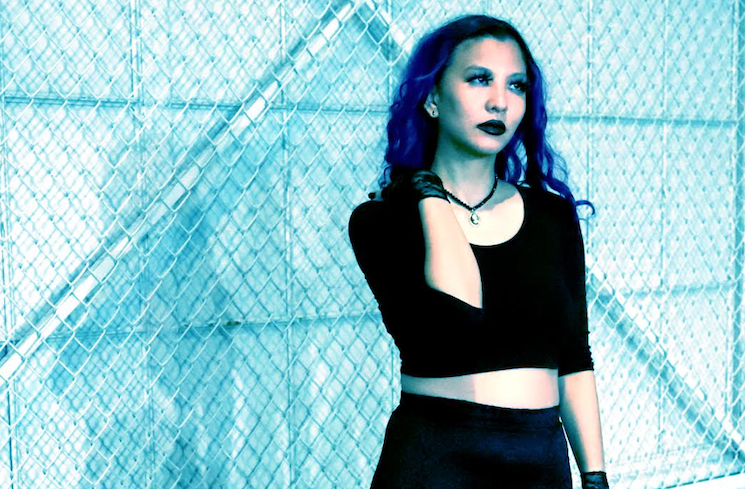
M. Munigant: As Juniper and I are living thousands of kilometers and several time zones away from each other, a lot of the creative process for this EP is asynchronous. Our general workflow usually involves me writing multiple versions of each song and letting Juniper choose which version she most likes. We then work out ideas through rough mixing and arranging until we come to something that clicks.
Sometimes I’d write things that I love but couldn’t imagine how vocals could be put over it, but then I’d be getting back something that did what I thought was impossible. I like to think of the entire creative process for our EP, Echoes of Elegy, as a continuous series of overcoming the impossible.
Juniper Jow: It’s funny to hear that M thought of it as impossible, because for me, it sort of felt like an incredibly natural process, like we were absolutely aligned and completely on the same wavelength from the very beginning. We basically met over the internet, formed our band, and wrote our first six songs together over the space of a few weeks. That initial excitement of forging an immediate connection was just an incredible creative rush – we were trading work back and forth at a fevered pace and finishing new songs in a day. Everything seemed to come together so smoothly – it sounds like it shouldn’t have worked, but it felt like it was just meant to be that way.
M: That’s not exactly how it went! I think we may have put things together over a period of weeks, but that was followed by a long series of tweaks and rewrites and remixes to make the final EP what it is. So the basics of the songs were there almost immediately, but the final product took nearly 6 months to put together correctly.
Could you discuss the lyrical themes or messages conveyed in 'Echoes of Elegy?'
J: I would say that the Echoes of Elegy EP has an overall theme of lost love. I wrote the lyrics for “Moth” on the day after my grandmother passed away at the age of 93. On that morning, the first thing I saw as I walked out my door was an enormous black moth, which in Hawaii is believed to be the spirit of a loved one returning to say goodbye. The same species of black moth is also considered an ominous portent of impending death in other cultures. That strange difference in potential interpretation fascinated me, and this song is what came out.
“We Don’t Have To Wait” is kind of about that frustration that bubbles up when you feel like you are in a job where you’re no longer appreciated, which is kind of a love lost, in a way. “Vicissitude” and “The Best That I Could Invent” both firmly fall into the category of classic breakup songs, about the devastating self-doubt that hits in the face of unrequited love. “We Sleep” was actually inspired after I attended a town hall meeting where I heard a native Hawaiian rights activist speak – and while it might sound strange to describe that situation as a lost love, I do think the wounded feelings that linger in communities reckoning with the long-lasting effects of colonialism are very akin to a bad breakup. “Death’s Lover” is technically a love song, but the kind of love that you know from the start you shouldn’t want because there is no way it will end happily – the kind of love that can only end in a tragic loss.
M: What I find amazing about this is that Juniper managed to almost read my mind in terms of what I was thematically thinking for each song. When I’d get back her lyrics and vocals, I’d always be blown away, not just by how good they sounded, but by the way she seemingly picked up on the exact theme of each song without me explicitly telling her. I knew we were a special kind of match when that started to happen.
Which song do you like the best and why?
M: For me personally, my favorite song on the EP is “The Best That I Could Invent.” It’s short and melodic but experimental in a lot of ways, partially using Sega Mega Drive generated drum sounds and a lot of discordant layered synth sounds that are beautifully brought together by Juniper’s vocals. Overall, it has a certain relatable pathos to it that I still feel every time I hear it, which is in no small thanks to the beautiful singing.
J: My personal favorite is “We Sleep.” The drums and creepy horror soundscape Munigant wrote for that song are just so good. When I was writing the lyrics, I swear those beats haunted me in my dreams, but in the best way.
Can you recall a particular moment, artist, or experience that had a significant influence on your music?
M: I’m mainly influenced by three things: 80’s horror movie soundtracks, especially movies like David Cronenberg’s and John Carpenter’s movies, which is most apparent in “We Sleep,” which is almost a sort of call and response to They Live; a wide variety of hardcore/screamo music, from which I tend to be influenced by things like discordant chords, driving noisy parts, and the time switches you’d find in bands like Rye Coalition, At the Drive-in, Hell No, Les Savy Fav, Universal Order of Armageddon, and the Murder City Devils; and dark, gritty sounding hip-hop production like you’d find from producers like the RZA, Mathematics, and Blue Skies/Black Death, which gives our songs their somewhat hip-hop sounding beats. It’s a weird combination of influences, which leads to somewhat experimental sounding tracks.
J: OK, this is a funny one. I think I have to say that my primary influence, in terms of my vocal style, is jazz, like the great American songbook of the first half of the 20th century. But Munigant hates jazz! I don’t know how he ended up with me!
Was there a pivotal moment in your life when you decided to follow your path as a musician?
M: For me, my start as a musician began after going to a battle of the bands when I was 13 years old. The bands were mostly punk and hardcore bands, and I fell immediately in love with the raw sounds and DIY spirit of the whole punk/hardcore scene at the time. I knew on that day that I wanted to make music. For the most part, I’ve been making music ever since that point, playing in multiple hardcore/screamo bands throughout the years in both the U.S. and Japan.
Obviously, it’s been a long, strange, winding trip from my punk roots to the music that I’m creating now, but I still feel like the general essence of all of the songs still has a punkish influence. This is the first project I’ve ever been a part of where I write all of the instrumentation, so it’s been exciting to be able to fully express myself musically and also to meet and work with Juniper to make this EP a reality.
J: I really only started writing music a few weeks before we formed the band. Before that, I’d spent decades trying to write novels and poetry and always felt dissatisfied with the results. But I took to writing songs in a way that I never could with any other form of writing. I love how music enhances the story in a way that words alone can’t – so songwriting is the only way for me, going forward. When I stumbled across Munigant’s dark edgy instrumentals online, I was immediately inspired and knew that I would be able to write lyrics if he wanted them. On a bit of a daring whim, I reached out and asked if he wanted to collaborate. It happened by chance, but it’s completely changed the trajectory of my life, for the better.

Personal Use On the Making Of ‘A new era’
Can you share any interesting or unique stories or perspectives in 'A new era?'
Perspective is a word I like a lot, I would start with this: the name of the project "Personal Use" and the title "A new era" reflect a need precisely "personal" i have a very varied background, i have been playing and producing music since 92, i have worked as an electronic musician in England, italy, Norway with more or less experimental projects, even getting to remix Peter Gabriel with the project at the time, for 4 years I produced soundtracks for German cinema with a composer, then I dedicated 8 years of my career as a sound engineer and producer for Italian mainstream discography working with many Big artists of the scene and receiving several platinum records and in the last years as a manager for cutting edge music production facilities. .. this is to say that I have apparently achieved considerable goals, but I felt a disconnect between my need to make music and the world around me. The market has always been divorced from music, no problem about that, I simply felt it was back to the time for me to freely experiment with the musical form. This record is the first chapter toward this Old/New World that I want to reclaim.
Which song do you like the best and why?
May I give a "stereotypical" answer? Every song is like a child, you love it differently... Having said that maybe I would say, "Lullaby" because it is the piece from which it all started, it was composed and arranged in 90 minutes, on the spur of the moment, after a total stop to music of almost 2 years. from there I realized that a little bit at a time something was being born.
Have you noticed any particular interpretations or connections that listeners have made with 'A new era?'
It is still too early to tell, the project is really just born and, consequently, still very unknown. From the first live shows I have to say that the feedback from people has been very, very positive. and anyway, not being a mainstream project, I don't expect big numbers, my interest is to build an international community that will allow me to be able to play in Europe, in places and festivals that deal with this kind of music...
Can I add one thing? The live shows are very special because the project is a duo, but not a musical one, as the second man is a video artist, so live we offer a very immersive experience based on music and videos made piece by piece ad hoc and reinterpreted live every night, all seasoned with a double player of projections. I am very proud of the work done with Marco Usuelli, the video artist.
Can you tell us a bit about yourself and how you got started in music?
For me music was a thunderbolt, at 7 years old I wanted to do this and at 12 I had my first "concert" with my first band. I was born as a drummer and have always been fond of technology, in fact, my older brothers had a rehearsal room in the house, and one day wanting to do like the "Beatles" and record with 4 tracks, I thought of disassembling 2 of their cassette recorders to connect the tape transport motors together and thus synchronize two tape machines. of course, it didn't work and I was banned from the rehearsal room for a long time. but that approach is still very much alive in me and from there I put things together by becoming a producer for other artists, from 1995 to 2018.
Have you ever encountered resistance or pushback when experimenting with your art? If so, how did you handle it?
Always! and I realized one thing: listen only to your belly and your heart!
Making music is a painful process that exposes you to many emotional and mental frailties, at least for me it has always been that way. Working for other artists, even big ones, I understood how to separate this emotional thing from the rational because in that case the "ass" was theirs and I couldn't afford mistakes.
Too many times in the past I have been influenced by the judgments of friends and colleagues, only to find out later that, as always, you can't please everyone. Now I simply choose to listen to the subtle voice of my heart and gut, make "my own use of it," and make mistakes myself!
Levi On the Making Of “Common Sense”
Can you share any interesting or unique musical elements or production techniques used in "Common Sense?"
“Common Sense” has nice guitar stacks but what takes the cake on the production, at least for me, are the background vocals right before the chorus. So there are basically 6 takes of my spread to the left and right sides with a nice lush reverb. To me, it sounds amazing and marks that separation between verse and chorus.
Were there any challenges or breakthrough moments during the songwriting process for "Common Sense?"
Oh definitely! It took me a while to finish the song because I couldn't write a chorus section to it. I had all the elements of my verses down but was looking for something to follow it up that would make an impression. I was at the studio trying out different parts. I'd been at it for hours and suddenly it hit me. I thought of Weezer's "Say it ain't so" and it became my inspiration for the chorus.
What has been one of your favorite memories along the path to making "Common Sense?"
Has to be that breakthrough moment of finding the chorus.
How do you continuously grow and evolve as an artist?
Hard to say. I grow by making more music every year I'd say. The more I make, the better I get practically. Being proficient at using the tools of music production is a huge part of making music. But there's also a part of it that is luck in a sort of way. I believe artists make their best art when they have something to say. For this song and my upcoming album, I had something to say so I got lucky there but who knows when that'll happen next. Could be years or days... who knows.
How do you approach creating something new and different?
I try my best to make something I like and not something that I think will please other people's ears. That's how I know I'm being genuine in my music and my sound. Certain sounds or stacks of instruments hit just right for me so I try as best I can to find those combinations and bring them to fruition. Something that's helped me a lot to make different songs is taking breaks and changing the environment where I create. Could be getting a different studio or simply redecorating the room. Helps to get a different creative energy. Also, I try to keep that almost childlike curiosity when writing. Like "ohh what if I do this?" or "what happens if I stack these there and switch the instruments later on???". That's what makes it fun. There are so many possibilities in music, you just have to explore them.
Sarah Auladell On the Making Of “Feelings”
What was the creative process like for this particular "Feelings?'
“Feelings” was a really easy song to write. I fell in love with the beat, and the lyrics just flowed. The challenge was in capturing the essence of the piece because I wanted it to sound like a dream as it is the motive of the song (seen in the chorus), so there were several studio sessions in order to find this essence.
Can you talk about the recording and production process for "Feelings?"
As I mentioned, there were several studio sessions in order to find the right balance for the voice. We wanted to play with harmonies, but not too much, or otherwise we'd lost the dreamy imagination. Another reason why we recorded the song several times was because we came up with new ideas between processes. It was an almost 2 year-process since the production was made long-distance between Barcelona and New York, due to the fact that the producer, Skinny Atlas, lives there. Other people collaborated in this song during the process: Nil Canals (local producer from Barcelona), Pablo Cano (owner of Lallana Studio), and Kerri Popowich (singer-songwriter and producer from Canada).
What did you enjoy most about making "Feelings?"
Since I finished writing the lyrics of “Feelings”, I knew this was one of my favorite songs I’ve ever made, so I really enjoyed the process of seeing it grow and mature with each change.
What inspired you to pursue a career in music?
I always wanted to be a singer, and I started writing songs at a very young age. It has always been something really enjoyable and therapeutic for me. During the pandemic, I decided to give my music a shot and released one of the songs that I composed when I was 14-15 years old, Last Dinner. Since then, I have launched and created new music building my own sound.
What are some of the biggest challenges you have faced as a musician, and how did you overcome them?
The biggest challenge of every independent and unsigned artist is to grow a presence outside of the close circle of friends, and family. Social media and algorithms sometimes only help those who have reached certain numbers, and without those numbers, the industry does not pay much attention to what you have to say. I believe that the best thing to overcome this situation is to be persistent and look for new opportunities to be heard, although I’m still in the way of overcoming it.
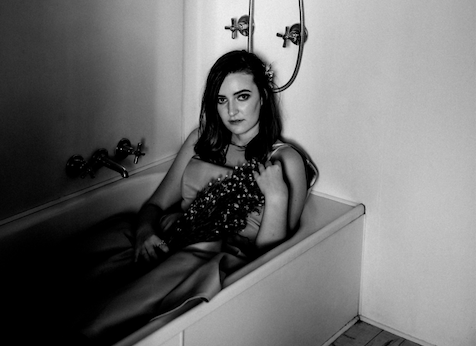
Athena Joy On the Making Of “Blame it on the Brain.”
How do you feel "Blame it on the Brain." represents your artistic identity?
I've always been kind of drawn to moody/darker vibes when it comes to music and I feel like I always have a bit of pop undertone to everything I create and “Blame it on the Brain.” is no different. If I'm honest though, when I'm creating music I less think about my identity as an artist and more about the identity of each individual song. I don't want to pigeonhole myself, this music represents where I am right now and that's all that matters to me.
Were there any challenges or breakthrough moments during the songwriting process for "Blame it on the Brain.?"
The song itself was actually very easy to write as I wrote it never really intending for anyone else to hear it. It was more like venting for me, so it came together really quickly. The biggest challenge with it was that I had chronic pain at the time and it hurt to talk so I wasn't singing or writing for a while. I had a really bad appointment with a doctor and came home and basically said "f*ck it" and just sat at my piano and wrote the song.
Were there any memorable or standout moments during the recording sessions for this song?
I remember most creating the bridge section - the night before the session I had written the lyrics for it and put this bass line together. We were recording drums with my friend Trevor the next day and it sounded so epic and fun I think I squeeled. I told the producers I wanted it to sound like a mental breakdown so that inspired a lot of the ideas for it.
The song has evolved a bit since then, that bass line is now actually in the chorus.
What inspired you to pursue a career in music?
Music has kind of always been that thing for me honestly. Where I've felt like I can be as weird and crazy as I am and it's just accepted. I've tried the 9-5 desk job thing, but it's not for me. I was born to create things.
What advice would you give to aspiring musicians who are just starting their musical journey?
If I'm honest the advice I normally give to aspiring musicians is to just not listen to advice... There are so many people who think they know best in this business and are gonna tell you how you can 'make it' and give you all the advice in the world but the reality is no one is going to hand you tickets to the kingdom. There is no one pathway of 'making it', if you listen to most musicians everyone has a different story of how they got into it and how they make it work, it's annoying but reality is the best thing to do is just get out there and start working out what’s going to work for you. What works for you isn't going to work for someone else- write your own story.
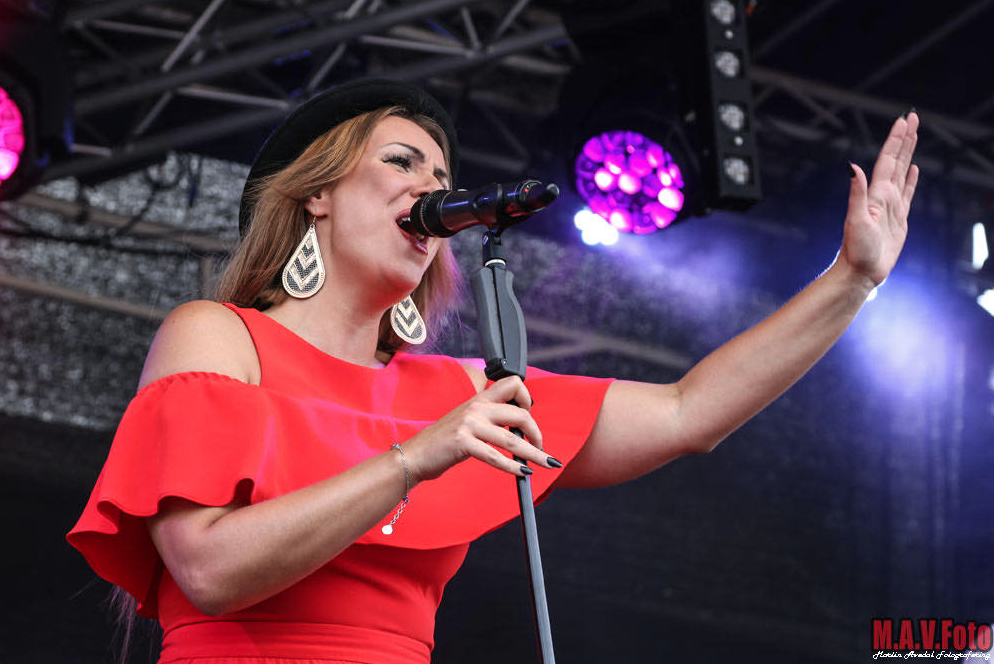
Nadine Randle On the Making Of “Waterfalls”
What was the initial spark or idea that led to the creation of "Waterfalls?"
The initial idea was based on the feeling of being stuck in life, and the need to be free.
Like a waterfall, you can flow freely and follow the light.
Were there any memorable or standout moments during the recording sessions for "Waterfalls?"
Yes, many moments but one particular was the moment the chorus came alive and we all stood up and had a real wow moment. It came easy like a waterfall.
What do you like the best about this track?
The lyrics really make you feel empowered!
Was there a pivotal moment in your life when you decided to follow your path as a musician?
Yeah, when I had my son I felt a need to be honest with myself and follow my dreams.
How do you approach collaborations with other musicians and maintain creative synergy?
I always love collaborations because they bring out the ABSOLUT best in me when I am around other musicians ❤️
Burnt Retina On the Making Of ‘Sleep Police’
What was the creative process like for this particular ‘Sleep Police?’
Just throwing down whatever sounds hilarious, intentionally bad, or yelling into the microphone with interesting guitar parts and drum fills.
Can you talk about the recording and production process for ‘Sleep Police?’
We wrote this album in a beaten-down garage with the cheapest production equipment ever, some true garage punk.
Which song do you like the best and why?
“Stalker” is our favorite on this album due to the unique indie/punk ring to it.
Where do you find inspiration for your songs or musical ideas?
Old school punk mostly, like the Misfits, GG, and Descendants.
What do you enjoy most about performing live and connecting with your audience?
Old punks and new scumbags moshing and having fun to some de-gen music.